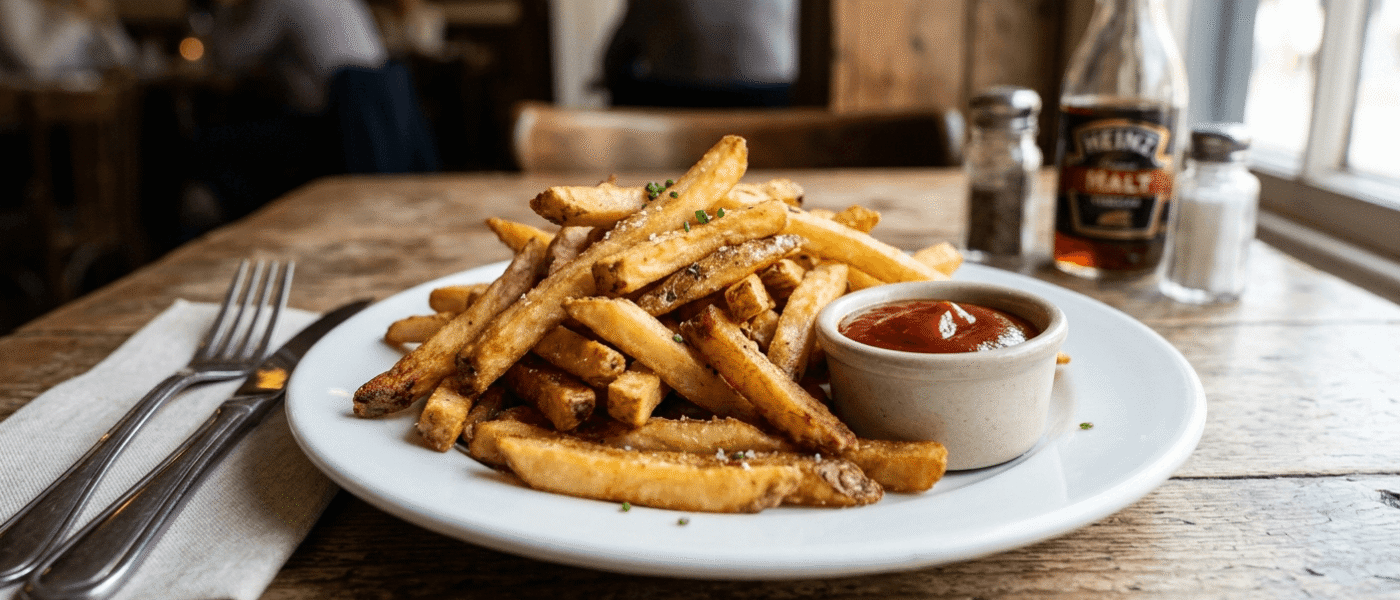
The double-fry is the secret. One fry makes them cooked. Two fries makes them crispy. Skip the second and you’ve made soft potato sticks.
Despite being called French fries, the dish is most credibly traced to Belgium — fried potato strips reportedly sold by street vendors in the Meuse valley as early as the 17th century. The name likely comes from the culinary term “to french,” meaning to cut into long thin strips, or from American soldiers in World War I who encountered the dish in French-speaking Belgium. Today french fries are one of the most consumed foods on the planet. The home version, done properly, beats anything from a fast-food counter — because you control the potato, the oil, the temperature, and the salt.
What You’re Learning
The double-fry technique. Frying in two stages at different temperatures is the key to fries that are simultaneously fluffy inside and shatteringly crisp outside. The first fry (lower temperature, 150–160°C / 300–320°F) cooks the interior starch all the way through without browning the surface. The second fry (higher temperature, 190°C / 375°F) drives moisture from the outer surface rapidly and creates the golden, crisp crust. Attempting this in a single hot fry leaves you with a dark exterior before the interior is cooked through.
Why soaking matters. Raw cut potato is covered in surface starch that, when fried without rinsing, causes fries to stick together and brown unevenly. Soaking cut fries in cold water for 30 minutes pulls excess surface starch out of the potato into the water, which you drain away. The result: fries that separate cleanly in the oil, brown evenly, and have a crisper final texture.
Ingredients
- 1 kg / 2 lbs starchy potatoes (Russet, Maris Piper, or King Edward)
- Oil for frying — vegetable, sunflower, or peanut oil (enough to fill your pot 8–10 cm / 3–4 inches deep)
- Salt, to season immediately after frying
Instructions
- Cut the potatoes. Peel and cut into even batons, roughly 1 cm / ½ inch wide. Consistent sizing ensures even cooking.
- Soak in cold water. Place cut fries in a bowl of cold water for at least 30 minutes (or overnight in the fridge). Drain and dry very thoroughly on clean towels — surface water causes dangerous spattering in hot oil.
- First fry (low temperature). Heat oil to 150–160°C / 300–320°F in a heavy pot. Working in batches to avoid crowding, fry for 5–7 minutes until cooked through and very lightly colored but not golden. Remove and drain on a wire rack. Do not salt yet. Fries can be refrigerated at this stage for up to 24 hours.
- Second fry (high temperature). Heat oil to 190°C / 375°F. Working in batches, fry the par-cooked potatoes for 2–4 minutes until deep golden and crisp. Watch closely — color changes quickly at this temperature.
- Salt immediately. Drain on a wire rack and season with salt the moment they come out. Salt sticks best when fries are still hot and lightly moist from frying.
- Serve at once. French fries are at their best in the first 5 minutes. They soften as they cool.
Notes
- Use a thermometer. Oil temperature is the single most critical variable. A probe thermometer removes all guesswork. Too cool produces greasy fries; too hot burns them before the interior cooks.
- Never fill the pot more than halfway with oil. Hot oil expands and bubbles aggressively when food is added. A pot too full can overflow and catch fire. 8–10 cm of oil depth is sufficient.
- Fry in small batches. Adding too many fries at once drops the oil temperature and you get steamed, soggy fries. The oil should sizzle actively when fries go in.
- Wire rack, not paper towels. A wire rack allows hot air to circulate under the fries, keeping the bottom crisp. Paper towels trap steam underneath.
- Oven alternative. Soak, dry, toss with 2–3 tbsp oil, spread on a hot tray in a single layer, and roast at 220°C / 425°F for 25–30 minutes, flipping halfway. Not the same as fried, but very good and much simpler.