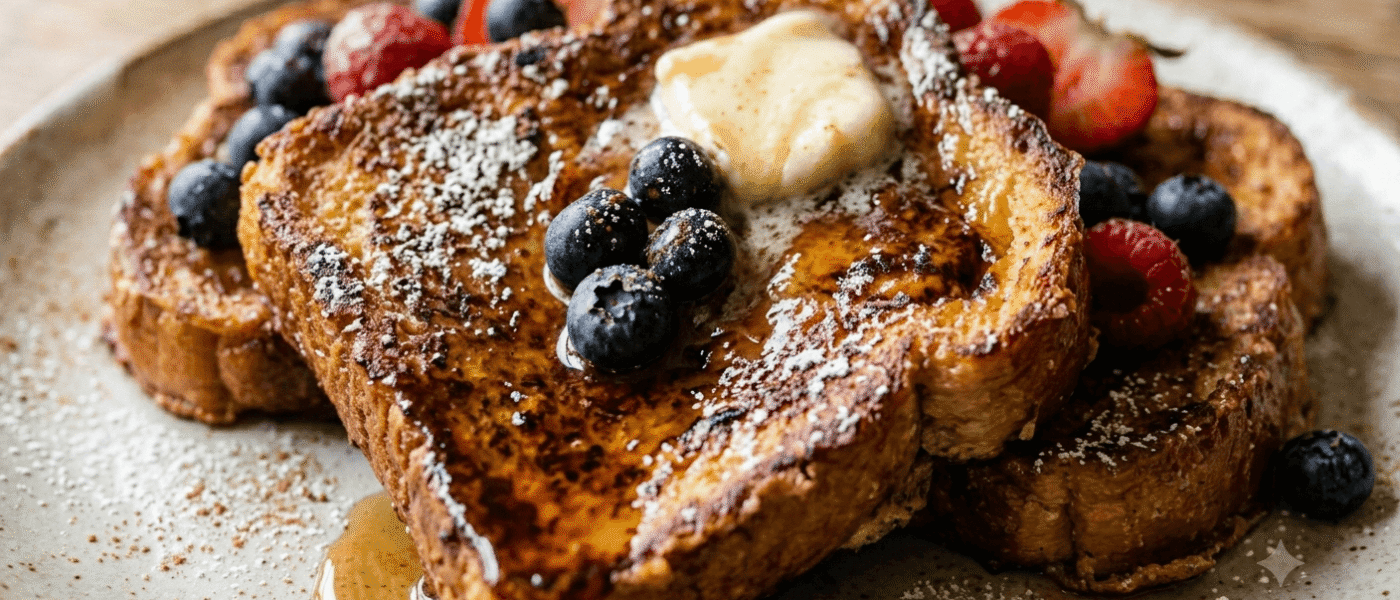
Pain perdu means “lost bread” in French — a rescue dish built for yesterday’s stale loaf. A simple egg custard, thick-cut bread, and a medium-hot pan are all it takes to turn it into something worth making on purpose.
The most common mistake with French toast is using fresh bread. Fresh bread is too saturated with its own moisture — when you soak it in custard, the outside gets soggy before the inside can absorb anything useful. Stale or day-old bread has dried out enough to soak up the egg and milk evenly, holding together in the pan and producing a crisp, golden crust with a custardy interior. The second mistake is heat: too high and the outside burns before the egg sets through; too low and the toast steams instead of crisping. Medium heat and patience solve both problems.
What You’re Learning
Custard absorption and bread selection. French toast is bread that has absorbed a thin custard — eggs and milk (or cream) that set when heated. The key variable is the bread’s moisture level. Fresh bread is already saturated; adding custard pushes it past the point where it can hold together. Day-old or deliberately dried bread has the open, porous crumb structure needed to absorb liquid without collapsing. Brioche and challah are ideal because their enriched dough has an open crumb and the butter they contain helps them brown beautifully. Plain white sandwich bread works equally well. Sourdough or whole-grain breads with tighter crumbs need a longer soak.
Pan temperature and the Maillard reaction. The goal is to brown the custard on the surface while fully setting the interior — which requires medium heat and time. Too much heat carbonizes the outside while leaving raw egg in the middle. The right temperature drives the Maillard reaction: the browning of proteins and sugars that gives French toast its caramelized, slightly crispy crust. Butter is the fat of choice because it contributes flavor and its milk solids brown as the bread cooks, adding depth. Watch for the butter to stop foaming before adding the bread — that’s when the pan is at temperature.
Ingredients
Makes 2 servings (4 thick slices).
- 4 thick slices bread (brioche, challah, or white sandwich bread), ideally day-old
- 2 large eggs
- ¼ cup (60ml) whole milk or heavy cream
- ½ tsp vanilla extract
- ½ tsp ground cinnamon
- Pinch of fine salt
- 1 tbsp unsalted butter per batch
- For serving: maple syrup, powdered sugar, or fresh berries
Method
- Dry the bread if it isn’t already stale. If using fresh bread, lay slices on a wire rack for 30 minutes or bake at 275°F (135°C) for 10 minutes per side until the surface feels dry to the touch. Skip this step if the bread is already day-old.
- Make the custard. In a shallow bowl wide enough to fit a slice of bread, whisk together the eggs, milk, vanilla, cinnamon, and salt until fully combined with no visible streaks of white.
- Soak the bread. Lay each slice in the custard for 20–30 seconds per side. The bread should absorb the liquid but not fall apart. Thick-cut brioche may need 30–45 seconds per side. If the bread feels like it’s getting too soft, reduce soak time.
- Heat the pan over medium heat. Add 1 tbsp butter to a wide skillet or griddle. Wait until the butter melts and the foam subsides — about 60 seconds. This signals the pan is ready.
- Cook until golden, 3–4 minutes per side. Add the soaked slices without crowding. Cook undisturbed until the underside is deep golden brown — resist the urge to flip early. Flip once and cook the second side equally. The bread should feel firm to a gentle press when done; if still very soft in the center, give it another minute.
- Serve immediately. French toast loses its crispness within minutes. Plate directly from the pan with maple syrup, powdered sugar, or fresh fruit.
Notes
- Brioche is the best choice. Its enriched dough absorbs custard beautifully and browns faster thanks to the butter content. Day-old brioche, sliced 1 inch thick, is the gold standard for this recipe.
- Heavy cream instead of milk makes it richer. Whole milk produces a lighter result; heavy cream produces something closer to dessert. Either is correct — use what you prefer.
- Don’t soak too long. Over-soaked bread collapses in the pan and never crisps. If working through a batch, keep soaked slices on a plate rather than leaving them in the custard bowl.
- Add fresh butter between batches. The butter from the first batch will be mostly gone by the second. Wipe any burned milk solids with a paper towel, add fresh butter, and proceed.
- Keep finished slices warm in a low oven. Place on a wire rack on a baking sheet at 200°F (93°C). They stay warm without softening the crust.
- The custard works with any sturdy bread. Sourdough, challah, ciabatta — they all work. Tighter-crumbed breads need longer soaking. Avoid very thin or crumbly breads; they won’t survive the flip.