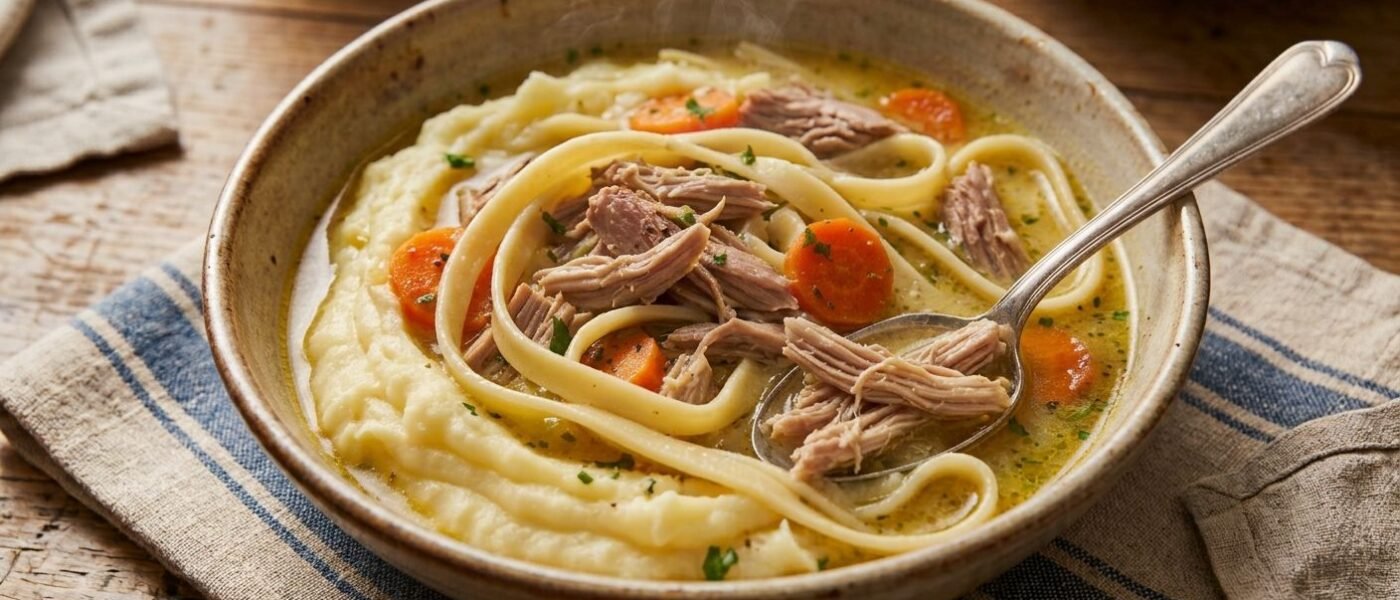
Chicken and noodles isn’t a recipe that needs reinvention — it works because braised chicken thighs, sweet vegetables, and tender homemade noodles together make something greater than the parts. The broth becomes rich and deep from the chicken’s collagen; the noodles soak it up; everything tastes like home. This version serves it the Amish way, over mashed potatoes, which turns the broth into a sauce.
The technique is forgiving. You’re not fussing with temperatures or timers beyond what a clock can tell you. The chicken tells you when it’s done — the meat pulls easily from the bone. The noodles cook in the same broth the chicken braised in, which means one pot and maximum flavor without extra steps.
Ingredients
For the braise
- 6 bone-in, skin-on chicken thighs (about 2 lbs)
- 2 tablespoons olive oil
- 1 large yellow onion, quartered (leave skin on)
- 3 medium carrots, cut into 1-inch chunks
- 4 cups chicken broth
- 2 bay leaves
- 1 teaspoon kosher salt, plus more to taste
- 1/2 teaspoon black pepper
- Fresh thyme sprigs (optional, 3–4 sprigs)
For serving
- 1 batch Amish noodles (flat egg noodles, fresh or dried — or buy premade)
- 2 tablespoons fresh parsley, chopped
- 3–4 cups mashed potatoes
- Salt and pepper to taste
Method
- Sear the chicken. Pat the chicken thighs dry with paper towels — this helps them brown. Heat the oil in a large, heavy pot (Dutch oven preferred) over medium-high heat. Working in batches so the pan isn’t crowded, sear the chicken skin-side down for 4–5 minutes until golden brown, then flip and sear the other side for 2–3 minutes. Transfer to a plate. You’re not cooking the chicken through, just developing color and flavor.
- Add the vegetables. Reduce heat to medium. Add the onion and carrots to the same pot (all that browned stuff on the bottom is flavor). Stir and let them cook for 2 minutes, softening slightly.
- Build the braise. Pour in the broth, scraping the bottom of the pot with a wooden spoon to release any stuck bits. Return the seared chicken thighs to the pot, nestling them among the vegetables. Add the bay leaves, thyme (if using), salt, and pepper. The liquid should come halfway up the chicken thighs — if it doesn’t, add a bit more broth or water.
- Braise low and slow. Bring to a gentle simmer, then reduce heat to low. Cover the pot partially (leave the lid slightly ajar so steam can escape) and let it bubble gently for 50–60 minutes. The chicken is done when the meat pulls easily from the bone with a fork and the thigh meat reaches 165°F internally. Don’t rush this step — the time builds flavor.
- Remove the chicken. Using tongs, transfer the cooked chicken to a plate. Set the pot aside to cool for 5 minutes. The broth should taste rich and full — this is your noodle cooking liquid, so taste it and add salt if needed.
- Pick the chicken. Once cool enough to handle, pull the meat from the bones and skin, discarding bones and skin. Shred the meat into bite-sized pieces. Set aside. (You should have about 2 cups of shredded chicken.)
- Cook the noodles in the broth. Return the pot to a simmer. Add the fresh (or dried) Amish noodles and stir gently. If using fresh noodles, they’ll cook in 2–3 minutes. If using dried, follow the timing from the noodles guide (usually 4–5 minutes). The noodles should be tender and have absorbed some of the broth’s flavor.
- Finish and serve. Stir the shredded chicken back into the pot. Taste and adjust salt and pepper. Ladle the chicken and noodles over bowls of warm mashed potatoes. Garnish with fresh parsley. Serve hot — the mashed potatoes act as a bed and help soak up the broth.
Notes
- Chicken thighs, not breasts. Thighs have more fat and collagen, which means they stay moist during the long braise and make the broth rich. Breasts will dry out and the broth won’t develop the same body. If you only have breasts, reduce the braising time to 30–35 minutes and check early to avoid overcooking.
- Don’t skip the sear. The golden-brown crust on the chicken (the Maillard reaction) is where flavor lives. It takes 5 minutes but changes everything. If you want to skip it to save time, the dish becomes one-dimensional.
- The vegetables soften but don’t disappear. By the end, the onion and carrots will be tender enough to almost fall apart. They’ve flavored the broth and are meant to stay in the dish. Some people eat them; some don’t. It’s fine either way.
- Mashed potatoes aren’t optional. They’re not a side dish here — they’re the base that catches the broth and turns this into something more than soup. The interplay between tender noodles, rich broth, and creamy potatoes is the whole point.
- No time to make noodles from scratch? Premade Amish noodles (wide or extra-wide) are a solid shortcut — they have the same tender, egg-based character as homemade and cook in the same broth without any fussing. The braising is where the real work happens; using store-bought noodles doesn’t shortchange the dish. Want to try making them yourself? See our guide to making Amish noodles from scratch.
- Fresh noodles cook faster than dried. Homemade egg noodles (whether flat or dumplings) cook in 2–4 minutes because they have no gluten development and the egg makes them tender. Dried noodles need longer. Either works — it just changes the timing. Factor this in when planning your meal.
- This freezes beautifully. If you want to make it ahead, braise the chicken, then cool and refrigerate for up to 2 days before adding the noodles. The broth will gel slightly from the chicken’s collagen, which means even richer flavor. Reheat gently and add fresh noodles when you’re ready to serve.