Fresh Spanish chorizo, chorizo fresco, is easier to make at home than most people expect, and it doesn’t require a curing chamber, a meat grinder, or any special butchery skill. It’s ground pork, seasoned heavily with pimentón, stuffed into a casing, and used right away, the same day or within a few days, never dried or aged. What separates it from a generic breakfast sausage is entirely the seasoning: pimentón dulce, sometimes cut with pimentón picante, is what makes it unmistakably Spanish, the same constant our own Spanish Charcuterie Guide points to as the real dividing line between Spanish, Mexican, and South American chorizo.
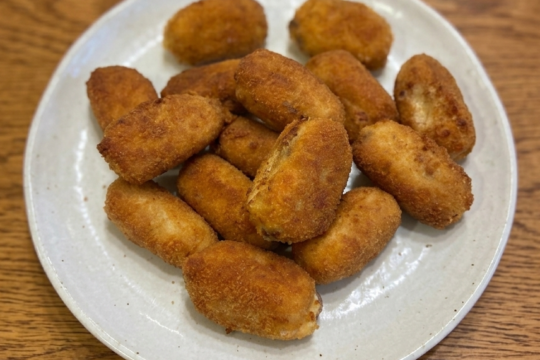
This is the same fresh chorizo that shows up crumbled into Patatas a la Riojana and Croquetas de Cocido Madrileño, made from scratch instead of bought pre-made. No sausage stuffer required, a wide-mouth piping bag does the job for a home-sized batch.
What You’re Learning
Cold meat and a firm hand mixing are what give a sausage its bind. Kneading the seasoned pork by hand for a couple of minutes isn’t just for even distribution, it pulls a sticky protein called myosin out of the meat, and that’s the glue that holds a sausage together once it’s cooked, the difference between links that hold their shape and a mixture that crumbles apart in the pan. Keeping the meat, the bowl, and even the room cold while this happens matters just as much: warm fat smears instead of staying in distinct flecks, and smeared fat renders out fast and leaves the cooked sausage dry instead of juicy.
Pimentón is doing all the work a curing chamber would otherwise do for flavor. Because this chorizo is never cured or dried, there’s no months-long process concentrating flavor the way there is for chorizo curado, so the seasoning has to carry the entire dish from the start. Sweet pimentón (pimentón dulce) is the base every batch needs, hot pimentón (pimentón picante) is an optional layer on top for heat, and using a generic paprika instead of real Spanish pimentón is the single most common way homemade chorizo ends up tasting like plain breakfast sausage with red food coloring instead of the real thing.
Ingredients
Makes about 2 lbs, roughly 8 links.
- 2 lbs (900g) ground pork shoulder, 80/20 fat ratio
- 3 tablespoons pimentón dulce (sweet Spanish paprika)
- 1 tablespoon pimentón picante (hot Spanish paprika), optional
- 6 cloves garlic, minced
- 2 tablespoons kosher salt
- 1 teaspoon black pepper, freshly ground
- 3 tablespoons dry white wine (or sherry vinegar)
- Natural hog casings, about 6 feet, soaked
Method
- Chill everything. Put a mixing bowl and the ground pork in the fridge or freezer for 15 to 20 minutes before you start. Cold meat and a cold mixing bowl keep the fat from smearing while you work.
- Season and mix. In the chilled mixing bowl, combine the pork, pimentón dulce, pimentón picante (if using), garlic, salt, pepper, and wine. Mix by hand for 2 to 3 minutes, folding and squeezing the mixture, until it turns sticky and pulls together rather than sitting as loose seasoned meat.
- Prep the casings. Rinse the soaked casings under cold running water, running water through the inside of each length to check for holes and flush out excess salt.
- Stuff and link. Fit a piping bag with a wide opening (or snip a large corner off a heavy zip-top bag) and fill it with the pork mixture. Slide a length of casing onto the opening, leaving a few inches empty at the end, then pipe in the filling steadily, keeping the casing loosely packed so it doesn’t split when twisted. Twist into 4- to 5-inch links, alternating twist direction each time.
- Rest. Refrigerate the links, loosely covered, for at least 4 hours and up to 24. This isn’t curing, it just gives the pimentón and garlic time to bloom fully into the fat. It’s safe to cook right away if you’re short on time.
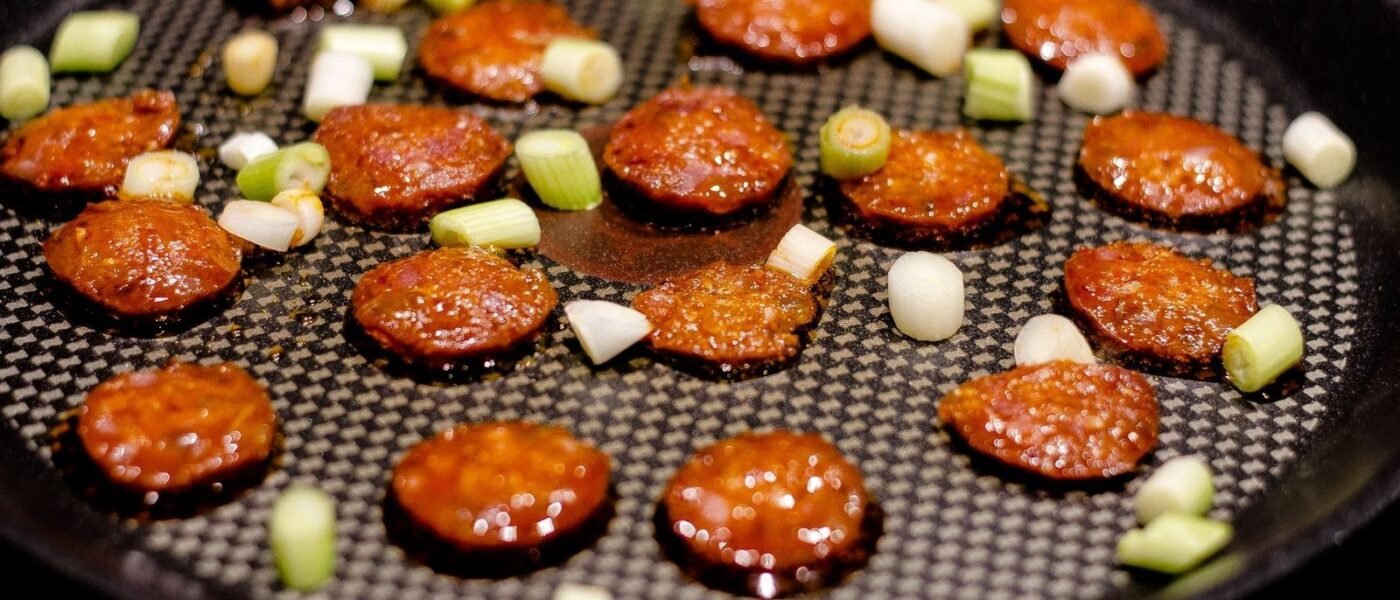
- Slice and cook. Slice into 1/2-inch rounds and pan-fry in a dry skillet over medium-high heat, 2 to 3 minutes per side, until browned and caramelized at the edges. Or cook whole links, turning occasionally, until the internal temperature reaches 160°F throughout.
Notes
- No sausage stuffer needed, a wide-mouth piping bag or a heavy zip-top bag with a corner cut off works fine for a batch this size.
- Natural hog casings are usually sold salt-packed at a butcher counter or online. Soak in water for 30 minutes before rinsing to soften them and remove excess salt.
- No casings on hand? Skip stuffing and form the mixture into loose patties, or crumble it straight into the pan. You lose the snap of a real link, but the flavor is identical.
- This is raw ground pork start to finish, always cook it to 160°F internal. Unlike cured chorizo from the deli counter, it’s never eaten cold or raw.
- Freezes well. Portion into individual links or patties before freezing, up to 3 months, and thaw in the fridge before cooking.
- Adjust the heat by changing the ratio of pimentón picante to dulce, or leave it out entirely for an all-sweet, mild version.