Pasta done right is already seasoned before sauce touches it. The water is the difference — and almost no one salts it enough.
Pasta is one of the oldest, most democratic foods in the world, eaten in some form across Italy, the Middle East, China, and virtually every culture that developed grain agriculture. The modern Italian dried pasta — durum wheat, water, extruded, dried — emerged in Sicily around the 12th century and spread north over the following centuries. Today it’s a weeknight staple across the world. And yet the thing that separates acceptable pasta from genuinely good pasta is almost always done wrong: the water. It should be deeply salted — closer to the sea than to tap water — seasoning the pasta from the inside as it absorbs liquid and cooks.
What You’re Learning
Why pasta water must be salty. Dried pasta contains almost no salt. As it cooks, it absorbs the cooking water — typically 30–40% of its own weight. If that water is properly salted (1–2% salinity), the pasta absorbs that salt and is seasoned through its entire cross-section. If the water is unsalted, you’re left trying to season the outside with sauce, which never penetrates the interior. This is why restaurant pasta tastes so much more seasoned than home pasta — the water, not just the sauce, is doing the work.
Al dente and why it matters. Al dente — Italian for “to the tooth” — describes pasta with a slight resistance at the center when you bite through it. Overcooked pasta goes soft and slippery, loses its texture in sauce, and digests faster (higher glycemic index). The fine white line you can see in the cross-section of a bitten strand of pasta is residual starch that hasn’t fully hydrated. Aim for just a hairline of white — no crunch, but definite resistance. Pasta that finishes cooking in the sauce should be pulled 1–2 minutes early.
Ingredients
- 400g / 14 oz dried pasta (any shape)
- 4–5 litres / 4–5 quarts water
- 2–3 tbsp fine salt (the water should taste pleasantly salty)
Instructions
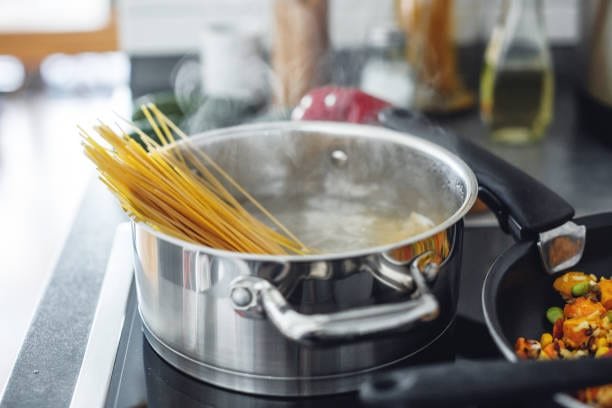
- Use a large pot with plenty of water. Pasta needs room to move. A large pot maintains its rolling boil when the pasta goes in and gives pasta space to cook without sticking together.
- Bring to a full, rolling boil. Do not add pasta to simmering water. You need a rapid boil so the pasta starts cooking immediately.
- Salt the water generously. Add salt to the boiling water before adding pasta. It should taste noticeably salty — “like the sea” is the standard instruction. Most of the salt stays in the pot.
- Add the pasta and stir immediately. Add pasta and stir at once to prevent sticking. Stir again every minute or two for the first 3 minutes while the surface starch is soft and sticky.
- Cook to al dente. Start tasting 2 minutes before the package says it’s done. Look for a hairline of white at the center when you bite through — slight resistance, but no crunch.
- Reserve pasta water before draining. Before draining, scoop out a mug of the starchy cooking water. This cloudy, salted liquid helps sauce cling to pasta and adjusts consistency without diluting flavor.
- Drain and sauce immediately. Drain the pasta (do not rinse) and add directly to your sauce in the pan. Toss over heat for 30–60 seconds with a splash of pasta water to finish.
Notes
- Don’t add oil to the water. Oil floats on the surface and does nothing to prevent sticking. Worse, it coats the drained pasta and prevents sauce from adhering. Stir instead.
- Don’t rinse pasta after draining. Rinsing removes surface starch — the very thing that helps sauce bind to pasta. Only rinse pasta if using it cold in a pasta salad.
- Pasta water is not optional. The starchy, salty cooking water thickens sauces, helps them cling to pasta, and adjusts consistency without diluting flavor. Keep a mug every time.
- Fresh pasta cooks much faster. Fresh egg pasta takes 1–3 minutes versus 8–12 for dried. Watch it closely.
- Match shape to sauce. Thick, chunky sauces pair with large tubes (rigatoni, penne). Delicate oil-based sauces suit thin strands (spaghetti, linguine). Ribbed surfaces hold sauce better than smooth.