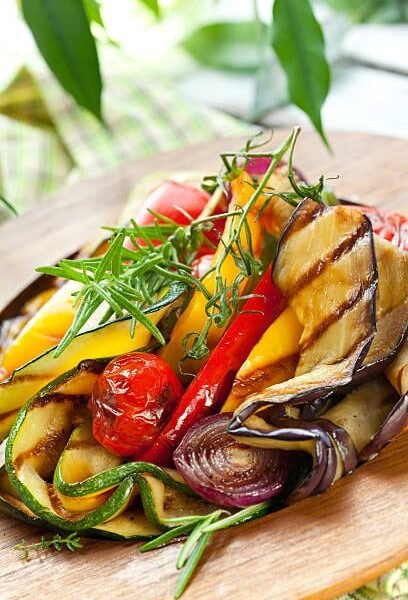
A contact grill or outdoor barbecue adds something a roasting tray cannot — direct char, smoke, and grill marks. Even stovetop, vegetables can taste like summer.
Grilling vegetables has roots across almost every cuisine with access to fire — from Middle Eastern mezze to Spanish escalivada, Mexican elotes, and Japanese yakitori vegetables. The direct contact with high heat creates char where the vegetable touches the grates, a bitterness that contrasts beautifully with the natural sweetness of the vegetable itself. Unlike roasting, which uses surrounding air to cook food evenly, grilling is aggressive and direct — which means you need vegetables sturdy enough to handle it, and you need to manage both sides.
What You’re Learning
Contact heat versus convection heat. A roasting oven heats food via circulating hot air (convection). A grill heats via direct contact with a hot surface (conduction) plus radiant heat from below. This produces a faster, more aggressive exterior crust while the interior cooks more slowly. The result is char marks and a smoky edge on the surface while the inside stays moist — a texture profile you cannot replicate in an oven.
Managing two sides independently. Because grill heat is directional, each side of the vegetable cooks independently. You need to check and flip with intention — watch for the char marks you want on the first side before flipping. Don’t press down, don’t constantly move the food. Let it sit, let the grate do the work, and flip only once for clean marks and maximum contact browning.
Ingredients
- 800g / 1¾ lbs vegetables suitable for grilling: courgette, aubergine, bell peppers, asparagus, corn on the cob, red onion, cherry tomatoes, portobello mushrooms, or thick-sliced fennel
- 3 tbsp extra virgin olive oil
- 1 tsp salt
- ½ tsp black pepper
- Optional: 1 lemon (for squeezing), fresh herbs (basil, parsley, thyme) to finish
Instructions
- Heat the grill. For a charcoal grill: establish a hot bed of coals. For a gas grill: preheat on high for 10–15 minutes. For a stovetop griddle pan: heat over high heat until lightly smoking. The grill must be properly hot before anything goes on it.
- Prepare the vegetables. Slice courgette and aubergine lengthways into thin ribbons, about 2–3 mm thick, using a vegetable peeler or mandoline. Halve peppers and remove seeds. Leave asparagus whole. Cut corn into halves. Slice red onion into thick rounds. Leave mushrooms whole.
- Oil the vegetables, not the grill. Brush or toss vegetables with olive oil and season with salt and pepper. Oiling the vegetable rather than the grill prevents flare-ups and sticking.
- Grill without moving. Lay vegetables on the hot grill without overcrowding. Do not move them for 2–4 minutes — let the grates do their work and the char form.
- Flip once. When the underside has good char marks and the vegetable releases easily, flip. Cook the second side for 2–4 minutes until marked and cooked through.
- Serve immediately or at room temperature. Finish with a squeeze of lemon and fresh herbs. Grilled vegetables are excellent warm, at room temperature, or chilled as part of an antipasto.
Notes
- Stovetop griddle pan. A cast iron or heavy griddle pan works well for indoor grilling. Heat it over high heat for 3–5 minutes before adding vegetables. Open a window — there will be smoke.
- Don’t crowd the grill. Overcrowding drops the grill temperature and vegetables steam in their own moisture. Cook in batches and keep finished batches warm.
- Marinating. For deeper flavor, marinate vegetables in olive oil, garlic, and herbs for 30 minutes before grilling. Don’t marinate in citrus juice for more than 15 minutes — the acid breaks down the surface texture.
- Cleaning the grill. Brush the grates while hot with a wire brush before grilling. Food releases more cleanly from clean, hot grates.
- Leftovers. Grilled vegetables keep in the fridge for 3–4 days and are excellent in sandwiches, pasta, grain bowls, and wraps at any temperature.