High heat, a hot oven, and space on the tray. That’s all roasting vegetables requires — and it transforms almost anything into something worth eating on its own.
Roasting is the simplest vegetable cooking method and arguably the most powerful. The high, dry heat of the oven pulls moisture from the surface and drives the Maillard reaction — the same browning that makes bread crusts, roasted meat, and caramelized onions irresistible. Vegetables that taste mild or even dull raw (broccoli, cauliflower, Brussels sprouts, carrots) become concentrated, sweet, and nutty when roasted. The method is the same for almost every vegetable: cut, coat in oil, season, spread in a single layer, and give it heat. What changes is the timing.
What You’re Learning
The Maillard reaction and caramelization. At high temperatures (above 150°C / 300°F), two separate reactions begin transforming the surface of food. Maillard browning creates hundreds of flavor compounds from proteins and sugars, producing the golden-brown color and savory depth you see on roasted vegetables. Caramelization happens when sugars break down under heat, producing sweetness and that distinctive nutty undertone in roasted carrots or onions. Both require dry heat — which is why you need high temperature, proper oil coating, and above all, an uncrowded tray.
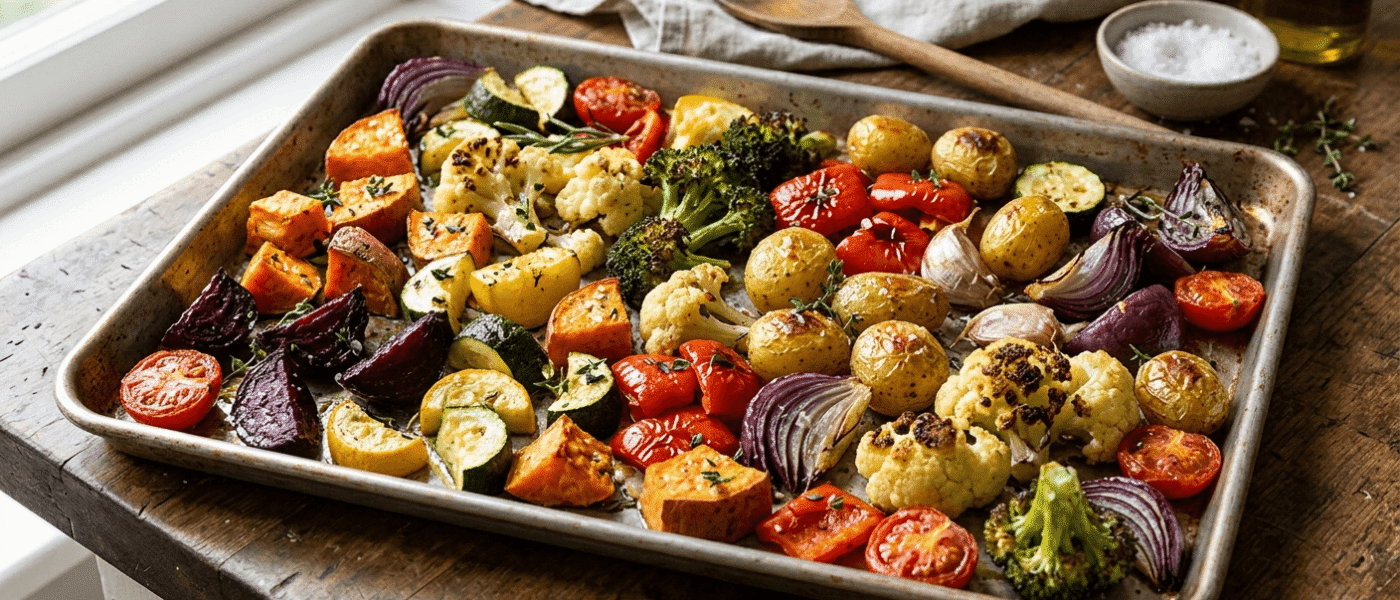
Why crowding kills the roast. Vegetables release steam as they cook. On a well-spaced tray, that steam escapes immediately and the surface stays dry enough to brown. When vegetables are packed together, the steam has nowhere to go — it collects around the food and the temperature at the surface drops below the browning threshold. The result: vegetables that are soft, pale, and slightly soggy instead of caramelized and crisp. Use a second tray rather than piling everything onto one.
Ingredients
- 800g / 1¾ lbs mixed vegetables (broccoli, cauliflower, carrots, courgette, bell pepper, Brussels sprouts, red onion — any combination)
- 3–4 tbsp extra virgin olive oil
- 1 tsp fine salt
- ½ tsp black pepper
- Optional: 1 tsp dried herbs (oregano, thyme, rosemary), 1 tsp smoked paprika, or 2 garlic cloves (minced)
Instructions
- Heat the oven. Preheat to 220°C / 425°F / Gas 7. A hot oven is non-negotiable — lower heat steams instead of roasts.
- Cut to similar sizes. Cut all vegetables to roughly 3–4 cm / 1½ inch pieces. Similar size means they finish cooking at the same time.
- Coat thoroughly in oil. Toss vegetables with olive oil until every surface is lightly coated. Season generously with salt and pepper (and any optional seasonings).
- Spread in a single layer. Arrange on one or two large baking trays, ensuring vegetables have space between them. They should not be touching. Use a flat tray, not a deep dish.
- Roast, flipping once. Roast for 20–25 minutes. Check at 15 minutes. Flip or stir once halfway through for even browning. Vegetables are done when edges are golden and slightly charred with a tender interior.
- Serve immediately. Add a squeeze of lemon juice or a drizzle of good olive oil just before serving if you like.
Notes
- Dense vegetables need more time. Carrots, beetroot, and sweet potato (30–40 min). Softer vegetables like courgette or asparagus need only 15–20 min. Roast them separately or add delicate vegetables halfway through.
- Pat dry before oiling. Any surface moisture on the vegetables slows browning. If washing, dry thoroughly with a towel first.
- Preheat the tray. Sliding vegetables onto a hot tray (heated in the oven) gives an immediate sear on the underside and reduces sticking. Optional but effective.
- Leftovers. Roasted vegetables keep refrigerated for 3 days. Reheat in a hot oven for 5–8 minutes to restore crispness — not a microwave, which makes them soft and soggy.
- What to roast. Almost anything works: root vegetables, brassicas, alliums, peppers, tomatoes, asparagus, green beans, fennel, and squash. Leafy greens are the main exception.