One pan, no special equipment, and the kind of dessert that disappears before it cools.
Peach cobbler is not a complicated dish, but it’s easy to get wrong in ways that are hard to diagnose. Soggy biscuits that steam instead of bake. A filling that’s either too liquid or inexplicably dry. A topping that looks done before it is. Most of these problems share a single root cause: the filling and the biscuit dough go into the oven at the same temperature at the same time, and they need different things. This recipe solves that by giving the filling a 15-minute head start — so by the time the biscuits land, the peaches are already bubbling and the heat from below drives the topping upward, giving you a deep golden crust rather than a pale, gummy one.
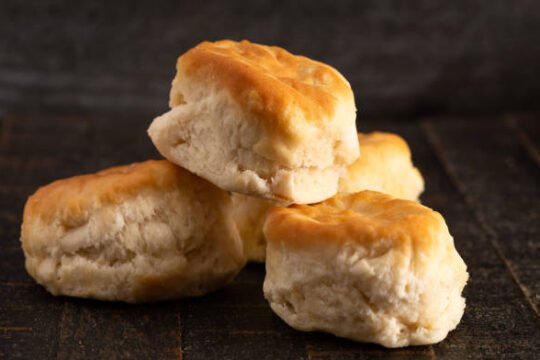
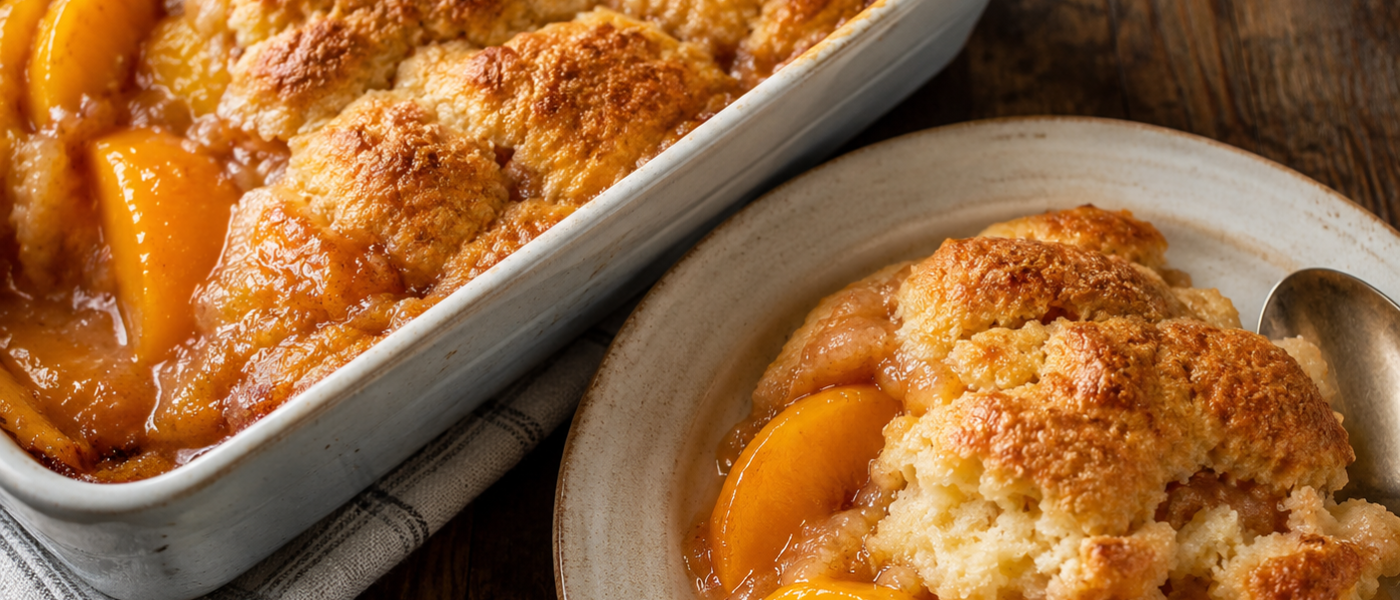
The biscuit topping here is a drop biscuit — no rolling, no cutter, no chilling the formed dough. Cold butter, cold buttermilk, a light hand, and spoonfuls dropped straight onto the hot filling. The result looks like the photo: domed, craggy, burnished at the peaks, still slightly tender in the thicker parts. It is the right topping for cobbler. It is not a scone or a crumble or a cake batter poured on top, and the distinction matters.
What You’re Learning
Pre-baking the filling changes everything. When you drop raw biscuit dough onto a cold or lukewarm filling, the moisture from the fruit steams the underside of the dough before it can set. The result is a pale, dense bottom that never fully cooks through. Pre-baking the filling until it’s actively bubbling at the edges means the heat source is already working from below the moment the biscuits touch the pan. The dough seizes, rises, and bakes — not steams. Fifteen minutes in a hot oven is all it takes, and it’s the step that separates a cobbler that holds its structure from one that collapses into soup.
Cold fat, minimal mixing, don’t touch it again. Drop biscuits live and die by three rules. First: butter must be genuinely cold — not cool, cold. Warm butter blends into the flour and produces a cracker. Cold butter stays in pieces, those pieces create steam pockets in the oven, and that steam is what gives you the lift and the layers. Second: cold buttermilk, added all at once. Third: fold just until no dry flour remains — eight or ten strokes maximum — and then stop. The dough will look shaggy and uneven. That’s correct. Overworked dough develops gluten, and gluten makes biscuits tough. The moment the flour is hydrated, put the spoon down.
Ingredients
Makes 8 servings.
Peach Filling
- 2 cans (29 oz / 822g each) sliced peaches in juice, drained — reserve ½ cup of the liquid
- ½ cup (100g) granulated sugar
- 2 tbsp brown sugar, packed
- 2 tbsp cornstarch
- 1 tbsp fresh lemon juice
- 1 tsp vanilla extract
- 1 tsp ground cinnamon
- ¼ tsp ground nutmeg
- Pinch of fine salt
Drop Biscuit Topping
- 2 cups (250g) all-purpose flour
- 3 tbsp granulated sugar, plus extra for sprinkling
- 1 tbsp baking powder
- ½ tsp fine salt
- 6 tbsp (85g) unsalted butter, cold and cut into small cubes
- ¾ cup (180ml) cold buttermilk
- 1 tbsp heavy cream, for brushing
Method
- Preheat and prepare. Position a rack in the centre of the oven and preheat to 375°F (190°C). Lightly butter a 9×13-inch (23×33cm) baking dish.
- Build the filling. Add the drained peach slices directly to the baking dish. In a small bowl, whisk together the granulated sugar, brown sugar, cornstarch, cinnamon, nutmeg, and salt until no lumps remain. Pour the reserved ½ cup of peach liquid into the bowl along with the lemon juice and vanilla, stir to combine, then pour the mixture over the peaches. Toss gently to coat every slice. Spread into an even layer.
- Pre-bake the filling. Bake, uncovered, for 15 minutes. The filling should be bubbling actively at the edges when you pull it out. If it isn’t, give it another 5 minutes. Don’t skip this step — the hot filling is what drives the biscuit topping to bake rather than steam.
- Make the biscuit dough. While the filling bakes, make the biscuit topping. Whisk together the flour, 3 tablespoons of sugar, baking powder, and salt in a large bowl. Add the cold butter cubes and work them in with your fingertips, pressing and smearing each piece flat, until the mixture resembles coarse crumbs with a few pea-sized chunks remaining. Pour in the cold buttermilk all at once and fold with a rubber spatula — 8 to 10 strokes maximum — until no dry flour remains. The dough will look shaggy and lumpy. That is correct. Do not work it further.
- Top and finish. Pull the hot filling from the oven. Using a large spoon, drop the biscuit dough in heaping mounds across the surface of the filling, spacing them slightly apart — they will spread and merge as they bake. You should have 8 to 10 mounds. Brush each one lightly with heavy cream and sprinkle generously with sugar.
- Bake. Return the dish to the oven and bake for 35 to 40 minutes, until the biscuit topping is deep golden brown at the peaks and the filling is visibly bubbling around and beneath the biscuits. Check at 35 minutes: if the biscuits are pale, continue in 5-minute increments. If the tops are browning too fast before the insides are set, tent loosely with foil for the final 10 minutes.
- Rest. Remove from the oven and rest for at least 15 minutes before serving. The filling thickens as it cools and the biscuits firm up slightly. Serve warm — not piping hot — with vanilla ice cream or lightly whipped cream.
Notes
- Canned peaches are the right call here. They’re consistent, already sweet, and already at the right texture for cobbler. Fresh peaches in peak summer are also excellent — peel and slice about 3 lbs (1.4kg) and increase the sugar by 2 tablespoons since fresh fruit has less syrup. Frozen peaches work too: thaw and drain very well before using.
- The butter must be genuinely cold. If your kitchen is warm, cut the butter into cubes and return them to the freezer for 10 minutes before you start. Warm butter blends into the flour instead of staying in pieces, and you lose all the flakiness and lift.
- Don’t overwork the biscuit dough. Eight to ten folds after the buttermilk goes in — count them if you have to. The moment the flour is incorporated, stop. Overworked biscuits are tough regardless of how good your butter was.
- The cream and sugar on top are not optional. Brushing with cream helps the peaks go deep golden rather than pale. The sugar adds crunch and a slight caramelisation at the edges. Both take 30 seconds and make a visible difference.
- Leftovers reheat well. Cover and refrigerate for up to 3 days. Reheat individual portions in a 325°F oven for 10 minutes — the microwave works, but it softens the biscuit topping. Either way it’s still very good the next morning with coffee.
- Serve with something cold and fatty. Vanilla ice cream is the classic pairing and it earns its reputation. The contrast between hot, jammy fruit, warm biscuit, and cold, melting cream is exactly what cobbler is for.