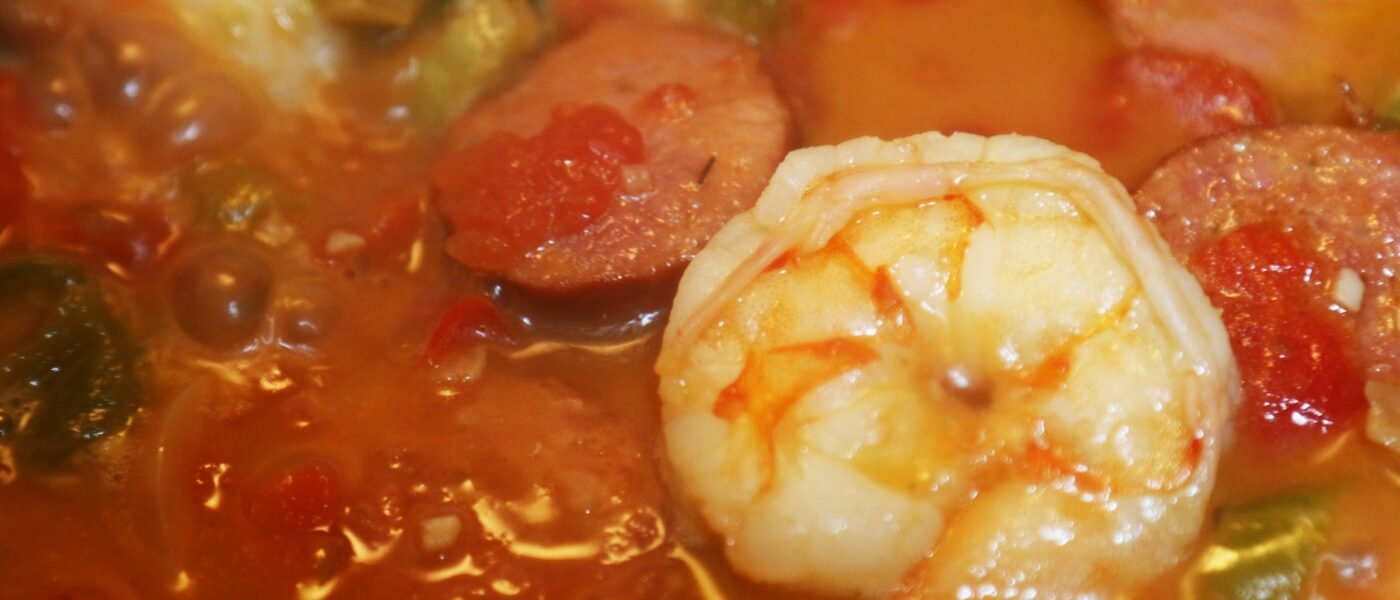
Gumbo starts with a decision most recipes don’t ask you to make: how dark do you want to take the roux. That one choice shapes almost everything else about the dish, and it’s the reason this is one of the harder things you can put in a pot.
This version leans Creole: chicken and andouille built into a dark roux, tomatoes in the pot, and shrimp added right at the end so it never overcooks. It takes the better part of two hours, most of it spent stirring, and it’s worth every minute of it.
What You’re Learning
Cooking a roux by color and smell, not a timer. Getting a roux to a dark, mahogany brown is a different kind of hard than most recipes on this site ask for. It’s not about precision, it’s about reading color and smell in real time and adjusting as you go. Rush the heat and the flour scorches instead of deepening; walk away for even a minute near the end and the same thing happens. There’s no shortcut here, just a wooden spoon, a pot you don’t leave, and the willingness to start over if it burns.
The trinity, and where it actually comes from. The onion, celery, and bell pepper that go in right after the roux, Louisiana cooks call it the trinity, is doing the same job French mirepoix does in a stock or braise: building a flavor base before anything else happens. Gumbo didn’t get that structure by accident. It’s a dish built by French, Spanish, African, and Native cooks working in the same kitchens, and the trinity is one of the clearest places you can still taste that history. Old World technique, adapted with what New Orleans actually had growing nearby.
Ingredients
- ½ cup olive oil
- ½ cup all-purpose flour
- 12 oz andouille sausage, sliced into rounds
- 1 lb boneless, skinless chicken thighs, cut into bite-sized pieces
- 1 large yellow onion, diced
- 2 celery stalks, diced
- 1 green bell pepper, diced
- 4 cloves garlic, minced
- 1 can (14.5 oz) diced tomatoes
- 6 cups chicken stock
- 2 bay leaves
- 1 tsp dried thyme
- 1 tsp smoked paprika
- ½ tsp cayenne pepper, plus more to taste
- 1 tbsp Worcestershire sauce
- 1 lb large shrimp, peeled and deveined
- Salt and black pepper, to taste
- 3 green onions, sliced, for serving
- Cooked white rice, for serving
Method
- Prep everything first. Dice the onion, celery, and bell pepper (the trinity), mince the garlic, slice the andouille, and cut the chicken into bite-sized pieces. Once the roux starts, it moves fast and needs full attention, so there’s no time to chop mid-stir.
- Brown the andouille and chicken. Heat a heavy Dutch oven over medium-high. Brown the andouille rounds, about 3 minutes per side, then set aside. Brown the chicken in the same fat, in batches so it doesn’t crowd, then set aside.
- Start the roux. Add the oil to the pot along with any rendered fat, then whisk in the flour over medium heat until smooth. Switch to a wooden spoon and stir constantly, scraping the bottom and corners of the pot, for 35 to 45 minutes.
- Watch the color, not the clock. The roux moves from a pale paste through sandy blond, then peanut butter, then milk chocolate, toward a deep mahogany brown, close to dark chocolate. Lower the heat if it darkens too fast or starts to smell sharp, a rushed roux burns instead of deepening.
- Add the trinity. The moment the roux reaches the color you want, stir in the onion, celery, and bell pepper. This stops the cooking instantly and the vegetables will sizzle hard, that’s normal. Cook 5 minutes, until softened.
- Add the garlic and tomatoes. Stir in the garlic and cook 1 minute, then add the diced tomatoes with their juice.
- Add the stock gradually. Whisk in the chicken stock one ladle at a time, fully incorporating each addition before the next, to keep the roux from clumping.
- Season and simmer. Add the bay leaves, thyme, smoked paprika, cayenne, Worcestershire, and the browned andouille. Bring to a low simmer, uncovered, and cook 45 minutes, stirring occasionally.
- Return the chicken. Add the chicken back to the pot for the last 15 minutes of simmering, until cooked through.
- Finish with the shrimp. Add the shrimp in the last 3 to 4 minutes, they’re done as soon as they turn opaque and curl into a loose C shape. Overcooked shrimp turn rubbery fast, so pull the pot off heat right after.
- Season and serve. Remove the bay leaves, taste, and adjust salt, pepper, and cayenne. Serve over rice, topped with sliced green onions.
Notes
- The roux is the recipe. Everything after it is straightforward; the 35 to 45 minutes of constant stirring is where this dish is actually made or lost.
- Color is a trade-off, not just a look. A lighter roux thickens the gumbo more; a dark one thickens it less but tastes deeper and smokier. This recipe aims for a real dark roux on purpose.
- Black flecks or a burnt smell mean start over. There’s no saving a scorched roux, pushing through just makes the whole pot bitter.
- This is a Creole gumbo, tomatoes and all. New Orleans city cooking includes tomatoes; the rural Cajun version further out in Acadiana usually doesn’t. Both are correct, they’re just different traditions.
- Filé powder (ground dried sassafras leaves) is a traditional finishing thickener, stirred in off heat only, right before serving. Boiling it turns the gumbo gluey and stringy, so add it to the pot after it’s off the burner, or let people sprinkle their own at the table.
- Leftovers are better the next day, once the flavors settle. Keeps 4 days refrigerated; freezes well if you leave the shrimp out and add a fresh batch when reheating, since previously frozen shrimp turn rubbery.