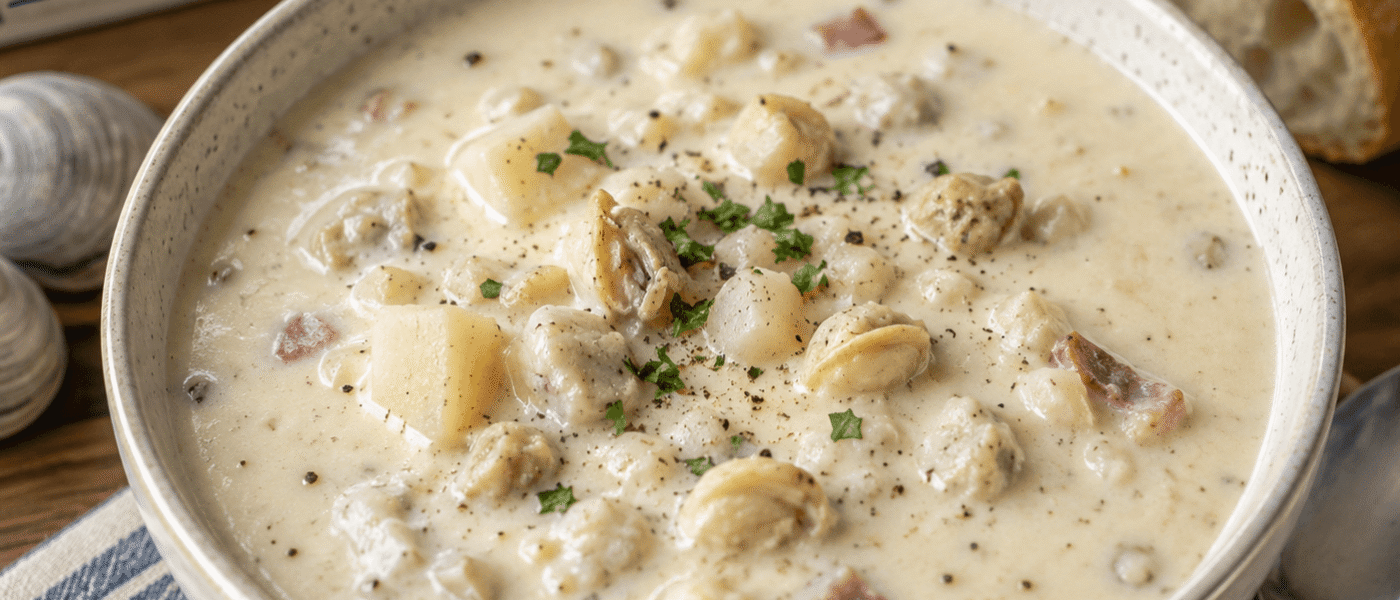
New England-style clam chowder the way it should be — thick, smoky from the bacon, loaded with clams and soft potatoes. One pot, straightforward technique, and better than anything from a can.
Ingredients
- 4 strips bacon, chopped
- 1 cup chopped fresh clams, or 2–3 cans chopped clams
- 1 can baby clams
- 1 bottle clam juice
- 1 onion, chopped
- 5–6 potatoes, sliced or cubed
- 1 tsp thyme
- Salt and pepper to taste
- Chicken broth to cover (or 1 tsp Better Than Bouillon chicken base dissolved in water)
- 1 pint heavy cream, or 1 can evaporated whole milk
Instructions
- If using canned clams, open the cans and drain the liquid into a separate container. Let it settle for a minute so any sand or shell fragments sink to the bottom — pour off the clear liquid and discard the sediment.
- Using a large pot over medium heat, cook the bacon until crispy. Remove with a slotted spoon and set aside — you’ll use it as a topping.
- Add the chopped onion to the bacon grease and sauté until soft, about 5 minutes.
- Season with thyme, salt, and pepper.
- Add the potatoes and clam juice to the pot. Pour in enough chicken broth (or water with bouillon) to just cover the potatoes.
- Simmer over medium-low heat until the potatoes are tender and break apart easily with a fork, about 15–20 minutes.
- Add the clams and heavy cream (or evaporated milk). Stir to combine and bring just to a boil, then reduce heat immediately — boiling hard will toughen the clams.
- Taste and adjust seasoning. Ladle into bowls and top with the reserved bacon and oyster crackers.
What You’re Learning
Clam chowder teaches you how to build layered flavor in a single pot. The bacon goes in first because it does two jobs: it crisps into a topping, and it renders fat that seasons everything else. The onion cooks in that fat and becomes the aromatic base. The clam juice goes in next and provides the backbone of the broth. Each step builds on the last — nothing is added randomly. That sequence is what makes a good chowder taste like more than just clams in cream.
You are also learning the rule of delicate proteins at the end. Clams are already cooked when they go in — your only job is to warm them through, not cook them further. A hard boil turns clams rubbery in under a minute. This applies to shrimp, fish, and most shellfish: they go in last, briefly, and come off heat the moment the cream has integrated. Knowing when to stop cooking is the technique.
Notes
- Settle the clam juice before using. Let the drained liquid rest for a minute so any sand or shell fragments sink. Pour off the clear liquid from the top and discard the sediment at the bottom.
- Don’t boil after the cream goes in. Bring the chowder just to a gentle boil to integrate everything, then reduce heat immediately. A hard rolling boil will toughen the clams and can break the cream.
- Evaporated milk works as a substitute. It’s lighter and slightly sweeter than heavy cream — still good. Regular milk can break under heat, so avoid it.
- Potato cut affects texture. Thin slices partially dissolve and thicken the broth. Cubes hold their shape and give more bite. Both are correct — decide what you want.
- Keep the bacon separate until serving. Add it to the pot and it softens immediately. Top individual bowls with it so it stays crispy. Oyster crackers on the side.