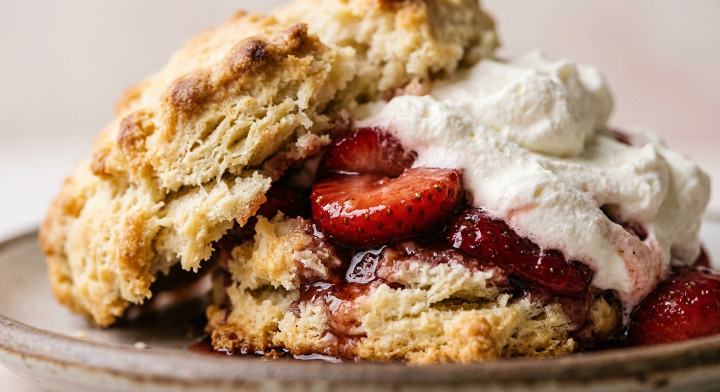
Macerated strawberries over a warm biscuit with cold whipped cream. Three simple components, each one made correctly, and nothing else needed.

The American shortcake is not a cake in the usual sense. It is a sweet, tender drop biscuit, somewhere between a biscuit and a scone, that splits cleanly in half and soaks up strawberry juice from the bottom without going soggy. The contrast between warm biscuit and cold cream is the whole point, which is why you assemble it right before serving and not a minute sooner.
The most important step in this recipe happens before any baking starts. Macerating the strawberries, slicing them and tossing with sugar, draws out their juice and turns them into a light, fruit-forward sauce with no cooking required. Ripe summer strawberries need twenty minutes. Less ripe ones need an hour. Either way the result is the same: fruit that tastes more like itself than it did when you started.
What You’re Learning
Macerating fruit. Tossing sliced strawberries with sugar draws water out of the fruit by osmosis, concentrating the flavor and creating a natural syrup with no stovetop and no thickeners. The longer the fruit sits (30 minutes to 2 hours), the more syrup it produces and the more intensely it tastes. This is the sauce, not an accessory to it.
The drop biscuit method. Working cold butter into flour until pea-sized pieces remain, then adding cream just until the dough comes together, creates a tender, slightly flaky biscuit without a rolling pin. Overmixing develops gluten and makes it tough. The goal is a rough, shaggy dough that barely holds together, which bakes into something light and crumbly.
Ingredients
Makes 8 servings.
For the shortcakes:
- 2 cups (240g) all-purpose flour
- 3 tbsp sugar, plus more for the tops
- 1 tbsp baking powder
- ½ tsp fine salt
- 6 tbsp (85g) unsalted butter, cold, cut into small cubes
- ¾ cup (180ml) heavy cream, plus more for brushing
For the macerated strawberries:
- 2 lbs (900g) fresh strawberries, hulled and sliced
- 3 tbsp sugar
- 1 tsp pure vanilla extract
For the whipped cream:
- 1½ cups (360ml) heavy cream, cold
- 2 tbsp powdered sugar
- 1 tsp pure vanilla extract
Method
- Macerate the strawberries. Combine sliced strawberries, sugar, and vanilla in a large bowl. Toss to coat and set aside at room temperature for at least 30 minutes, up to 2 hours. The fruit will release its juice and soften into a light, syrupy sauce.
- Make the shortcake dough. Preheat the oven to 425°F (220°C). In a large bowl, whisk together flour, sugar, baking powder, and salt. Add the cold butter cubes and work them into the flour with your fingers or a pastry cutter until the mixture resembles coarse crumbs with some pea-sized butter pieces still visible.
- Add the cream. Pour in the cream and stir just until the dough comes together. It should look rough and shaggy with some dry bits. Do not overmix. The dough will be sticky.
- Shape and bake. Turn the dough out onto a lightly floured surface and pat it gently into a 1-inch-thick slab. Cut into 8 rounds with a 2½-inch biscuit cutter, or cut into squares with a knife. Place on a parchment-lined baking sheet, brush the tops with cream, and sprinkle with sugar. Bake for 14 to 16 minutes, until deep golden on top.
- Whip the cream. Combine cold heavy cream, powdered sugar, and vanilla in a chilled bowl. Whip with a hand mixer or by hand until soft peaks form. Stop before stiff peaks, you want it thick but still billowy.
- Assemble and serve. Split each warm shortcake in half. Spoon a generous portion of macerated strawberries and all their juice over the bottom half. Add a large dollop of whipped cream, then set the top half slightly askew so the layers are visible. Serve immediately.
Notes
- Use ripe, peak-season strawberries. A perfect summer strawberry does most of the work here. Off-season fruit will need more sugar and a longer maceration time to develop real flavor.
- The juice is the sauce. Do not drain the strawberries before assembling. The liquid they release while macerating is what soaks into the biscuit and makes the whole thing taste right.
- Keep the butter cold. Room-temperature butter blends too completely into the flour. Cold butter leaves pockets that create steam in the oven, which is what makes the biscuit tender and slightly flaky.
- Do not overmix the dough. Stir just until it holds together. Overworking builds gluten and turns a tender biscuit into something dense. A rough, shaggy dough is the right target.
- Assemble right before serving. The shortcake goes from perfect to soggy in about 15 minutes once assembled. Keep the three components separate until you are ready to eat.
- Shortcakes can be baked ahead. Warm them in a 300°F (150°C) oven for 5 minutes before serving if made more than an hour in advance.