
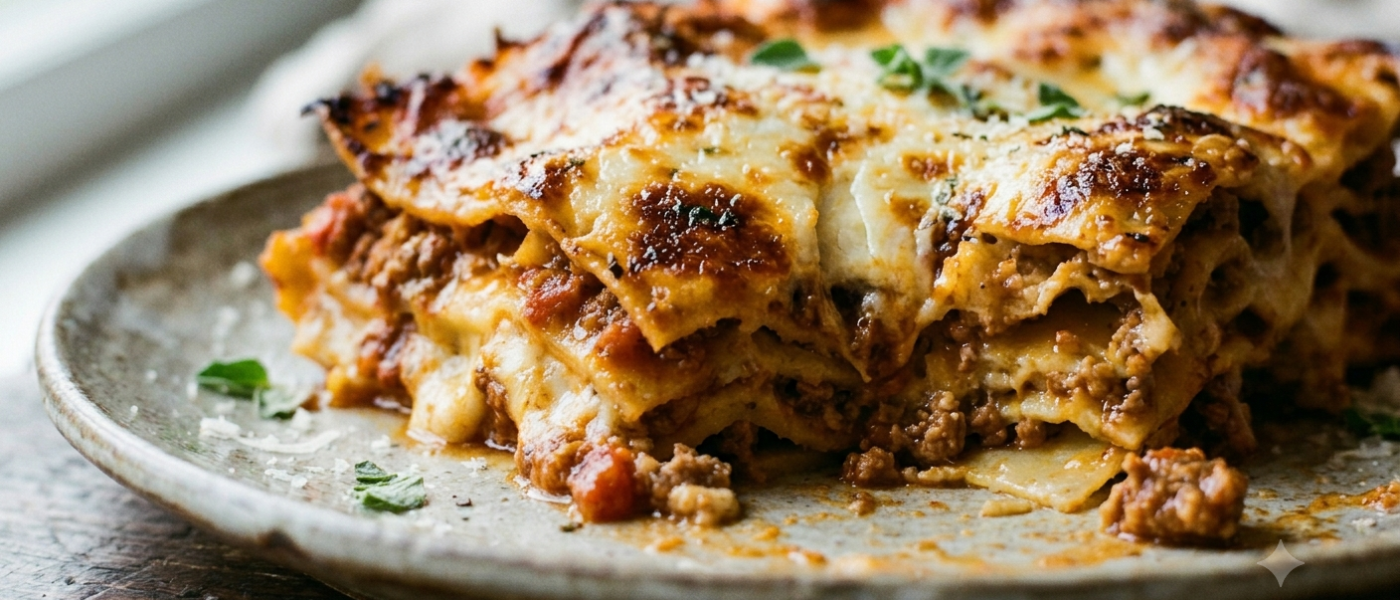
Meat Lasagna (Lasaña de Carne)
Most lasagna recipes assume you already know the one thing that makes it work: rest it before you cut it. Skip that step and every slice turns into a melted pile. Follow it and you get clean, layered cuts that hold together on the plate. The rest — two meats, a jar of good pasta sauce, ricotta bound with egg — is just smart assembly.
What You’re Learning
Mixing egg into the ricotta is the move that holds everything together. Plain ricotta is wet and loose — it slides between layers and turns watery as it bakes. One or two eggs bind the proteins as they cook, firming the cheese layer into something that grips the noodles above and below. The result is a ricotta layer that stays where you put it, slices cleanly, and doesn’t weep liquid onto the plate. This is why restaurant lasagna looks assembled and home lasagna looks collapsed.
Undercook the noodles by two minutes — they finish cooking in the oven and absorb moisture from the sauce as they do. If you cook them to package instructions, they turn mushy by the time the cheese is browned. Pull them out firm, almost al dente, then lay them flat on an oiled baking sheet so they don’t clump. The layering order matters too: sauce on the bottom first (prevents sticking), noodles, ricotta, meat sauce, mozzarella — repeat. The top layer ends with sauce and mozzarella only, no ricotta, so the surface can brown properly.
Ingredients
- 12 dry lasagna noodles
- 1 lb lean ground beef (80/20)
- 1 lb sweet Italian sausage, casings removed
- 1 jar (24–25 oz) store-bought pasta sauce (Rao’s or similar thick sauce)
- 32 oz (2 lbs) whole-milk ricotta cheese
- 2 large eggs
- 3 cups low-moisture mozzarella, shredded (about 12 oz)
- ¾ cup Parmesan, freshly grated — divided
- ¼ cup fresh parsley, chopped — plus more to garnish
- ½ tsp garlic powder
- Salt and black pepper
Method
- Prep the noodles. Bring a large pot of heavily salted water to a boil. Cook noodles 2 minutes less than the package directions. Drain, drizzle a baking sheet with olive oil, and lay noodles flat in a single layer. Set aside.
- Brown the meat. In a large skillet over medium-high heat, cook the ground beef and sausage together, breaking up the meat as it browns. Season with garlic powder, salt, and pepper. Drain excess fat.
- Make the meat sauce. Add the pasta sauce to the meat in the skillet. Stir to combine and simmer over low heat for 5 minutes. Remove from heat.
- Mix the ricotta layer. In a large bowl, combine ricotta, eggs, parsley, half the Parmesan (about ⅓ cup), and a pinch of salt and pepper. Stir until smooth and fully combined.
- Assemble. Preheat oven to 375°F (190°C). Spread a thin layer of meat sauce across the bottom of a 9×13-inch baking dish. Add a layer of noodles (3–4 sheets, slightly overlapping). Spread ⅓ of the ricotta mixture, then ⅓ of the remaining meat sauce, then ⅓ of the mozzarella. Repeat the layers two more times. For the final top layer: noodles, remaining meat sauce, remaining mozzarella, and the rest of the Parmesan. No ricotta on top.
- Bake covered. Tent the dish with foil — don’t press it against the cheese — and bake for 35 minutes.
- Brown the top. Remove the foil and bake an additional 15–20 minutes, until the top is golden, bubbling at the edges, and the cheese has brown spots.
- Rest before cutting. Remove from the oven and let rest uncovered for at least 15 minutes. Do not skip this. The layers need time to set before the lasagna can be sliced cleanly.
Notes
- Sauce matters. Use a thick sauce you’d eat on pasta night — Rao’s Homemade, Newman’s Own Marinara, or similar. Thin, watery sauces make the lasagna soggy. If the sauce slides off a spoon easily, it’s too thin.
- No-boil noodles: Oven-ready noodles skip the boiling step entirely. Add ½ cup of water to the meat sauce to compensate for what the noodles will absorb during baking.
- The egg in ricotta is non-negotiable. It binds the cheese layer so it sets firm during baking — without it, the ricotta slides and pools at the bottom.
- Make ahead: Assemble the lasagna the night before and refrigerate unbaked, covered with foil. Bake straight from the fridge — add 15 minutes to the covered bake time to account for the cold start.
- Leftovers are better the next day. The layers compress overnight and the flavors deepen. Reheat covered at 350°F for 20–25 minutes, or individual slices in the microwave with a splash of water over the top.
- Freezes well: Wrap individual slices tightly in foil and freeze for up to 3 months. Thaw overnight in the fridge and reheat covered.
More at This Level
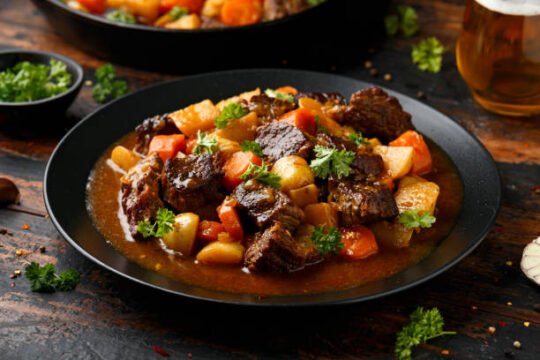
Beef Stew (Estofado de Ternera)
A Spanish-style beef stew built in layers — seared chuck, paprika-wine base, root vegetables — braised low and slow until the sauce holds a spoon.

Pumpkin Pie (Tarta de Calabaza)
A silky pumpkin custard baked in a blind-baked crust, using a two-stage oven temperature so the edges set fast while the center finishes gently, without cracking. Uses the same crust as Dutch Apple Pie and Pecan Pie.
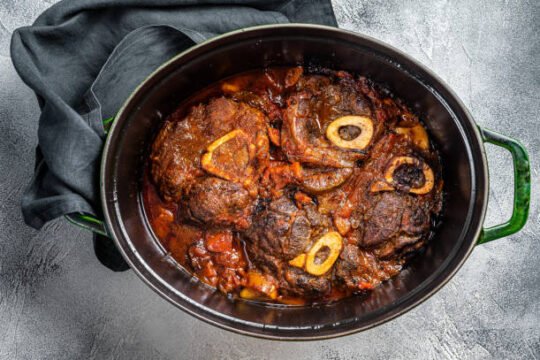
Braised Beef Shanks (Jarrete de Ternera Estofado)
Cross-cut beef shanks slow-braised in wine, paprika, and aromatics until the collagen melts into a rich, glossy sauce.
More 🌎 New World
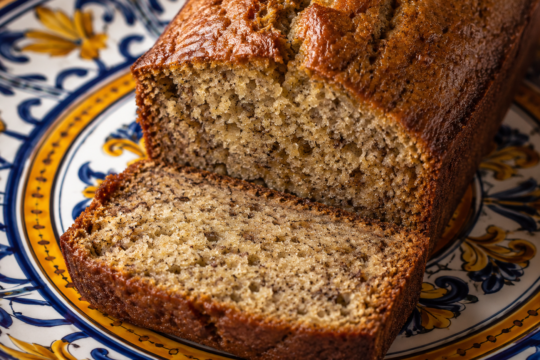
Banana Bread (Bizcocho de Plátano)
A Depression-era quick bread that transforms overripe bananas into something worth the overnight wait.
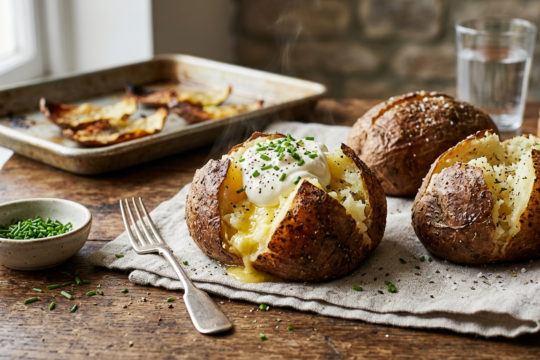
Baked Potatoes (Patatas Asadas)
The baked potato is pure technique — oven heat and time transform a raw starch into something fluffy and crisp-skinned that works as a meal on its own or a side for almost anything.
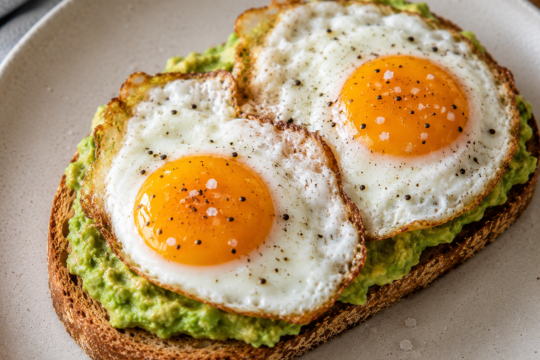
Avocado Toast (Tostada de Aguacate)
Ripe avocado, properly seasoned, on bread toasted until it can hold its weight. With a poached or Spanish fried egg on top, it becomes a complete meal.