The baked potato is pure technique — oven heat and time transform a raw starch into something fluffy and crisp-skinned that works as a meal on its own or a side for almost anything. Both regular and sweet potatoes covered here.
The baked potato is one of the oldest preparations of the potato in the Americas, where indigenous Andean peoples cooked tubers directly in hot coals for thousands of years before European contact. The modern oven-baked version became a staple across the English-speaking world in the 20th century — a simple, cheap, filling meal that required nothing but time. The sweet potato version, nutritionally distinct but cooked using similar methods, offers a completely different flavor profile: sweeter, denser, and more complex, caramelizing beautifully in the oven. Both are covered here, with the key differences in technique noted.
What You’re Learning
Convection cooking and the potato’s interior. A potato baked in a hot oven is cooked by hot air circulating around it — the exterior heats first, and that heat gradually penetrates toward the center. Large potatoes take longer not because they have more starch, but because the heat has further to travel. Piercing the skin lets steam escape so pressure doesn’t build. Rubbing the skin with oil and salt before baking serves two purposes: the oil helps the skin crisp, and the salt draws out surface moisture and seasons the skin directly.
The doneness check. A baked potato is done when the interior is completely soft — a skewer or thin knife should slide through with no resistance at the center. The skin should be dry and slightly crisp. Squeezing the sides gently with an oven-mitt-covered hand is the classic check — if it yields immediately and feels soft all the way through, it’s done. A potato that feels firm in the center needs more time, and there are no shortcuts.
Ingredients
- 4 large baking potatoes (Russet or King Edward) — or 4 medium sweet potatoes (or a mix)
- 1–2 tbsp olive oil or softened butter
- 1 tsp coarse salt or flaky sea salt
Instructions — Regular Baked Potato
- Preheat the oven to 220°C / 425°F / Gas 7. A hot oven is important for crisp skin. Skip the foil — wrapping in foil steams the skin and keeps it soft.
- Prepare the potatoes. Scrub the skins under cold water and dry thoroughly. Pierce all over with a fork — 8–10 times per potato, going deep into the flesh.
- Oil and salt the skin. Rub each potato all over with olive oil or softened butter. Sprinkle generously with coarse salt.
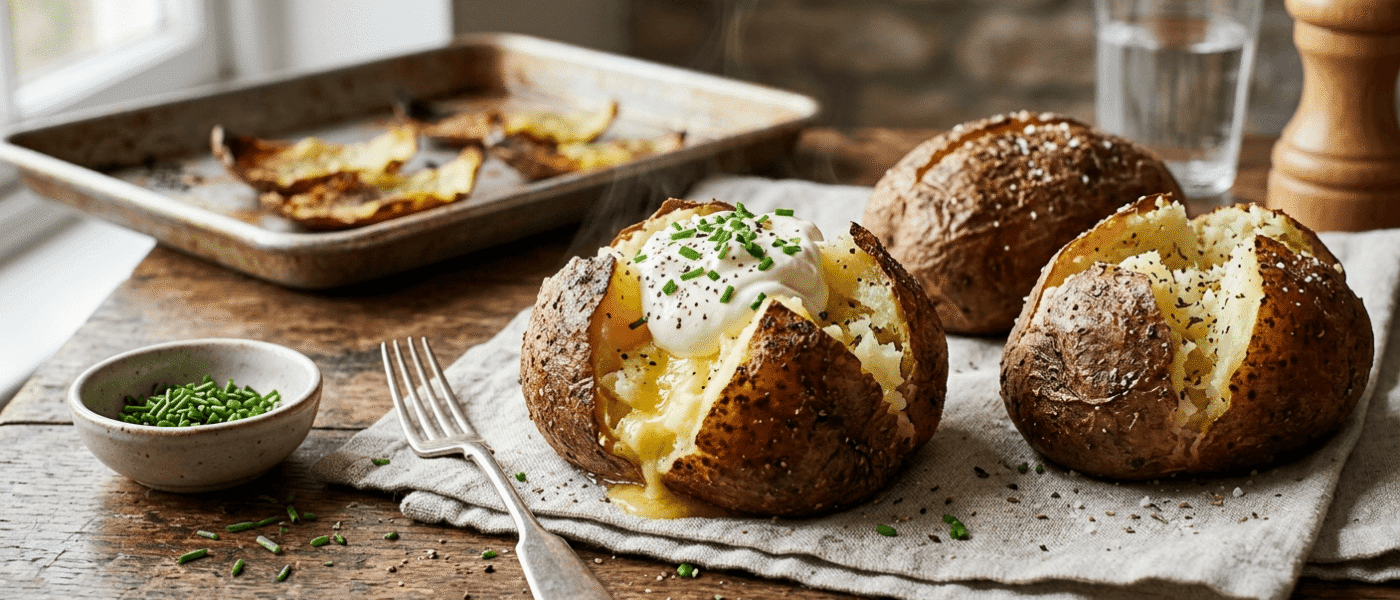
- Bake directly on the oven rack. Place potatoes on the oven rack (not a tray) so hot air circulates completely around them. Bake for 50–70 minutes depending on size.
- Check doneness. Squeeze gently with an oven mitt — if it yields easily and feels completely soft inside, it’s done. Or insert a thin skewer into the center: no resistance means done.
- Open and fluff. Cut a cross in the top and push the ends together to open it up. Fluff the interior with a fork. Add butter, sour cream, cheddar, chives, or whatever you like.
Instructions — Sweet Potato
- Preheat to 200°C / 400°F / Gas 6. Slightly lower than regular potatoes — sweet potatoes have more sugar and can overbrown on the outside before the center is done.
- Prepare and pierce. Scrub and dry the sweet potatoes. Pierce all over with a fork.
- Oil lightly. Rub with a small amount of oil.
- Bake on a lined tray. Place on a baking tray lined with foil — sweet potatoes weep sugar as they cook and will drip. Bake for 40–50 minutes until completely soft.
- Check and serve. A properly baked sweet potato will have wrinkled, soft skin and may have begun to caramelize where sugar has leaked out. Serve with butter and a pinch of salt, or with tahini and a drizzle of olive oil.
Notes
- No foil for regular potatoes. Wrapping in foil steams the skin, keeping it soft and leathery. Without foil, the skin dries and crisps — once properly baked and salted, it’s arguably the best part of the potato.
- Don’t rush with higher heat. Cranking the oven hotter results in a crisp skin over an undercooked interior. The heat needs time to penetrate all the way to the center.
- Microwave shortcut. Pierce and microwave on high for 5 minutes per side (10 min total) to cook through, then transfer to a 220°C oven for 15–20 minutes for crisp skin.
- Toppings for regular potatoes. Sour cream and chives · Cheddar and bacon · Baked beans · Chilli · Butter and salt alone.
- Toppings for sweet potatoes. Butter and cinnamon · Tahini and pomegranate · Black beans and sour cream · Maple syrup and pecans · Goat cheese and honey.