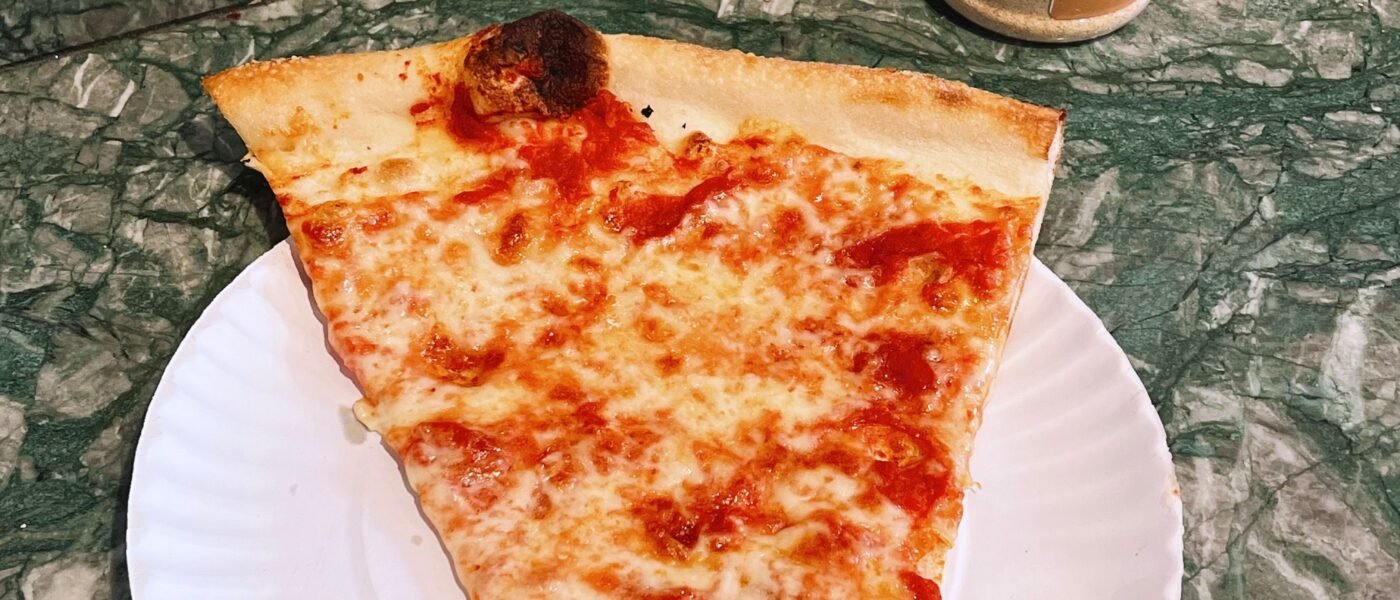
A great New York slice comes down to two things most recipes rush: how long the dough ferments, and how hot your oven actually gets. Both take patience. Neither takes skill you don’t already have.
This is a proper cold-fermented dough, the kind that takes two days more of waiting than doing, baked as hot as a home oven can manage on a preheated steel. The result is a thin, chewy, foldable slice, not a soft, bready crust.
What You’re Learning
Why a cold, slow ferment beats a fast one. Yeast doesn’t stop working in the fridge, it just slows way down. Over 24 to 72 hours, enzymes in the flour keep breaking starches into simple sugars the whole time, building real flavor complexity a same-day dough never gets the chance to develop. It’s the same principle behind our Baguette‘s overnight rest, just applied to a different dough and a different oven temperature.
Getting a home oven closer to pizzeria heat. A real pizzeria oven runs 800 to 900°F. A home oven tops out around 500 to 550°F, and that gap is most of the difference between a great slice and a mediocre one. A pizza steel, preheated a full 45 minutes, stores enough heat to blast the bottom of the dough the moment it lands, which is what produces char and a crisp base instead of a pale, floppy one. Skip the preheat and the steel is just a cold metal plate that hasn’t caught up yet.
Ingredients
Makes two 12-inch pizzas, serves 4.
- 3½ cups (420g) bread flour, plus more for dusting
- 1¼ tsp instant yeast
- 2 tsp salt
- 1 tbsp olive oil, plus more for the bowl
- 1⅓ cups (315ml) water, room temperature
- 1 can (28 oz) crushed tomatoes (San Marzano if available)
- 2 cloves garlic, minced
- 1 tsp dried oregano
- ½ tsp salt, for the sauce
- 1 lb low-moisture whole-milk mozzarella, shredded
- 2 tbsp grated Parmesan
- Cornmeal or semolina, for dusting the peel
Method
- Make the dough. Whisk the flour, yeast, and salt in a large bowl. Add the water and olive oil, mix with a wooden spoon or your hands until no dry flour remains. It will look shaggy, not smooth, that’s expected at this stage.
- Knead briefly. Turn the dough out onto a lightly floured counter and knead 5 minutes, until smooth and elastic. It should spring back slowly when poked.
- Cold ferment. Place the dough in a lightly oiled bowl, cover tightly, and refrigerate 24 to 72 hours. This is what actually builds the flavor, don’t shortcut it.
- Divide and rest. About 2 hours before baking, divide the dough into two balls, cover, and let come to room temperature. Cold dough tears instead of stretching.
- Make the sauce. Combine the crushed tomatoes, garlic, oregano, and salt. No cooking required, the oven does that work.
- Heat the oven. Place a pizza steel or stone on the top rack and preheat the oven as hot as it goes, 500°F (260°C) or higher, for at least 45 minutes. The steel needs real time to fully heat through, not just the air around it.
- Shape the dough. Press and stretch one ball into a 12-inch round, working from the center out and leaving a slightly thicker edge for the crust. Don’t use a rolling pin, it crushes out the air bubbles that make the crust light.
- Dust the peel. Scatter cornmeal or semolina on a pizza peel (or the back of a sheet pan) and transfer the dough onto it. This is what lets the pizza slide instead of stick.
- Top and launch. Spread a thin layer of sauce, leaving the border bare. Scatter mozzarella and Parmesan. Slide the pizza onto the hot steel with a quick, confident forward jerk.
- Bake. 8 to 12 minutes, until the crust is deeply spotted and the cheese is bubbling and browned in spots. Repeat with the second ball.
- Rest briefly. Let the pizza sit 2 minutes before slicing, the cheese needs a moment to stop being lava.
Notes
- Bread flour matters here. Its higher protein content builds more gluten, which is what gives a New York slice its chew and lets you fold it without it flopping.
- The cold ferment is the whole trick. A same-day dough works but tastes flat by comparison; 48 hours is the sweet spot for flavor without overdoing it.
- No pizza steel? A stone works, or even a heavy overturned sheet pan, though it won’t hold heat quite as well. Whatever you use, give it the full 45-minute preheat.
- Low-moisture mozzarella, not fresh. Fresh mozzarella carries too much water for this style and will make the pizza soggy, save it for a Neapolitan-style pie.
- Dough freezes well after the cold ferment. Portion it, oil lightly, and freeze up to 3 months; thaw overnight in the fridge before shaping.
- Leftover slices reheat best in a hot skillet, a few minutes covered, which re-crisps the bottom instead of turning it rubbery like a microwave does.