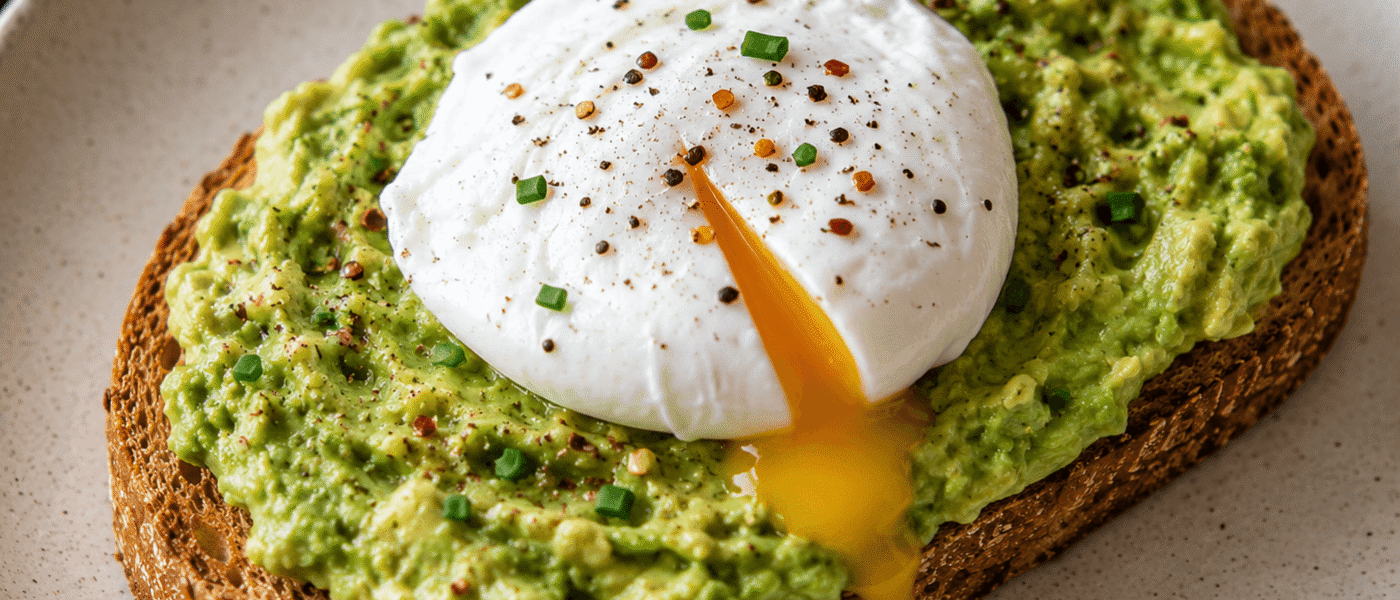
A well-poached egg is one of the cleaner tests of patience in the kitchen. The technique takes five minutes once you understand it.
Poaching is simply cooking an egg in hot liquid, without any fat or shell. The result is a white that is fully set and tender, wrapped around a yolk that is still warm and runny — a texture you cannot get any other way. French and British cooking both claim it as foundational, and it appears everywhere from eggs Benedict to simple broth-based dishes across Europe. The technique itself has not changed: gentle heat, a little acid, and the discipline not to rush it.
What You’re Learning
Temperature discipline — Poaching requires a simmer, not a boil. A vigorous boil tears the white apart before it can set; a gentle simmer barely moves, which is precisely what you want. Learning to hold a pan at a steady simmer carries into stocks, custards, and delicate fish.
Acid and protein chemistry — A small amount of vinegar in the water lowers the pH slightly, which causes egg white proteins to coagulate faster and at a lower temperature. This gives you a neater, more compact white. The effect is subtle but real — and it is the same principle behind why acidic marinades firm up protein before it even hits heat.
Ingredients
- 2 large eggs
- 1 tsp white wine vinegar or plain white vinegar
- Water, enough to fill a wide saucepan 3 inches deep
- Flaky sea salt and black pepper, to serve
Instructions
- Set up the water: Fill a wide saucepan or deep skillet with about 3 inches of water. Bring to a gentle simmer over medium heat — small bubbles rising steadily, not a rolling boil. Add the vinegar.
- Prep the eggs: Crack each egg into its own small cup, ramekin, or bowl. Lowering an egg from a cup gives you control; cracking directly into the water does not.
- Create a vortex (optional): Use a spoon to stir the water in a slow, wide circle. Lower the cup to just above the surface and slide the first egg into the center. The swirling water wraps the white around the yolk as it sets.
- Cook undisturbed: Let the egg cook without touching it — 3 minutes for a runny yolk, 4 minutes for a yolk that is mostly set. The white should be fully opaque and firm to a gentle touch.
- Remove and drain: Lift with a slotted spoon and hold it over the pan for a moment to drain. Blot the bottom lightly on a folded paper towel. Season with flaky salt and pepper. Serve immediately.
Notes
- Fresh eggs poach better: A fresh egg has a tighter white that holds together. An older egg’s thinner white spreads more. Both will poach; fresh just looks better.
- The vortex is a nice-to-have: It helps shape the white, but gentle heat matters far more than the swirl.
- Cooking multiple eggs: Possible to poach two or three at once in a wide pot, but crowding cools the water and the whites can merge. Poach in batches of two for best results.
- Make ahead: Hold poached eggs in cold water in the fridge for up to two days. To serve, lower into hot (not boiling) water for 30–60 seconds to warm through.
- Serving suggestions: On buttered toast, over wilted greens, on a bowl of warm grains, or on avocado toast for something more substantial.