A proper beef stew doesn’t take skill — it takes attention at the right moments, and patience for the rest.
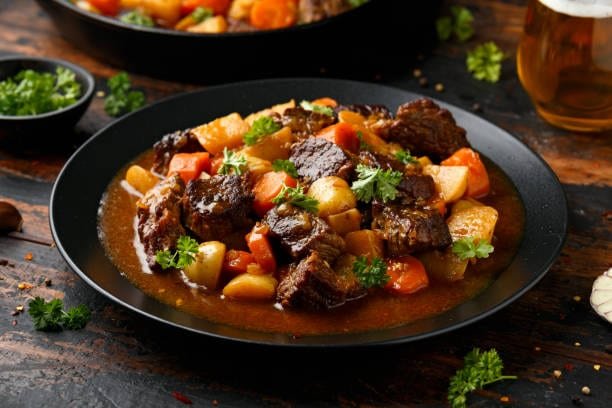
Carne guisada — literally “cooked meat” — is one of the oldest preparations in Spanish home cooking, predating written recipes. Every region has a version: Asturian stew heavy with potatoes, Andalusian versions bright with saffron, Basque ones thickened with almonds. What they share is a common logic: tough, collagen-rich beef cuts cooked long and slow in liquid with vegetables and aromatics until the meat yields completely and the sauce becomes something the spoon stands up in. This version is the central Castilian approach — olive oil, paprika, wine, bay, root vegetables, nothing more. It is humble and exactly right.
What You’re Learning
Choosing the right cut — Stew only works with tough, collagen-rich cuts: chuck, short rib, shin, brisket. Lean cuts like sirloin or round will cook dry and stringy in long heat. The fat and connective tissue in chuck is not a flaw — it is the mechanism that produces the tender, glossy result you’re after. If your butcher offers “stew beef,” look at what it actually is. If it looks lean, ask for chuck instead.
Building in stages — A stew built in stages — sear, soften aromatics, add liquid, braise — produces a fundamentally different result than everything dumped in a pot and boiled. Each stage contributes something the others can’t: the sear builds fond and Maillard flavor; the softened aromatics build the base; the wine deglaze integrates both; the long braise does the collagen work. Missing a stage means missing a layer of the final dish.
Ingredients
- 2 lbs (900g) beef chuck, cut into 1.5-inch cubes
- 2 tsp salt, plus more to taste
- 1 tsp black pepper
- 3 tbsp extra-virgin olive oil
- 1 large yellow onion, diced
- 4 cloves garlic, minced
- 2 medium carrots, cut into large chunks
- 2 medium waxy potatoes, cubed
- 2 tbsp tomato paste
- 1 tsp sweet paprika (Pimentón dulce)
- 1/2 tsp smoked paprika (Pimentón de la Vera)
- 3/4 cup dry red wine
- 2 cups beef stock
- 2 bay leaves, plus fresh parsley to finish
Instructions
- Season the beef. Pat the chuck cubes completely dry with paper towels. Season all over with salt and pepper.
- Sear in batches. Heat the olive oil in a heavy Dutch oven or pot over high heat. Add the beef in a single layer — do not crowd — and sear for 2–3 minutes per side until deeply browned on at least two surfaces. Work in batches. Remove and set aside.
- Soften the aromatics. Reduce heat to medium. Add the onion and cook for 5 minutes, stirring occasionally, until softened and translucent. Add the garlic and cook 1 more minute.
- Build the base. Add the tomato paste and stir around the pan, cooking for 2 minutes until it deepens to a rust color. Add both paprikas and stir to coat the aromatics.
- Deglaze. Pour in the wine and scrape the bottom of the pot thoroughly to dissolve all the fond. Let it bubble and reduce by half, about 3 minutes.
- First braise. Return the beef to the pot. Add the stock and bay leaves — the liquid should come about halfway up the meat. Bring to a gentle simmer, cover, and cook on low heat for 45 minutes.
- Add vegetables. Add the carrots and potatoes. Cover and continue cooking for 30–40 minutes more, until the beef is fork-tender and the vegetables are cooked through.
- Finish. Discard the bay leaves. Taste and adjust salt. If the sauce needs more body, simmer uncovered for 5–10 minutes. Finish with fresh parsley and serve in deep bowls with crusty bread.
Notes
- The cut matters most: Chuck will give you a tender, glossy stew. Lean beef will give you shoe leather. Do not substitute.
- Browning in batches is non-negotiable: A crowded pan drops in temperature and steams the beef grey instead of searing it brown. Give each piece contact with the pan. The extra 10 minutes at the start pays back tenfold in the final dish.
- Add vegetables late: Potatoes and carrots added at the start of a 90-minute braise will dissolve into mush. Adding them at the 45-minute mark gives them enough time without overcooking.
- Done when: A piece of beef offers no resistance to a fork and the sauce coats a spoon cleanly. If the beef still feels firm or fibrous, cover and cook another 15–20 minutes.
- Next-day rule: Like all braises, this stew is better the day after the flavors have fully integrated and the fat has solidified on the surface for easy removal. Make it a day ahead whenever possible.
- Serving: Serve in deep bowls with crusty bread for the sauce. Goes well with a glass of whatever red wine went into the pot.