The Spanish grandmother’s method — low heat, good olive oil, and patience. No thermometer, no double-fry. Just one pan done right.
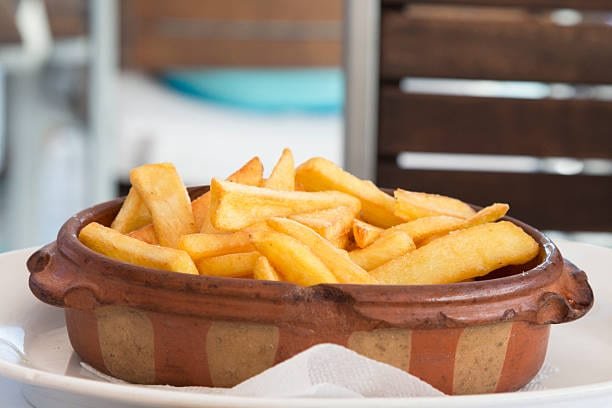
Patatas fritas — Spanish fried potatoes — are the ancestral version of French fries, and they predate the double-fry technique by centuries. Where the Belgian and American approach optimizes for structural crispness through precise temperature control, the Spanish method relies on olive oil and a gentler process: starting the potatoes cold in the oil, heating slowly together, and allowing the potato to confit before the exterior crisps. The result is completely different — a potato that is almost creamy inside with a crunchy, slightly blistered exterior that carries the grassy, peppery flavor of good olive oil. It is not interchangeable with a French fry. It is its own thing, and it has been on Spanish tables for four hundred years.
What You’re Learning
The cold-start method. Starting potatoes in cold oil with the heat rising gradually is the inverse of standard frying. As the oil heats, the potato interior cooks slowly through steam and gentle conduction before the exterior temperature reaches the crisping threshold. This mimics a confit — the potato effectively poaches in its own moisture while the oil temperature climbs. The result is an interior that is fully cooked and almost silky before the outside browns.
Olive oil as a flavor ingredient. Using extra virgin olive oil for frying is unusual in most culinary traditions because of its lower smoke point. But the temperature this method uses stays well within EVOO’s safe range — and its flavor compounds survive to penetrate the potato exterior. The result tastes of olive oil in a way that neutral-oil frying never achieves. The quality of the oil is directly proportional to the quality of the final dish.
Ingredients
- 4 large starchy potatoes (Russet or Yukon Gold), peeled
- 2 cups / 480ml high-quality extra virgin olive oil
- Coarse sea salt, to taste
Instructions
- Prep the potatoes. Cut into 1-inch rough cubes or thick, rustic wedges — not thin strips. The size is part of the technique.
- Soak. Soak the cut potatoes in a bowl of cold, salted water for 30 minutes to draw out excess starch. Drain well and dry them completely with a clean kitchen towel. Any surface moisture will cause the oil to spatter.
- Cold-start fry. Place the dried potatoes into a deep, heavy-bottomed pan or skillet. Pour the olive oil over the potatoes — they should be mostly submerged. Do not heat the oil first.
- Heat gently. Turn the burner to medium heat. Let the potatoes and oil heat up together slowly. You are not looking for aggressive bubbling — a gentle, steady sizzle is correct.
- Cook until golden. Allow them to cook in the gently bubbling oil for 20–25 minutes, moving them occasionally with a wooden spoon to ensure even color. Once they are golden brown and crispy on the outside, remove with a slotted spoon.
- Drain and season. Transfer to a paper towel-lined plate, sprinkle immediately and generously with coarse sea salt, and serve hot.
Notes
- Oil quality is everything. Use the best extra virgin olive oil you can. A grassy, peppery Spanish EVOO (Arbequina or Picual) is traditional and gives the most characteristic flavor.
- Don’t rush the heat. The slow heat rise is the technique. Turning the heat up high defeats the purpose and will brown the outside before the inside is cooked through. Medium heat and patience.
- Rustic chunks, not strips. The thick cut creates the textural contrast — creamy interior, crunchy crust — that defines this dish. Thin strips would fry through too quickly on this method.
- Reuse the oil. After cooling, strain the potato-infused olive oil through a fine mesh strainer and store it in a jar. It’s excellent for sautéing vegetables, dressing salads, or cooking eggs.
- Serving. Classic accompaniments: bravas sauce (spicy tomato), alioli (garlic mayonnaise), or simply flaky salt. Serve immediately — patatas fritas do not hold well.