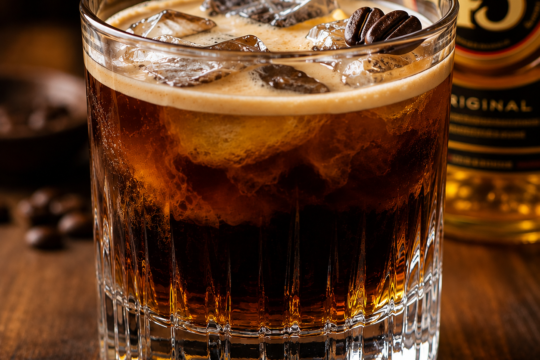
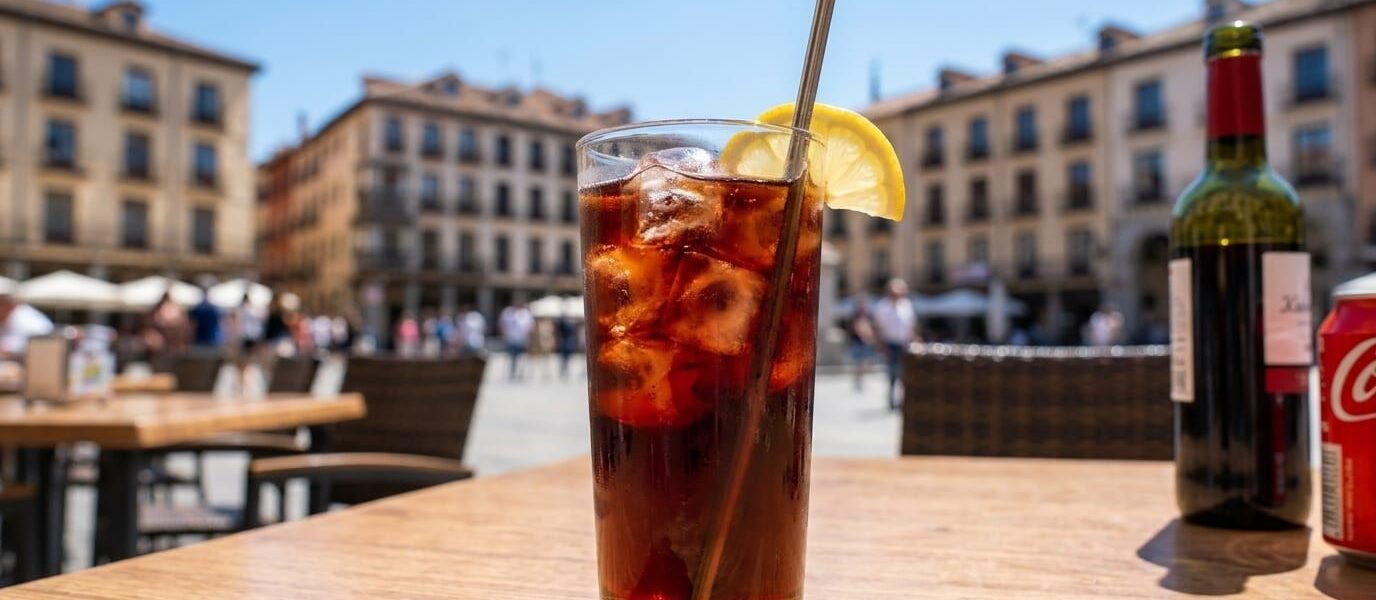
Kalimotxo is red wine and Coca-Cola, half and half, over a glass full of ice. That’s the whole recipe. It was born at a summer fiesta in Getxo, near Bilbao, in 1972, when the wine that had been bought for the festival turned out to be bad. Instead of pouring it out, the volunteers running the bar mixed it with cola, and the Basque Country has been drinking it ever since. In the rest of Spain it’s spelled calimocho, and it’s the drink of street parties, summer festivals, and anyone who has a bottle of red that isn’t good enough to sip on its own.
If you like long, cold drinks built on wine, it belongs next to Tinto de Verano and Sangria. It’s the easiest of the three. No fruit to cut, nothing to soak overnight, two bottles and a glass.
What You’re Learning
Sugar and acid soften tannin. Cheap young red wine is often harsh: a dry, puckering grip from tannin and a sharp edge from acid. Cola brings sugar, which rounds off that grip, plus its own acidity and spice notes like vanilla and cinnamon that line up with the fruit in the wine. Together they taste smoother than either one alone. It’s the same reason a spoonful of sugar can fix a tomato sauce that tastes too sharp.
Cold changes how a drink tastes. The colder a drink is, the less you notice bitterness and alcohol. That’s why kalimotxo is always served over a full glass of ice with both bottles straight from the fridge. Warm, it tastes like flat wine soda. Ice cold, it tastes crisp and fizzy. Chilling everything first also means the ice melts more slowly, so the drink doesn’t go watery halfway down the glass.
Ingredients
- 4 oz dry red wine, chilled (a young Spanish Garnacha or Tempranillo, nothing expensive)
- 4 oz Coca-Cola, well chilled (the regular, full-sugar kind)
- Plenty of ice cubes
- 1 lemon wedge (optional)
Method
- Chill everything. Put the wine and the cola in the fridge for at least two hours before you mix. Both should be cold before they ever touch the ice.
- Fill the glass with ice. Pack a tall highball glass to the top with ice cubes.
- Pour the wine. Measure the wine with a jigger and pour it over the ice. It should come about halfway up the glass.
- Top with cola. Open the cola right before you use it. Hold a bar spoon in the glass and pour the cola gently down the handle so it slides in without foaming up and losing its fizz.
- Finish and serve. Squeeze the lemon wedge over the drink and drop it in, give it one slow lift from the bottom with the spoon to mix, and serve right away.
Notes
- Don’t use good wine. This is the drink for the cheap bottle. A fruity, young red with no oak works best. Expensive, oaky wines turn muddy and bitter with cola.
- Use real Coke. Diet and zero-sugar colas don’t have the sugar that smooths out the wine, so the drink comes out thin and sharp. In Spain it’s almost always Coca-Cola.
- Adjust the ratio to taste. Equal parts is the classic. If your wine is very rough, go a little heavier on the cola. If you want it drier, go a little heavier on the wine.
- Making it for a crowd? Mix it in the glass, not in a pitcher. Cola goes flat fast once it’s poured, so build each drink as you serve it.
- The fiesta way. At Basque festivals it’s mixed right in the bottle: pour out half the wine, top the bottle up with cola, put your thumb over the top, and tip it gently once. Then share it.