Negroni
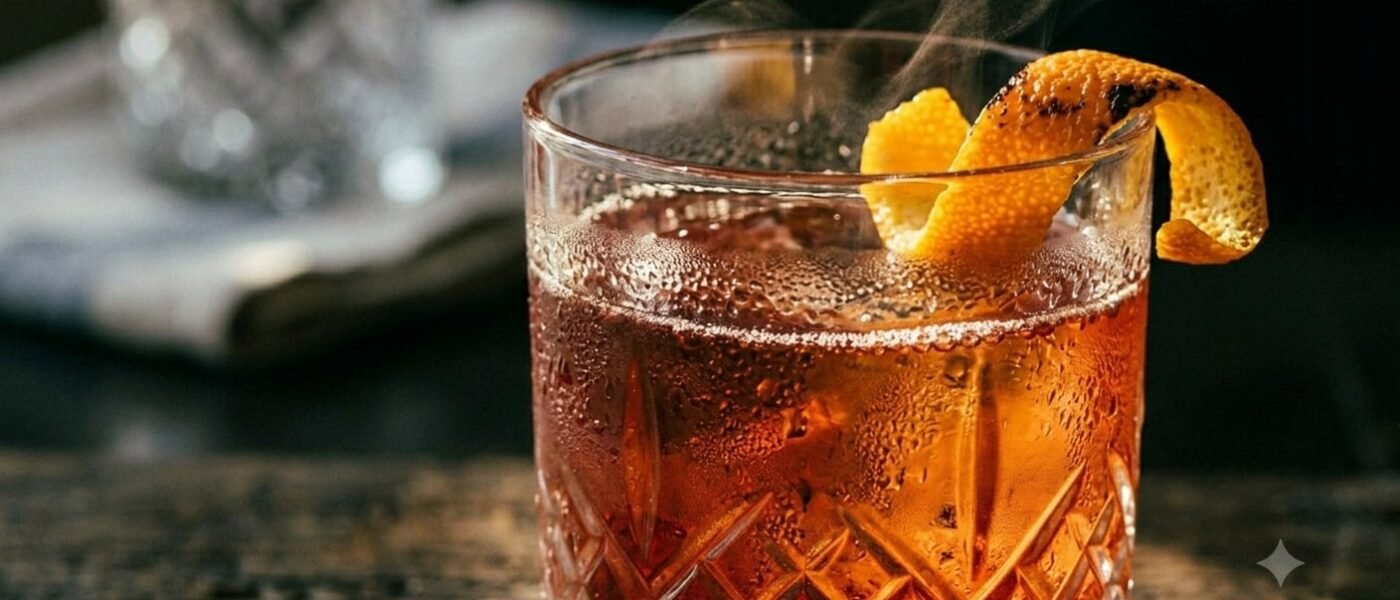
The Negroni is one of the few cocktails where the formula is the entire recipe: equal parts gin, Campari, and sweet vermouth. Once you understand why equal parts works here, you can start to modify it — swap the gin for bourbon (that’s a Boulevardier), adjust the ratios, try different amari. But first, make it exactly as written.
What You’re Learning
Most cocktails use a dominant spirit with modifying elements. The Negroni treats all three components as equals because each one has a specific job. Gin provides botanical complexity and alcohol backbone. Campari contributes bitterness and color. Sweet vermouth adds sweetness and herbal notes that bridge the other two. Remove or reduce any one of them and the balance collapses — the bitterness overwhelms, the sweetness smothers, or the alcohol sticks out unpleasantly.
This drink gets stirred, not shaken, because shaking aerates it — tiny bubbles cloud the liquid and change the texture. A Negroni should be clear and silky. Stir with a long bar spoon and large ice in a mixing glass for about 30 seconds, or until the outside of the glass is very cold. The dilution from stirring is intentional — it integrates the ingredients and softens the alcohol without changing the clarity.
Ingredients
- 1 oz gin
- 1 oz Campari
- 1 oz sweet vermouth (Carpano Antica or Dolin Rouge)
- 1 large ice cube, for serving
- Orange peel, for garnish
Method
- Combine gin, Campari, and sweet vermouth in a mixing glass with ice.
- Stir steadily for 25–30 seconds, until the outside of the mixing glass is very cold to the touch.
- Strain over a large ice cube into a rocks glass.
- Express an orange peel over the glass: hold it skin-side down, squeeze sharply to release the oils, then twist and drop it in.
Notes
- Gin choice matters. Use one you’d drink on its own. London Dry (Tanqueray, Beefeater) works well. Avoid heavily flavored gins — they fight with the Campari.
- Store opened vermouth in the fridge and use within a month. Oxidized vermouth is the most common reason a Negroni tastes flat or medicinal.
- Campari is not optional. Aperol is sweeter and less bitter — it makes a different drink. A Negroni made with Aperol is an Aperol Spritz ingredient, not a Negroni.
- The Boulevardier is the same recipe with bourbon instead of gin. If you don’t love gin, try that version first — it’s warmer and more approachable.
- Batch it: multiply by 10 and refrigerate. Stir over ice to order when serving. Negronis batch well because there’s no citrus to oxidize.
More at This Level
Rebujito
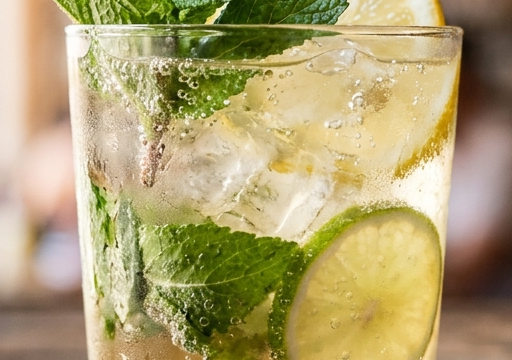
Dry sherry and lemon-lime soda over ice, finished with bruised mint. Seville's actual Feria pour, built in the glass in under two minutes.
Vermut (Spanish Vermouth on the Rocks)
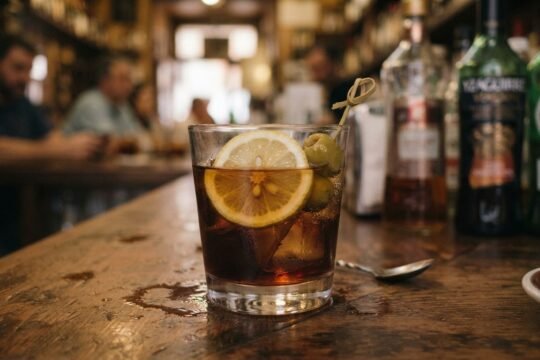
Spain's pre-lunch ritual: red vermouth poured over ice with a slice of citrus and an olive, served with something salty on the side. No shaker, no recipe to memorize, just la hora del vermut.
Daiquiri
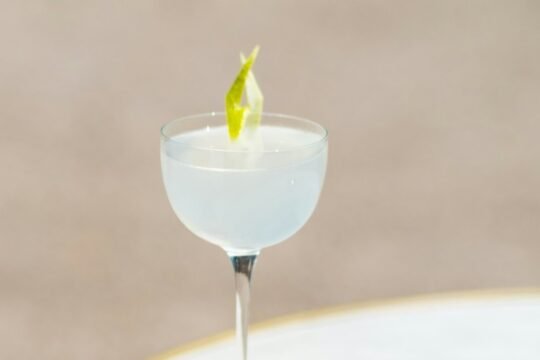
White rum, fresh lime juice, and simple syrup, shaken hard and strained up into a chilled glass. The Daiquiri is the original template every great sour cocktail borrows from — three ingredients, one ratio, no shortcuts.
More 🌍 Old World
Carajillo
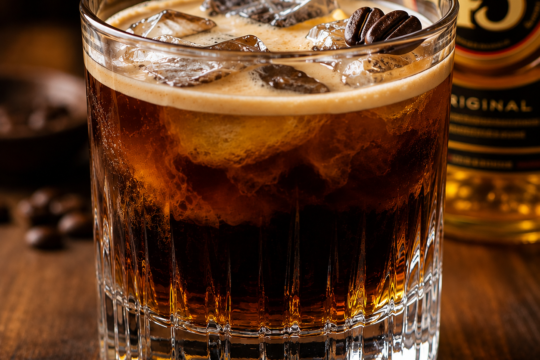
The modern iced carajillo: Licor 43 and hot espresso shaken hard over ice until the top turns foamy, then poured over fresh ice. Ready in five minutes, no bar tools beyond a shaker.

Hot Toddy
Whisky, honey and fresh lemon topped with hot water, in a warmed glass with a clove-studded lemon wheel and a cinnamon stick. The easiest warm drink there is, ready in five minutes.
Vermut (Spanish Vermouth on the Rocks)
Spain's pre-lunch ritual: red vermouth poured over ice with a slice of citrus and an olive, served with something salty on the side. No shaker, no recipe to memorize, just la hora del vermut.