
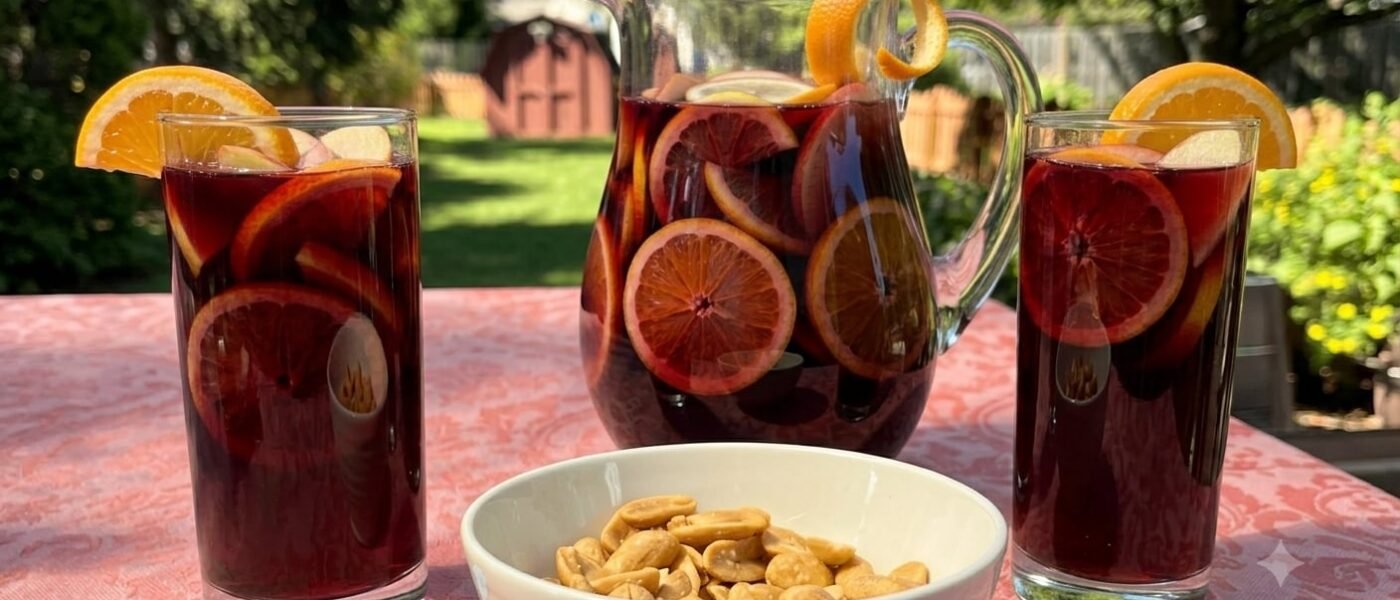
Sangria
Sangria is a pitcher drink, not a glass drink. That distinction matters. It’s designed to be made ahead, to sit in the fridge overnight, and to be served to eight people without anyone measuring anything twice. The version most people have had — wine dumped over ice with a few orange wheels — is missing the step that makes it worth making: the maceration.
What You’re Learning
Maceration is what happens when fruit sits in alcohol overnight. The alcohol pulls the oils and sugars out of the citrus peel and the flesh of the cut fruit, and those flavors diffuse into the wine. By morning, you don’t have wine with fruit in it — you have something that tastes like it was made that way from the start. The brandy accelerates this process and adds backbone that wine alone can’t provide. Skip the overnight rest and you have a serviceable party drink. Wait, and you have the real thing.
The wine matters, but not in the way you’d expect. Use a Spanish red — Garnacha, Rioja, or Tempranillo — that’s fruity and not too tannic. Don’t use anything expensive. The brandy and citrus change the wine significantly; spending more than $15 on the bottle is wasted. What you’re looking for is body and fruit, not complexity. A wine you’d drink by the glass but wouldn’t think twice about pouring into a pitcher.
Ingredients
Makes one pitcher, serves 8. Scale up freely.
- 1 bottle (750 ml) Spanish red wine (Garnacha, Rioja, or Tempranillo)
- 2 oz (60 ml) brandy
- 2 oz (60 ml) fresh orange juice (about 1 orange)
- 1 oz (30 ml) simple syrup (or 2 tbsp sugar, stirred to dissolve)
- 1 orange, sliced into rounds
- 1 lemon, sliced into rounds
- 1 apple, cored and cut into thin wedges
- Club soda or sparkling water, to top — about 8 oz when serving
Method
- Combine wine, brandy, orange juice, and simple syrup in a large pitcher. Stir to combine.
- Add the sliced citrus and apple. Press the fruit down into the wine so it’s submerged.
- Cover and refrigerate for at least 4 hours, ideally overnight. 8 hours is noticeably better than 4. 24 hours is the best.
- To serve: fill glasses with ice. Pour sangria over (include some of the fruit). Top each glass with a splash of club soda. Serve immediately.
Notes
- Don’t skip the fridge time. Thirty minutes doesn’t do it. The maceration needs at least 4 hours to work. Make it the night before.
- The club soda goes in at serving, not before. Add it to the pitcher early and it goes flat in the fridge. Add to each glass individually at the last moment.
- Adjust sweetness at the end. Taste before serving — how sweet it is depends on the wine. Add a bit more simple syrup if needed, or squeeze a little extra lemon to bring the acid up.
- White sangria: use a dry white (Albariño, Verdejo, or Pinot Grigio), replace the brandy with Cointreau or triple sec, and use peaches, nectarines, and grapes instead of apple. Same method, same overnight rest.
- The fruit is edible after macerating and worth eating — it absorbs the wine and brandy and gets significantly better than it started.
More at This Level

Manhattan
Rye whiskey, sweet vermouth, and bitters, stirred cold and strained up into a chilled glass. The Manhattan is proof a great cocktail doesn't need more than three ingredients, just the right ratio and the patience to stir it properly.
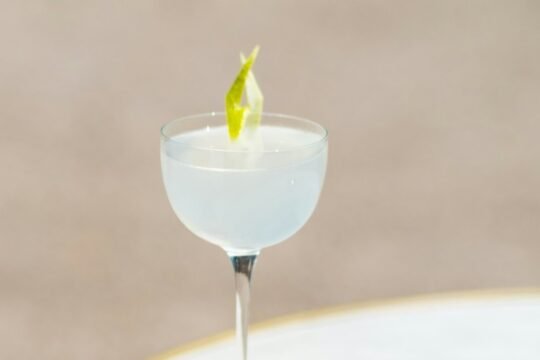
Daiquiri
White rum, fresh lime juice, and simple syrup, shaken hard and strained up into a chilled glass. The Daiquiri is the original template every great sour cocktail borrows from — three ingredients, one ratio, no shortcuts.

Whiskey Sour
Bourbon, fresh lemon, and simple syrup, shaken hard and strained over ice. The Whiskey Sour is the sour formula in its cleanest form, and the ratio it teaches shows up in half the cocktail menu.
More 🌍 Old World

Negroni
Equal parts gin, Campari, and sweet vermouth — stirred, not shaken. The Negroni is one of the few cocktails where understanding the formula is the entire lesson.
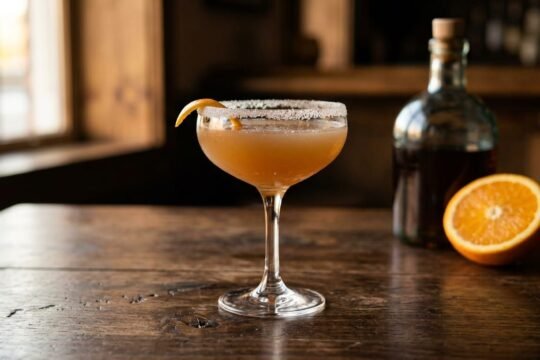
Sidecar
Brandy, orange liqueur and fresh lemon, shaken hard and strained into a sugar-rimmed coupe. A 1920s classic, made here with Spanish brandy de Jerez for a rounder, richer drink.
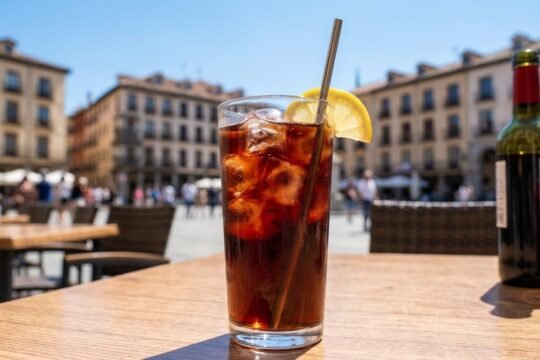
Kalimotxo (Red Wine and Coke)
The Basque Country's favorite fiesta drink: equal parts cheap red wine and cold cola over plenty of ice, with a squeeze of lemon. It sounds wrong and tastes great.