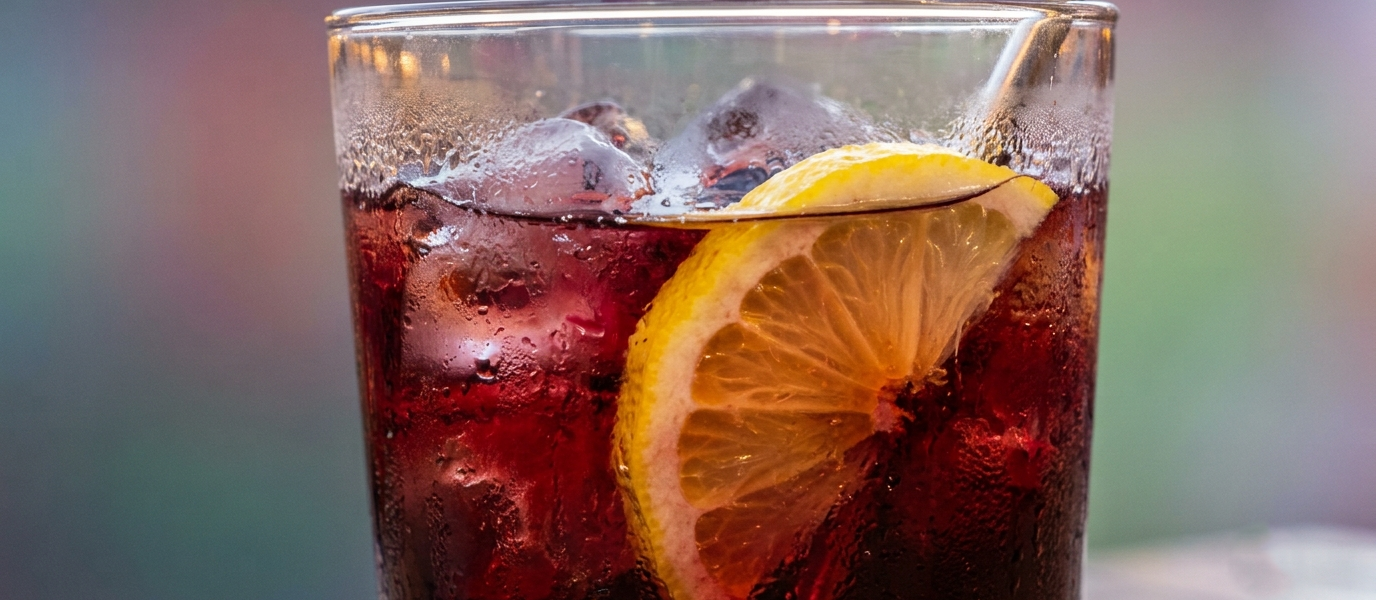
Ask a bartender in Madrid for a sangria in July and you’ll get a tourist’s drink. Ask for a tinto de verano and you’ll get what everyone else at the table is actually having: red wine and cold lemon soda over ice, built in seconds, no overnight wait required. It’s the everyday drink; sangria is the party punch.
What You’re Learning
The ratio is 1:1, red wine to lemon soda, and that’s the entire technique. There’s no maceration, no fruit steeping overnight, no shaker. The soda does two jobs at once: it dilutes the wine so it’s genuinely refreshing over ice on a hot day, and its carbonation and acidity lift the wine’s fruit instead of just watering it down. This is why a splash of plain water or club soda doesn’t work as a substitute — you need the sweetness and citrus that a lemon-lime soda brings.
Wine choice matters here in the opposite way you’d expect: a big, tannic, expensive red gets muddled and bitter once it’s cut with soda. You want a young, fruity, low-tannin red, the same category of easy-drinking Spanish red used for sangria. Serve it cold, over plenty of ice, in a short tumbler, and drink it within the hour. It’s not a make-ahead pitcher drink like sangria; it’s built to order, glass by glass.
Ingredients
- 4 oz Spanish red wine (Garnacha, Tempranillo, or Rioja), chilled
- 4 oz lemon-lime soda or lemon soda (chilled)
- Ice
- 1 lemon slice or wedge, for garnish (optional)
Method
- Fill a short tumbler or rocks glass with ice.
- Pour in the chilled red wine.
- Top with an equal amount of chilled lemon-lime soda.
- Give it one gentle stir, just enough to combine without losing the fizz. Garnish with a lemon slice.
Notes
- The 1:1 ratio is a starting point, not a law. Some people prefer it two parts wine to one part soda for a stronger pour. Start even and adjust to taste.
- Use a cheap, fruity red. The same bottle you’d use for sangria works here. Save anything you’d drink on its own for drinking on its own; soda flattens nuance you paid for.
- Lemon-lime soda beats plain club soda. You need the sweetness and citrus. Sparkling water alone makes the wine taste thin rather than refreshing.
- Serve it built to order, not batched. Unlike sangria, tinto de verano loses its fizz fast once mixed. Make it glass by glass, right before drinking.
- A cava-soda version exists too. Swap the red wine for a dry white or rosé and you get a lighter variation still built on the same 1:1 idea.