4 min
Barely Set
Runny, translucent white
Fully liquid yolk
Shakshuka · Adding to broth
 Tools & Table
Eight stages from barely set to fully hard — so you know exactly when to pull them.
Eggs straight from the fridge (cold). Add 1 minute for very cold eggs; subtract 30 sec for room-temperature eggs.
Times are for large eggs (UK M/L, US Large). Add 1–2 min for extra-large or jumbo; subtract 1 min for medium.
Lower eggs into already-boiling water. Start timing immediately. Transfer to an ice bath the moment time is up to stop cooking.
Above 1,500m / 5,000ft? Water boils at a lower temperature — add 1–2 minutes to each time.
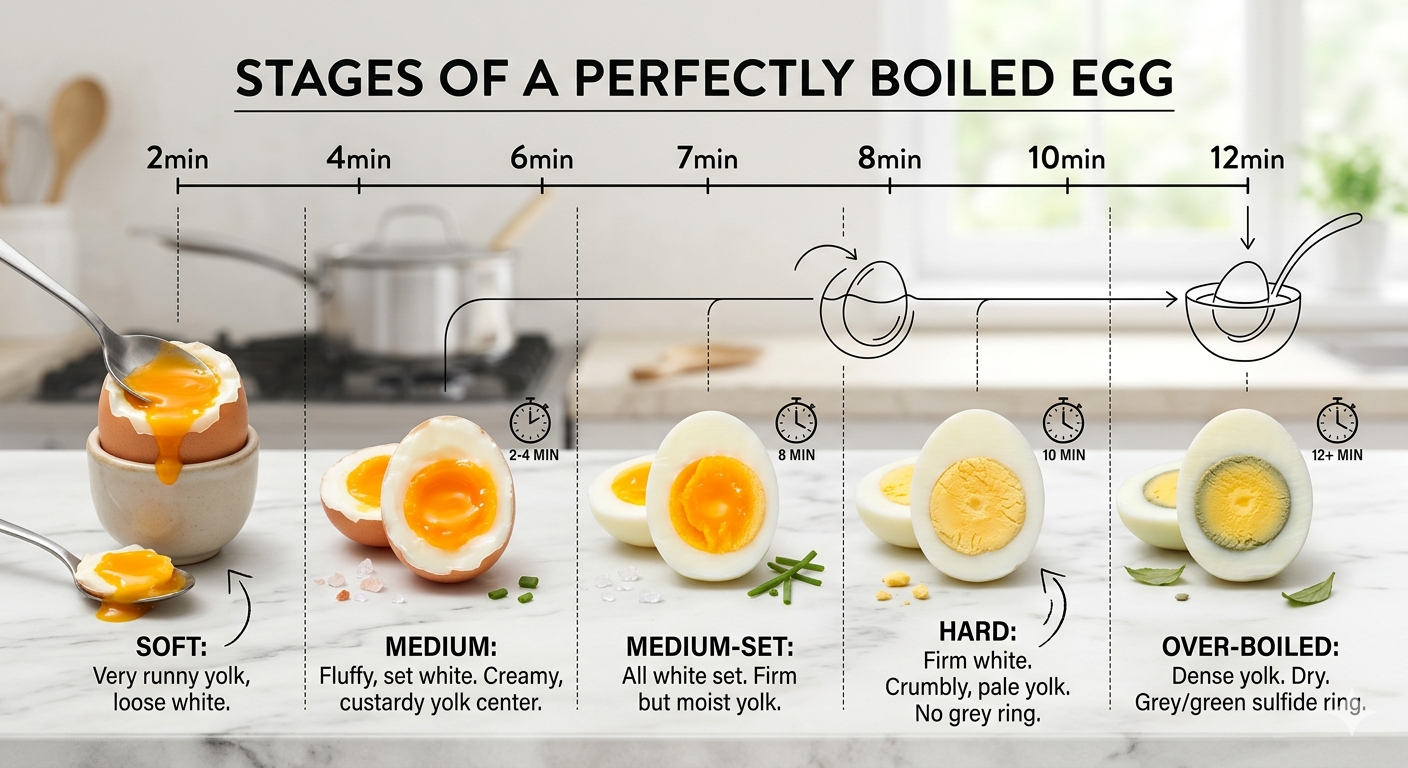
4 min
Barely Set
Shakshuka · Adding to broth
5 min
Soft
Eggs Benedict · Soft dippy
6 min
Dippy
Soldiers · Dippy egg toast
7 min
Jammy
Salads · Grain bowls
8 min
Ramen Egg
Ramen · Soy-marinated
9 min
Almost Hard
Sandwiches · Snacking
11 min
Hard
Egg salad · Devilled eggs
13 min
Fully Hard
Pickling · Slicing
Transfer immediately to a bowl of ice and cold water. Leave for at least 2 minutes. This stops cooking and makes the shell peel more easily.
Peel under cold running water or submerged in the ice bath. Start at the wide end where the air pocket is — the shell releases more easily there.
Hard-boiled eggs keep unpeeled in the fridge for up to 1 week. Soft or jammy eggs: store peeled in cold water for up to 2 days.
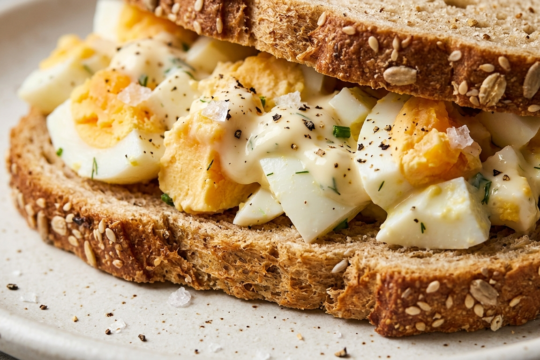
Hard-boiled eggs, mayonnaise, Dijon, and fresh chives. The technique that matters most happens before the mixing bowl: how you boil and cool the eggs.
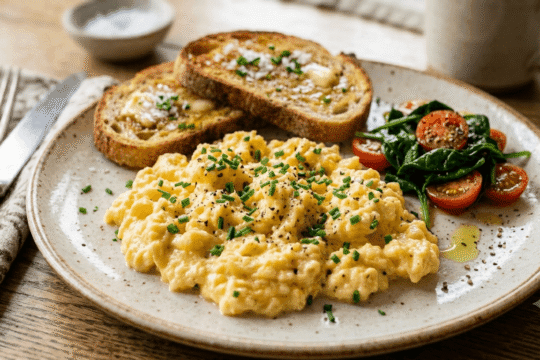
The French method for scrambled eggs: low heat, constant movement, pulled from the pan before they look done. Same eggs. Completely different result — silky, custardy, nothing like what most people make.
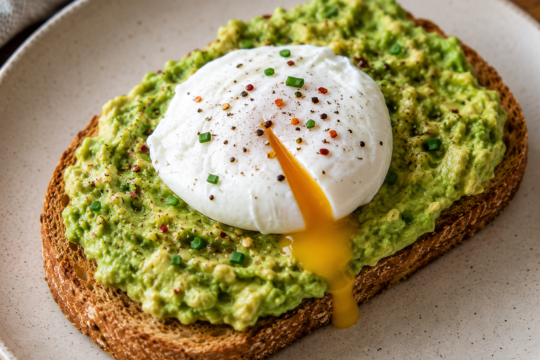
Gentle heat, a splash of vinegar, and a little patience. Poaching is one of the most useful egg techniques to learn — and once you have it, you use it constantly.
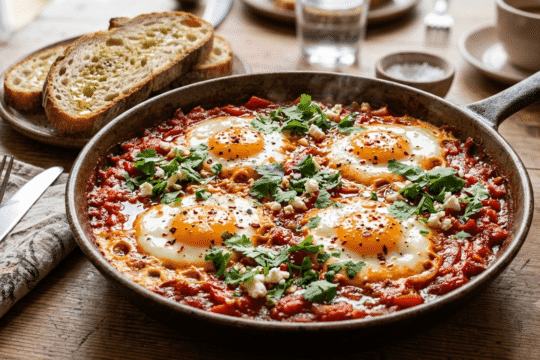
Eggs poached in a spiced, garlicky tomato and pepper sauce. One pan, thirty minutes, and a dinner that looks far more deliberate than it is.
Or let the next recipe come to you. Early access, before it hits the site. Free.
Sign up and get a free Kitchen Starter Cheat Sheet: conversions and knife cuts, straight to your inbox. Then every week, next week's recipe lands first, before it's live on the site. English or Spanish.