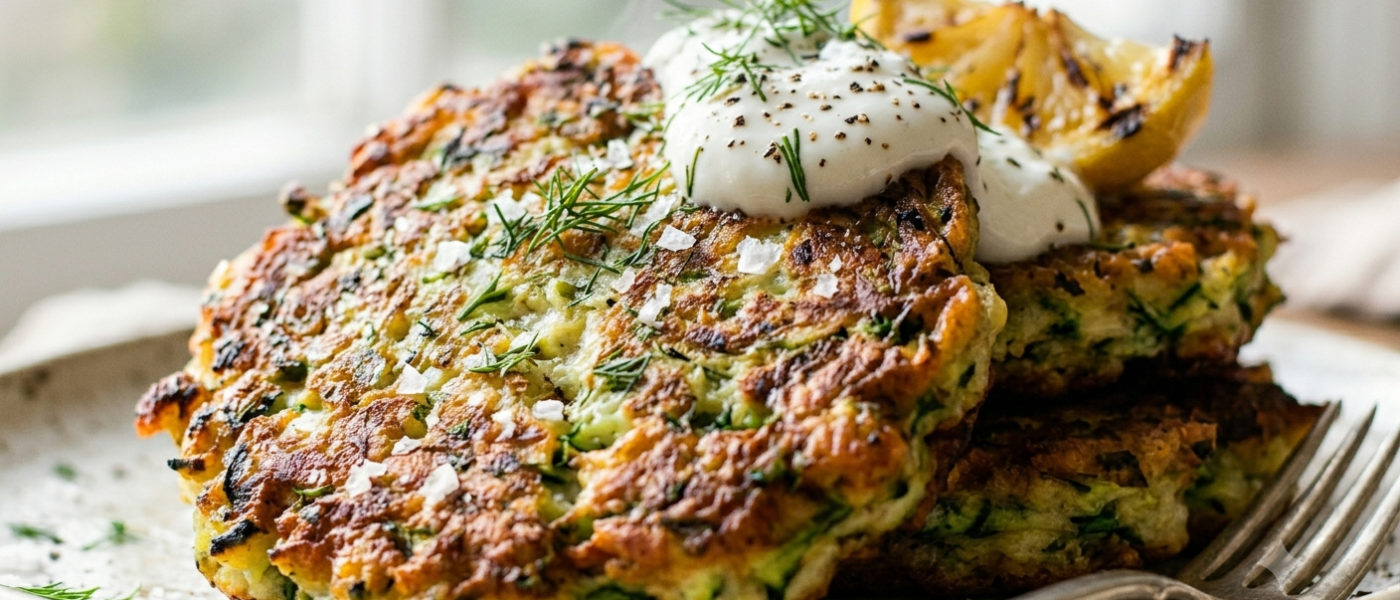
Zucchini fritters fail for one reason: the zucchini is too wet. The squeeze step is not optional — it’s the whole technique. Get that right and the rest is straightforward.
Zucchini is roughly 95% water. When you grate it and put it in a hot pan, that water turns to steam before the surface has a chance to brown. You end up with a pale, soggy patty that falls apart when you try to flip it. The fix is to draw out and remove as much of that moisture as possible before the zucchini goes anywhere near a pan. Salt the grated zucchini and let it sit for ten minutes — the salt pulls water to the surface through osmosis — then squeeze hard with a kitchen towel. The difference in volume is dramatic. What goes into the bowl is a compact, almost dry pile of grated zucchini that binds easily, holds its shape, and browns on contact with a hot pan.
What You’re Learning
Moisture extraction and the Maillard reaction. The Maillard reaction — the browning of proteins and sugars that creates flavor and texture — requires the surface temperature to reach above 300°F (150°C). Water prevents this: it keeps the surface temperature at 212°F (100°C) until it evaporates. Any food with excess surface moisture will steam before it browns. This is why a wet steak turns gray instead of searing, and why soaked zucchini produces a pale, flabby fritter. Salting draws moisture out via osmosis: the salt creates a concentration gradient across the cell walls, pulling intracellular water outward. Squeezing removes the drawn-out water mechanically. The result is a drier surface that heats past the boiling point quickly and starts browning almost immediately when it hits the pan.
Binder ratios and structure. A fritter binder — egg, flour, cheese — holds the grated vegetable together through two mechanisms: the egg proteins coagulate when heated and form a matrix around the zucchini strands; the flour absorbs remaining moisture and provides structure. Too much flour makes fritters dense and bready; too little and they fall apart. The ratio here — roughly 2 tablespoons flour per cup of squeezed zucchini — produces a fritter that holds together cleanly but still tastes mostly of vegetable. The parmesan is both flavor and binder: its fat coats the strands and its protein sets in the heat.
Ingredients
Makes 4 servings (about 12 fritters).
- 2 medium zucchini (about 500g / 1 lb), ends trimmed
- 1 tsp fine salt (for drawing moisture)
- 1 large egg, beaten
- ¼ cup (30g) all-purpose flour
- ¼ cup (25g) finely grated parmesan
- 1 clove garlic, minced
- ¼ tsp black pepper
- 2–3 tbsp olive oil for frying
- For serving: Greek yogurt or sour cream, fresh herbs, lemon wedges
Method
- Salt the grated zucchini. Grate the zucchini on the large holes of a box grater (or use a food processor with a grating disc). Transfer to a bowl, sprinkle with 1 tsp salt, toss to coat, and let sit for 10 minutes. The salt draws moisture to the surface.
- Squeeze thoroughly. Working in two or three batches, transfer the salted zucchini to the center of a clean kitchen towel. Gather the edges and twist, squeezing as hard as you can over the sink. The amount of liquid that comes out will surprise you. Squeeze until no more liquid drips. The zucchini should feel almost dry and be reduced to roughly half its original volume.
- Make the batter. Transfer the squeezed zucchini to a bowl. Add the beaten egg, flour, parmesan, garlic, and black pepper. Mix until just combined. The mixture should hold its shape when pressed; if it looks very wet, add 1 tbsp more flour.
- Heat the pan. Add 2 tbsp olive oil to a wide, heavy skillet over medium-high heat. The oil is ready when a small piece of the mixture dropped in sizzles immediately.
- Form and cook the fritters. Drop heaped tablespoons of the mixture into the pan, pressing each one into a flat round about ½ inch thick. Don’t overcrowd — work in batches. Cook undisturbed for 3–4 minutes until the underside is deeply golden. Flip once and cook 2–3 minutes more.
- Drain and serve. Transfer to a wire rack or paper towel-lined plate. Serve immediately with Greek yogurt or sour cream, fresh herbs, and lemon wedges.
Notes
- The squeeze is non-negotiable. This is the single step that determines whether the fritters are crispy or soggy. Squeeze harder than you think necessary — you cannot over-squeeze zucchini for fritters.
- Parmesan can be replaced. Feta (crumbled, not grated) adds a tangy, salty punch. Gruyère or aged cheddar work well. For a dairy-free version, use 1 extra tbsp flour and a pinch of nutritional yeast.
- Breadcrumbs instead of flour. Panko breadcrumbs make a slightly crisper fritter with a coarser texture. Use the same quantity by weight. Gluten-free breadcrumbs or almond flour work as substitutes.
- Large overgrown zucchini. If the zucchini is very large (over 25cm / 10 inches), scoop out the seedy center with a spoon before grating — the seed cavity holds the most water and the seeds add no texture benefit.
- Make ahead. Fritters reheat well in a dry pan over medium heat for 2 minutes per side, or in a 400°F (200°C) oven for 8 minutes on a wire rack. They lose some crispness but stay flavourful.
- The batter can sit for up to 30 minutes. If you’re prepping ahead, the mixture is fine to rest in the fridge briefly. Much longer and the salt continues drawing moisture — the batter can get watery. Give it one more squeeze in the towel if needed.