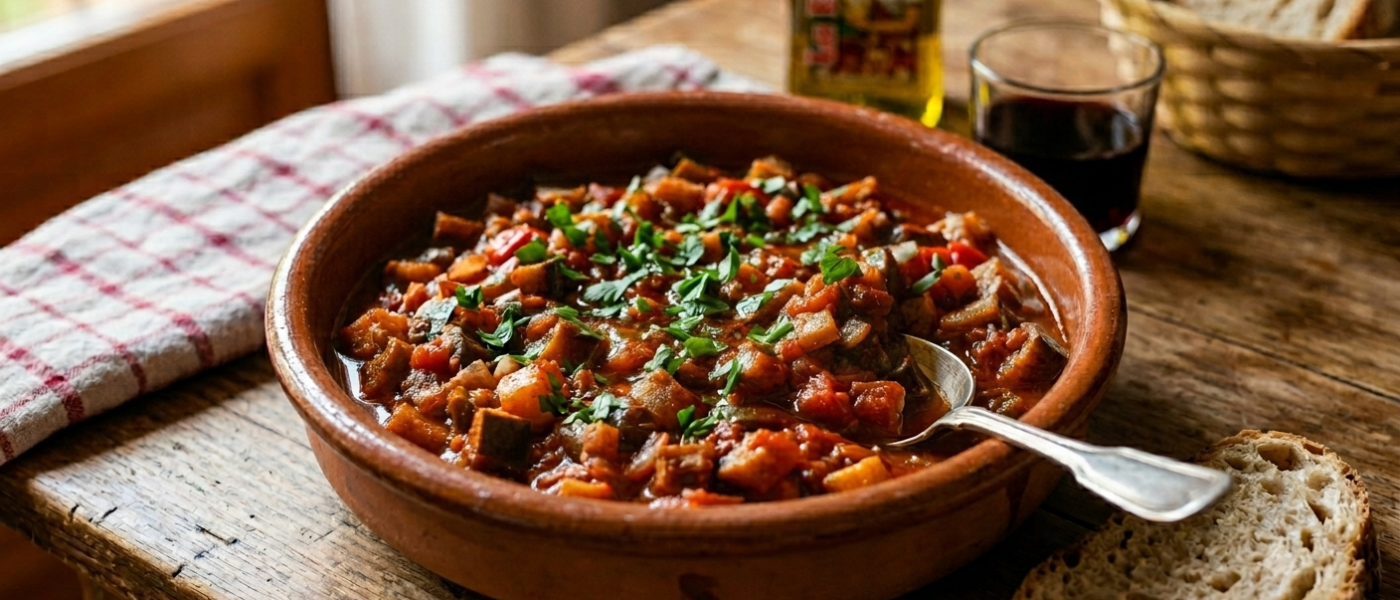
Spanish Ratatouille (Pisto)
Spain’s answer to what you do with a full summer vegetable garden — and better than most versions because each vegetable gets its own time in the pan.
Pisto is Spain’s slow-cooked vegetable stew — similar in spirit to French ratatouille, Sicilian caponata, or Tunisian shakshuka, but with its own character. The defining technique is patience: rather than throwing all the vegetables into a pot together and hoping for the best, you cook each one separately first. The onion and garlic go in first and soften until sweet. The peppers follow, getting time to blister and caramelise at the edges. The eggplant goes in next, cooked in batches until golden on both sides — a step most recipes skip and a step that makes a significant difference. Then the zucchini, just until tender. Finally, everything joins a deeply reduced tomato base and finishes together for the last ten minutes.
The result is a stew where each vegetable has kept its own texture and character — not a mush where everything has dissolved into everything else. That extra time is the whole point of pisto. It’s also a dish worth making in quantity because it keeps for four days in the fridge and improves overnight as the flavours settle and deepen. Serve it as a side dish, spoon it onto thick bread, stir it into eggs for a simple supper, or eat it cold the next morning. It belongs at the table in any form.
What You’re Learning
Cooking vegetables separately before combining. When you add all the vegetables to a pan at once, the ones that release water quickly — tomatoes, zucchini — immediately drop the pan temperature and create steam. Everything ends up braising rather than sautéing, and the result is soft and uniform rather than varied in texture. Cooking each vegetable separately keeps the pan hot enough to develop real colour and flavour on each one before they meet. The eggplant gets golden edges. The peppers caramelise slightly. The onion turns sweet and jammy. Those individual flavours survive into the finished dish in a way they wouldn’t if everything went in together. It takes longer, but it’s the difference between a stew that tastes like one blended thing and one that tastes like distinct vegetables in conversation with each other.
Building a deeply reduced tomato base. The tomatoes are the last vegetable to go in and the most important. Fresh tomatoes (or good canned ones) need 20 to 25 minutes over medium-low heat to shed most of their water and concentrate their sweetness and acidity into something rich and jammy. This is not a step you can rush by turning up the heat — high heat scorches the outside before the interior has time to reduce. Low and steady, stirring occasionally, until the tomatoes have gone from bright and wet to deep red and almost paste-like. That concentration is what gives the finished pisto its depth. Once the other vegetables are added back, the tomato base coats everything rather than flooding it.
Ingredients
Makes 6 servings.
- 1 medium eggplant (~14 oz / 400g), cut into ¾-inch dice
- 2 medium zucchini (~14 oz / 400g), cut into ¾-inch dice
- 2 red bell peppers, cut into ¾-inch dice
- 1 large yellow onion, diced
- 3 garlic cloves, thinly sliced
- 1½ lbs (680g) ripe tomatoes, roughly chopped — or one 28 oz (794g) can crushed tomatoes
- 5 tbsp extra-virgin olive oil, divided, plus more as needed
- 1 tsp sweet smoked paprika
- 1¼ tsp fine salt, divided, plus more to taste
- Small handful of fresh flat-leaf parsley, roughly chopped, for serving
Method
- Salt the eggplant. Toss the diced eggplant with ½ teaspoon of salt in a colander or on a paper-towel-lined tray. Let sit for 15 to 20 minutes. Pat thoroughly dry with paper towels before cooking — excess moisture will cause the eggplant to steam rather than brown.
- Cook the onion and garlic. Heat 2 tablespoons of olive oil in a wide, heavy pan — a 12-inch skillet or a shallow Dutch oven — over medium heat. Add the onion and a pinch of salt. Cook, stirring occasionally, for 8 to 10 minutes until soft and just beginning to turn golden. Add the garlic and cook for 2 more minutes until fragrant. Transfer to a large bowl and set aside.
- Cook the peppers. Add another tablespoon of oil to the same pan. Add the peppers and cook over medium-high heat, stirring occasionally, for 8 to 10 minutes until softened and beginning to char at the edges. Transfer to the bowl with the onion.
- Cook the eggplant. Add another tablespoon of oil. Add the eggplant in a single layer — cook in two batches if your pan isn’t large enough. Cook over medium-high heat without stirring for 3 to 4 minutes until the undersides are golden, then toss and cook for another 3 to 4 minutes. The eggplant should be golden on most sides and completely tender. Transfer to the bowl.
- Cook the zucchini. Add a final splash of oil. Cook the zucchini over medium-high heat for 5 to 6 minutes, stirring once or twice, until just tender with some colour. Transfer to the bowl.
- Build the tomato base. Reduce the heat to medium. Add the tomatoes directly to the pan along with the paprika and the remaining ¾ teaspoon of salt. Cook, stirring occasionally, for 20 to 25 minutes until the tomatoes have broken down completely and the mixture has reduced to a thick, jammy paste — dark red, with very little liquid remaining. Don’t rush this step. If using canned tomatoes, the process is the same but may take 5 minutes less.
- Combine and finish. Add all the reserved vegetables back to the pan with the tomato base. Stir gently to coat everything without breaking the vegetables up. Cook over medium-low heat for 10 minutes, stirring occasionally, until the vegetables have fully absorbed the flavour of the tomato base and the whole thing looks unified and deeply coloured. Taste and adjust salt.
- Serve. Scatter the chopped parsley over the top and serve warm, at room temperature, or cold. All three are good.
Notes
- Salt the eggplant — don’t skip it. Salting draws out moisture so the eggplant browns instead of steams, and it also reduces the slightly bitter edge that raw eggplant can have. Twenty minutes is enough. Pat it completely dry before it goes in the pan.
- Don’t rush the tomato reduction. This is the step that gives pisto its depth. The tomatoes need to lose most of their water and concentrate down to something almost paste-like. High heat scorches the outside; low and steady is the only way to get it right.
- Huevos con pisto. The classic pairing: spoon a generous portion of finished pisto into a warm skillet, make two or three small wells with the back of a spoon, crack an egg into each well, cover and cook over low heat until the whites are set but the yolks are still runny. Serve with bread.
- It improves overnight. Like most slow-cooked vegetable dishes, pisto tastes better the next day after the flavours have had time to settle. Make it the day before if you’re serving it to guests.
- Canned tomatoes are fine. In winter, a good 28 oz can of crushed tomatoes will produce a better result than pale, out-of-season fresh ones. In summer, ripe fresh tomatoes are worth using.
- Serve with good bread. Thick slices of country bread are not optional. The tomato base that collects at the bottom of the bowl is the best part.
More at This Level
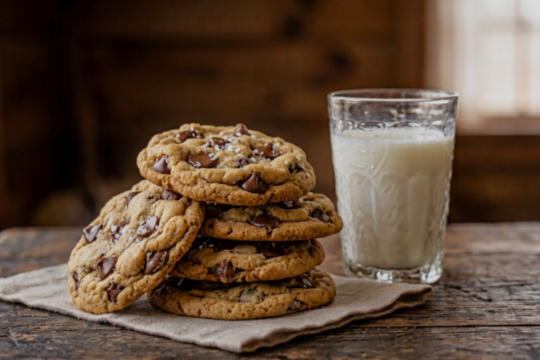
Chocolate Chip Cookies (Galletas con Pepitas de Chocolate)
A chilled dough and the right sugar ratio, that's the whole secret. Crisp edges, chewy centers, real bakery-style cookies from your own oven.
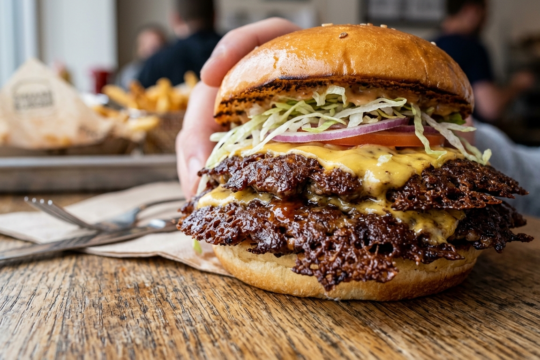
Smash Burger
Two thin patties, great cheese, 15 minutes. Better than anything you've been ordering. Learn the sear and you've unlocked the most important technique in New World cooking.
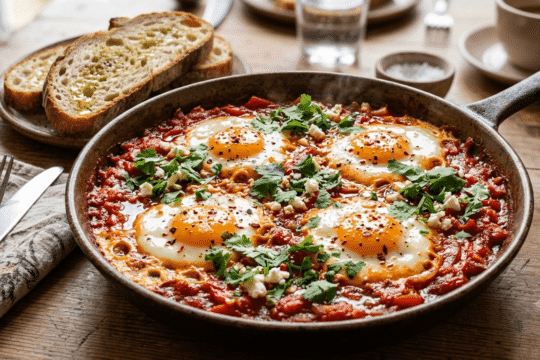
Shakshuka
Eggs poached in a spiced, garlicky tomato and pepper sauce. One pan, thirty minutes, and a dinner that looks far more deliberate than it is.
More 🌍 Old World
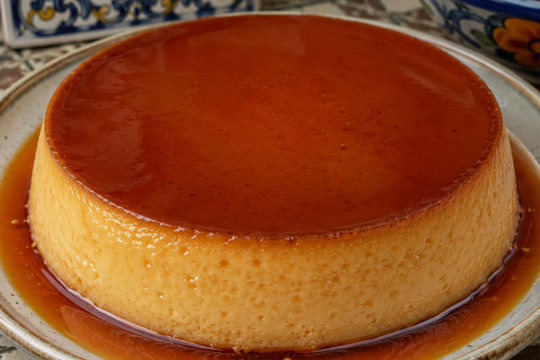
Flan (Caramel Custard)
Caramel on the bottom, silky custard on top, then you flip it. A water-bath bake that turns three humble ingredients into one of the oldest, most forgiving desserts in the Old World kitchen.
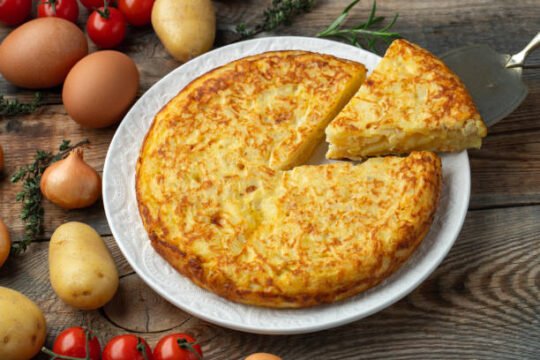
Tortilla Española (Spanish Omelette)
The real tortilla española — confited onions, olive-oil-poached potatoes, and a custardy center that sets on its own time.
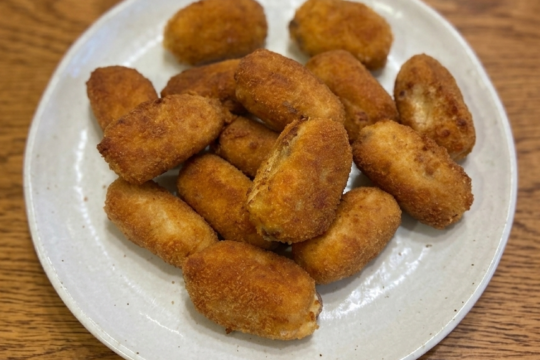
Spanish Ham Croquettes (Croquetas de Cocido Madrileño)
The classic next-day dish from Madrid's beloved chickpea stew. Leftover meats folded into a thick béchamel, breaded, and fried until golden.