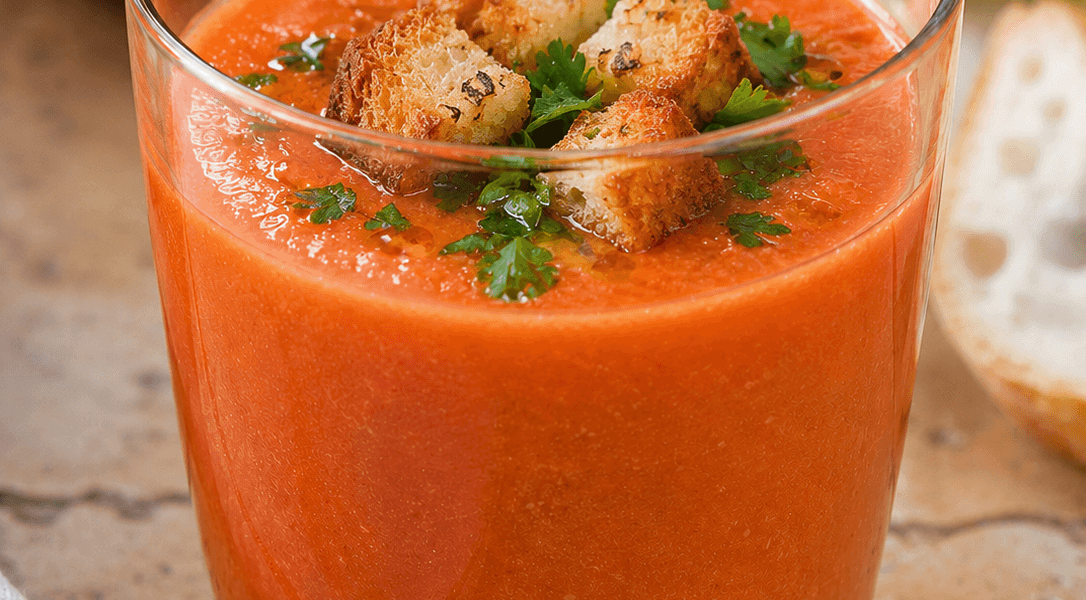
No cooking, no heat — just ripe tomatoes, a blender, and two hours in the fridge. Gazpacho is summer in a glass, and it asks almost nothing of you except patience.
Spain’s most recognizable cold soup has been eaten in Andalusia for centuries, born from the simple combination of stale bread, olive oil, vinegar, and whatever the garden offered. The modern version dropped the bread and leaned into the tomato — turning what was peasant sustenance into one of the most refreshing things you can serve on a hot day. The rule hasn’t changed: use the best tomatoes you can find. This recipe has nowhere to hide.
What You’re Learning
Cold food needs more seasoning than warm food. Temperature suppresses flavor perception — what tastes balanced at room temperature will taste flat from the refrigerator. Gazpacho teaches you to season assertively, taste after chilling, and adjust again just before serving. This lesson applies to every cold dish you’ll ever make: potato salad, ceviche, vinaigrette.
Building depth without heat. Most savory cooking uses the Maillard reaction and caramelization to create complexity. Gazpacho does it without a flame — using the interplay of acid (sherry vinegar), fat (olive oil), sweetness (bell pepper), and sharpness (raw onion and garlic). Learning to balance these four forces with only raw ingredients is a skill that transfers directly to dressings, salsas, and cold sauces.
Ingredients
- 2 lbs (900g) ripe tomatoes (Roma or heirloom)
- 1 English cucumber, divided — half for soup, half for garnish
- 1 red bell pepper, cored and seeded
- ½ small red onion
- 2 garlic cloves
- ¼ cup (60ml) extra-virgin olive oil, plus more to finish
- 2 tbsp sherry vinegar (or red wine vinegar)
- 1½ tsp fine salt, plus more to taste
Method
- Rough chop. Core the tomatoes and cut into large chunks. Quarter half the cucumber, core and cut the bell pepper, and roughly chop the onion. No precision needed — the blender does the work.
- Blend. Combine tomatoes, cucumber, bell pepper, onion, garlic, olive oil, vinegar, and salt in a blender. Process until completely smooth, about 60–90 seconds. Work in batches if needed.
- Strain and season. Pour through a fine-mesh strainer into a bowl or large jug, pressing firmly with a spoon to extract all liquid. Discard solids. Taste — adjust salt, vinegar, and oil until the balance feels right. The soup should be bright, tangy, and savory.
- Chill. Cover and refrigerate for at least 2 hours. Overnight is better — the flavors meld and deepen significantly. Taste again before serving and re-season as needed. Serve ice-cold in chilled bowls or glasses with diced cucumber, a drizzle of olive oil, and cracked black pepper.
Notes
- Ripe, in-season tomatoes are non-negotiable. Underripe tomatoes produce a flat, acidic result with no sweetness — wait for summer tomatoes or use good-quality canned whole tomatoes in winter.
- Sherry vinegar is traditional and worth seeking out; it has a rounder, nuttier flavor than red wine vinegar. Both work. Avoid balsamic.
- Cold dulls flavor — always taste the chilled soup again just before serving and adjust the seasoning. You’ll almost always need a touch more salt and vinegar.
- Optional: soak one slice of stale bread in water for 5 minutes, squeeze dry, and blend in for a thicker, more traditional texture.
- Keeps 3–4 days in the fridge, tightly covered. Stir before serving as it may separate slightly.