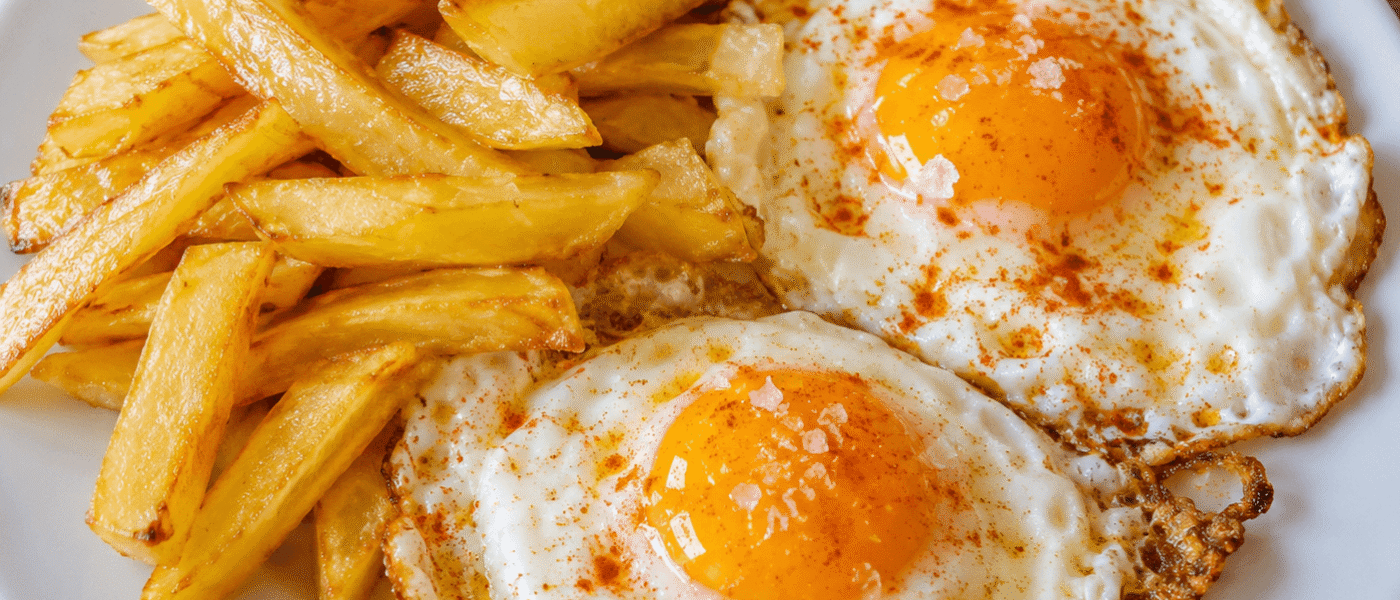
Spain doesn’t fry eggs — it bathes them. The result is something quite different from the flat, pale thing most home cooks produce.
In Spanish kitchens, huevos fritos are cooked in considerably more olive oil than a typical fried egg — enough to fill the pan a centimetre deep. The oil is brought to proper heat before the egg goes in, and the cook immediately tilts the pan and spoons the hot oil over the top of the white, basting it until it sets. The result: a white that is fully cooked with golden, lacey, crisped edges, while the yolk stays liquid and warm. Served with a pinch of flaky salt and a dusting of smoked paprika, it is one of the simpler dishes in Spanish cooking and one of the best.
What You’re Learning
The shallow-fry baste — By tilting the pan and spooning hot oil over the top of the white, you cook the egg from two directions simultaneously: from the bottom by conduction, from the top by the hot oil. This sets the white without flipping the egg, keeping the yolk untouched. The same basting technique applies to fish fillets, chicken thighs, and any protein you want cooked through without turning.
Reading oil temperature — At the right temperature, the white immediately begins to sizzle and puff at the edges when it hits the oil — that reaction is what creates the lace. Too cool, and the egg spreads flat and effectively poaches in oil rather than frying. Learning to read oil temperature by sound and sight is one of the most transferable skills in stovetop cooking.
Ingredients
- 2 large eggs
- 4–6 tbsp extra virgin olive oil (enough to fill the pan about 1/3 inch deep)
- Flaky sea salt
- Smoked Spanish paprika (pimentón), to finish
Instructions
- Choose the right pan: Use a small skillet — 6 to 8 inches. A large pan spreads the oil too thin. You want depth, not surface area.
- Heat the oil: Add the olive oil and set the pan over medium-high heat. The oil is ready when it shimmers visibly and a drop of water flicked in sputters immediately. Aim for around 350°F (175°C) if using a thermometer.
- Crack the egg into a cup: Crack each egg into a small cup before it goes into the pan. Lowering a cup to the oil surface gives you precise control over where the white lands.
- Slide the egg in: Lower the cup close to the oil surface and let the egg slide gently in. It should immediately begin to sizzle and the white should start to puff and set at the edges.
- Baste: Tilt the pan slightly so the oil pools to one side. Using a large spoon, scoop the hot oil and pour it repeatedly over the top of the white. Continue basting for 60–90 seconds until the white is fully set and opaque but the yolk is still runny.
- Remove and serve: Lift with a slotted spoon, letting the oil drain. Slide onto a plate. Season immediately with flaky salt and a small pinch of smoked paprika. Serve at once.
Notes
- Oil depth matters: Too shallow and you have a pan-fried egg, not a Spanish fried egg. You need enough oil to pool and baste continuously.
- Don’t hold back on heat: The lacey edges only form in properly hot oil. If the egg slides in and barely sizzles, let the oil heat further before the next one.
- Use a small pan: A 6-inch pan for one egg, an 8-inch for two. A standard 12-inch skillet spreads the oil far too thin for one egg.
- Olive oil quality: A good Spanish extra virgin olive oil adds a grassy, slightly peppery note that becomes part of the dish. This is one of the preparations where the oil’s flavour is front and centre.
- Serve immediately: Huevos fritos do not hold. The edges soften and the texture degrades within minutes. Have everything else on the plate before the egg goes in.
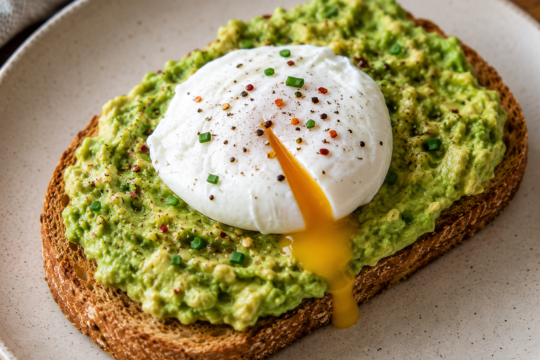
- Goes well with: Patatas bravas, white beans, crusty bread, or on top of avocado toast for something that eats like a full meal.
Frequently Asked Questions
Why isn’t my egg getting those crispy, lacey edges?
The oil isn’t hot enough. You want it shimmering visibly, close to 350°F, before the egg goes in. If the white slides in and barely sizzles, pull it back out, let the oil heat more, and try again. Lacey edges only form in properly hot oil.
Can I make huevos fritos in a regular large skillet?
Not well. A standard 12-inch pan spreads the oil too thin to pool and baste with, which is the whole technique here. Use a small 6 to 8 inch skillet so the oil has enough depth, even if you’re only cooking one or two eggs at a time.
Do I have to use a whole cup of oil for two eggs?
You need enough oil to pool about a third of an inch deep in a small pan, which is closer to 4 to 6 tablespoons, not a full cup. It looks like a lot for two eggs, but the depth is what lets you baste the tops instead of flipping, and most of the oil stays in the pan rather than being absorbed into the eggs.