
Valencian Sugar-Top Sponge Cake (Coca de Llanda)
Coca de llanda is the cake Valencian families bake for breakfast and the afternoon merienda. The name comes from the llanda, the shallow rectangular metal tin it’s baked in. It’s a thin, light sponge flavored with lemon and made with oil instead of butter, with a layer of sugar sprinkled on top that bakes into a crisp, crackly crust. Cut into squares, it’s eaten with a café con leche or a glass of milk.
Everything happens in one bowl, and the only real technique is beating the eggs and sugar long enough. If you’ve made our Spanish Yogurt Olive Oil Cake, this is its cousin: same oil-based tenderness, baked flat in a sheet pan instead of tall in a loaf tin. It’s meant to be thin, about an inch, so there’s crunchy sugar in every bite.
What You’re Learning
Whipping eggs is the rise. Beating the eggs and sugar for several minutes fills them with tiny air bubbles. When the mixture is pale, thick and about doubled, and falls from the whisk in a ribbon that sits on the surface for a moment, it’s ready. Those bubbles expand in the oven alongside the baking powder and give the cake its light, open crumb. Folding the flour in gently at the end keeps them from being knocked out.
Oil keeps it moist. Butter is solid at room temperature, so butter cakes firm up as they cool. Oil stays liquid, so an oil cake stays soft and moist for days. A light sunflower oil keeps the flavor clean and lets the lemon come through; a mild olive oil adds a gentle fruitiness that’s very Spanish.
Ingredients
Makes one 9×13-inch cake, about 12 squares.
- 250 g (1 1/4 cups) granulated sugar, plus 2 tablespoons for the top
- Finely grated zest of 1 lemon
- 3 large eggs, at room temperature
- 250 g (1 cup) whole milk, at room temperature
- 225 g (1 cup) sunflower oil or mild olive oil
- 400 g (about 3 1/4 cups) all-purpose flour
- 16 g (4 teaspoons) baking powder
- 1 pinch fine sea salt
- Ground cinnamon, for the top (optional)
Method
- Heat the oven and line the pan. Heat the oven to 350°F (180°C), conventional heat, no fan. Grease a 9×13-inch pan and line it with parchment paper.
- Rub the zest into the sugar. Put the 250 g sugar in the bowl of a stand mixer, grate the lemon zest over it, and rub them together with your fingertips for about a minute, until the sugar is damp and smells strongly of lemon.
- Whip the eggs and sugar. Add the eggs and beat with the whisk attachment on medium-high for 3 to 4 minutes, until the mixture is pale, thick, and about doubled. When you lift the whisk, it should fall back in a ribbon that sits on the surface for a moment.
- Add the milk and oil. Turn the mixer to low and pour in the milk, then the oil in a steady stream, mixing just until smooth, about 20 seconds.
- Fold in the flour. Whisk the flour, baking powder, and salt together in a separate bowl. Add them to the batter in two or three additions, mixing on the lowest speed or folding by hand with a spatula just until no dry flour is left. Stop as soon as the batter is smooth.
- Sugar the top. Pour the batter into the pan and smooth it into the corners. Sprinkle the 2 tablespoons of sugar evenly over the whole surface, with a pinch of cinnamon mixed in if you like.
- Bake. Bake on the middle rack for about 30 minutes, until golden, risen, and a toothpick in the center comes out clean.
- Cool and cut. Let the cake sit in the pan for 5 minutes, then lift it out by the parchment onto a wire rack. Let it cool before cutting it into squares.
Notes
- It’s supposed to be thin. A traditional llanda is about 30×20 cm (12×8 inches) and the cake comes out about an inch tall, with plenty of crust. A 9×13 pan gives the same effect. Don’t use a deep round pan: the cake would be twice as tall and the center would take much longer to set.
- With a hand mixer or by hand. A hand mixer takes 4 to 5 minutes on medium-high to whip the eggs. By hand, whisk hard for 8 to 10 minutes with the bowl set on a damp towel; the cake will be a little denser but still tender.
- In a Thermomix. Blitz the sugar and lemon peel 5 seconds on speed 10, add the eggs for 3 minutes at 37°C on speed 3.5, then the milk and oil for 15 seconds on speed 4, and the flour, salt, and leavening for 10 seconds on speed 4.
- Gaseosas. Spanish recipes often use gaseosas, paired envelopes of baking soda and acid sold for baking. Three double sachets replace the baking powder here. Add both envelopes of each pair with the flour.
- The sugar crust. Sprinkle the sugar right before the pan goes into the oven so it sits on the surface and bakes into a crisp layer instead of dissolving into the batter.
- Keeping it. Covered at room temperature, it keeps for 3 days and stays moist thanks to the oil.
More at This Level
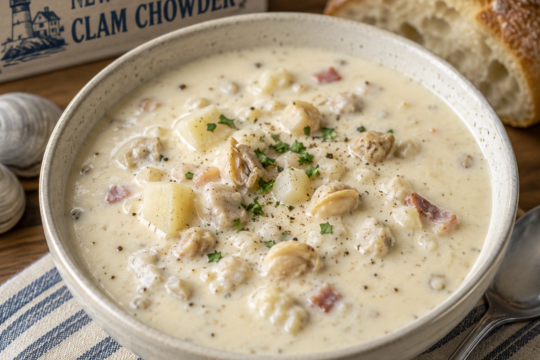
Clam Chowder (Crema de Almejas)
A creamy, hearty soup made with bacon, clams, potatoes, and heavy cream.
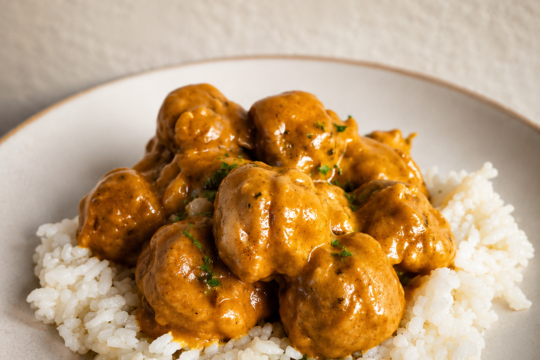
Spanish Turkey Meatballs (Albóndigas de Pavo)
Spanish-style turkey meatballs simmered in a smoky paprika sauce — tender, weeknight-fast, and deeply savory.
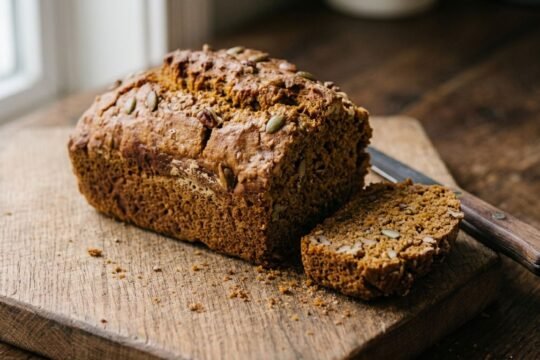
Pumpkin Bread (Bizcocho de Calabaza)
A moist, deeply spiced quick bread built on real canned pumpkin, not pumpkin pie filling. One bowl, no mixer, the fall bake that actually delivers on flavor.
More 🌍 Old World
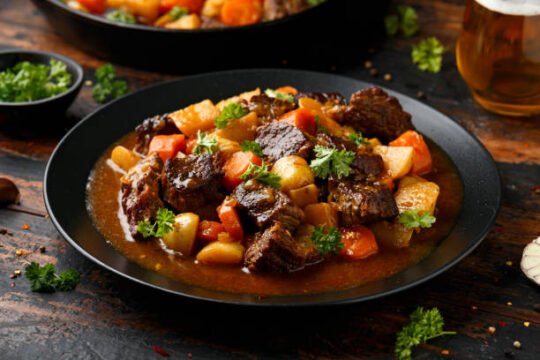
Beef Stew (Estofado de Ternera)
A Spanish-style beef stew built in layers — seared chuck, paprika-wine base, root vegetables — braised low and slow until the sauce holds a spoon.
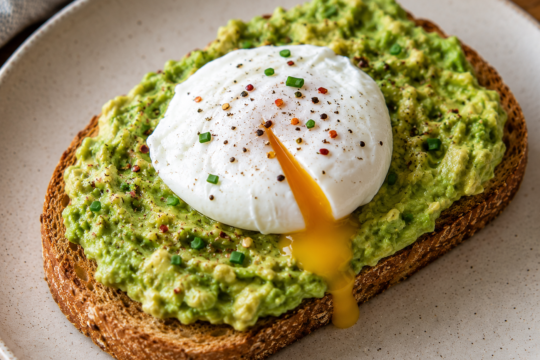
How to Poach an Egg (Cómo Escalfar un Huevo)
Gentle heat, a splash of vinegar, and a little patience. Poaching is one of the most useful egg techniques to learn — and once you have it, you use it constantly.
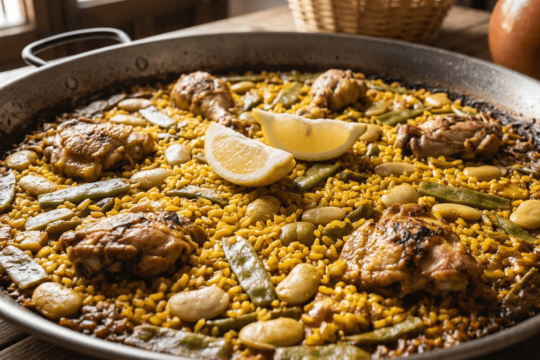
Paella Valenciana
Chicken, rabbit, and saffron rice cooked wide and shallow, with a crisp caramelized crust on the bottom. The most misunderstood technique in Spanish cooking, done the way Valencia actually does it.