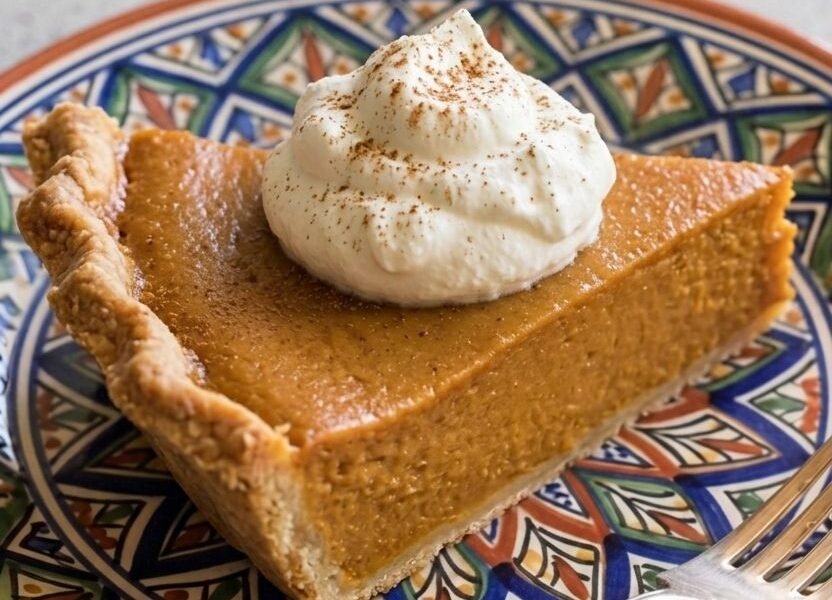
Pumpkin pie is a custard, not a cake batter — eggs and evaporated milk set the pumpkin puree into something silky-smooth, and the single biggest risk is overbaking it into a cracked, grainy mess. The fix is a two-stage oven: hot enough at first to set the edges quickly, then low enough to let the center finish slowly without ever fully firming up in the oven.
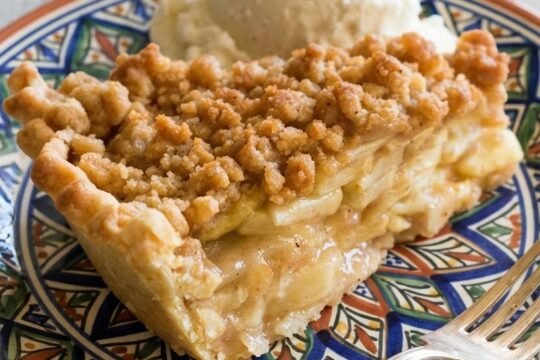
The crust below is the same one used for Dutch Apple Pie and Pecan Pie, blind-baked first so it holds up under all that wet custard instead of turning soggy.
What You’re Learning
Blind-baking keeps the bottom crust from turning soggy. A raw crust filled straight with wet custard steams from underneath the whole time it bakes, and never fully crisps. Partially baking the empty crust first — weighted down with pie weights so it doesn’t puff up or slide down the sides — sets and dries the bottom before the wet filling ever touches it.
The two-stage oven temperature is what prevents cracking. A short blast at 425°F sets the outer edges of the custard quickly. Dropping to 350°F right after lets the center cook through gently instead of continuing to puff and overbake — overbaked custard is exactly what cracks and turns grainy as it cools. Pull the pie while the center still jiggles slightly, like set Jell-O; it firms up completely as it cools, not in the oven.
Ingredients
- Crust: 1 1/4 cups all-purpose flour
- 1/2 teaspoon salt
- 1 teaspoon granulated sugar
- 1/2 cup (1 stick) unsalted butter, cold and cubed
- 3-4 tablespoons ice water
- Filling: 15 oz canned pumpkin puree (not pumpkin pie filling)
- 3 large eggs
- 12 oz evaporated milk
- 2/3 cup granulated sugar
- 1/4 cup packed brown sugar
- 1 1/2 teaspoons ground cinnamon
- 1 teaspoon ground ginger
- 1/2 teaspoon ground nutmeg
- 1/4 teaspoon ground cloves
- 1/2 teaspoon salt
- Whipped cream and a pinch of cinnamon, for serving
Method
- Make the dough. In a bowl, whisk together the flour, salt, and sugar. Add the cold cubed butter and cut it in with a dough blender until the mixture looks like coarse crumbs with some pea-sized pieces remaining. Drizzle in ice water 1 tablespoon at a time, tossing with a fork, until the dough just comes together when pressed.
- Chill the dough. Shape the dough into a disc, wrap tightly, and refrigerate for at least 30 minutes (up to 2 days).
- Roll and fit the crust. On a lightly floured surface, roll the chilled dough into a 12-inch circle with a rolling pin. Transfer it to a 9-inch pie pan, press gently into the bottom and sides, then trim and crimp the overhanging edge. Refrigerate for 15 minutes while the oven preheats.
- Blind-bake the crust. Preheat the oven to 400°F. Line the chilled crust with parchment paper and fill with pie weights. Bake for 15 minutes, then remove the parchment and weights and bake 5 more minutes, until the crust looks dry and just barely golden. Set aside; leave the oven on.
- Make the filling. In a large bowl, whisk the pumpkin puree, eggs, evaporated milk, granulated sugar, brown sugar, cinnamon, ginger, nutmeg, cloves, and salt until smooth.
- Fill and start hot. Increase the oven to 425°F. Pour the filling into the warm parbaked crust and bake for 15 minutes to set the edges quickly.
- Finish low and slow. Reduce the oven temperature to 350°F and continue baking for 35 to 40 minutes, until the outer 2 inches of filling look set and the center still jiggles slightly when the pan is nudged.
- Cool completely. Let the pie cool on a wire rack for at least 3 hours — it will look underdone straight out of the oven and firms up entirely as it cools. Refrigerate if not serving the same day.
- Serve. Top each slice with a dollop of whipped cream and a light dusting of cinnamon.
Notes
- Use pure pumpkin puree, not pumpkin pie filling — pie filling already has sugar and spices mixed in and will throw off the recipe. Same distinction the site’s Pumpkin Bread makes.
- The center should still jiggle slightly when the pie comes out of the oven, like set Jell-O. A fully firm center in the oven means it’s overbaked and likely to crack as it cools.
- Blind-baking with pie weights keeps the crust from puffing up or sliding down the sides, and dries out the bottom before the wet filling goes in. Dried beans or rice work in a pinch if you don’t have ceramic weights.
- Pumpkin pie actually improves overnight in the fridge — the filling fully sets and the flavor rounds out, so it’s a good one to bake a day ahead.
- Same crust as Dutch Apple Pie and Pecan Pie — if you’ve made either of those, this part is already familiar.