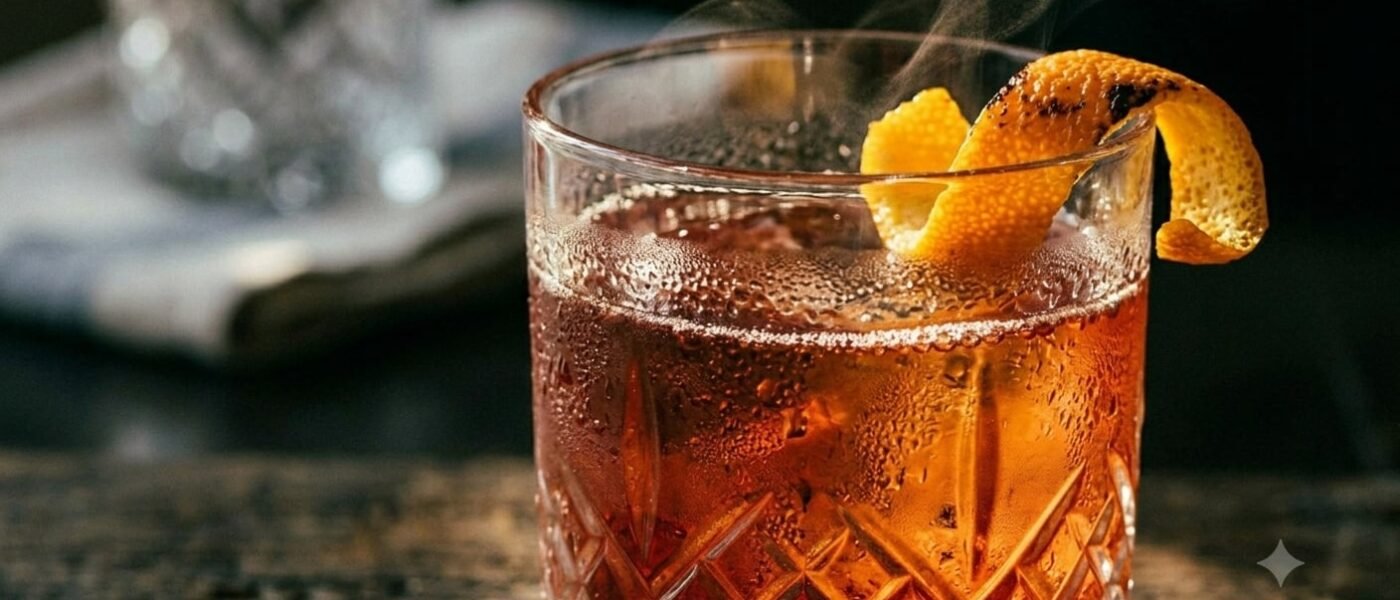
The Negroni is one of the few cocktails where the formula is the entire recipe: equal parts gin, Campari, and sweet vermouth. Once you understand why equal parts works here, you can start to modify it — swap the gin for bourbon (that’s a Boulevardier), adjust the ratios, try different amari. But first, make it exactly as written.
What You’re Learning
Most cocktails use a dominant spirit with modifying elements. The Negroni treats all three components as equals because each one has a specific job. Gin provides botanical complexity and alcohol backbone. Campari contributes bitterness and color. Sweet vermouth adds sweetness and herbal notes that bridge the other two. Remove or reduce any one of them and the balance collapses — the bitterness overwhelms, the sweetness smothers, or the alcohol sticks out unpleasantly.
This drink gets stirred, not shaken, because shaking aerates it — tiny bubbles cloud the liquid and change the texture. A Negroni should be clear and silky. Stir with a long bar spoon and large ice in a mixing glass for about 30 seconds, or until the outside of the glass is very cold. The dilution from stirring is intentional — it integrates the ingredients and softens the alcohol without changing the clarity.
Ingredients
- 1 oz gin
- 1 oz Campari
- 1 oz sweet vermouth (Carpano Antica or Dolin Rouge)
- 1 large ice cube, for serving
- Orange peel, for garnish
Method
- Combine gin, Campari, and sweet vermouth in a mixing glass with ice.
- Stir steadily for 25–30 seconds, until the outside of the mixing glass is very cold to the touch.
- Strain over a large ice cube into a rocks glass.
- Express an orange peel over the glass: hold it skin-side down, squeeze sharply to release the oils, then twist and drop it in.
Notes
- Gin choice matters. Use one you’d drink on its own. London Dry (Tanqueray, Beefeater) works well. Avoid heavily flavored gins — they fight with the Campari.
- Store opened vermouth in the fridge and use within a month. Oxidized vermouth is the most common reason a Negroni tastes flat or medicinal.
- Campari is not optional. Aperol is sweeter and less bitter — it makes a different drink. A Negroni made with Aperol is an Aperol Spritz ingredient, not a Negroni.
- The Boulevardier is the same recipe with bourbon instead of gin. If you don’t love gin, try that version first — it’s warmer and more approachable.
- Batch it: multiply by 10 and refrigerate. Stir over ice to order when serving. Negronis batch well because there’s no citrus to oxidize.