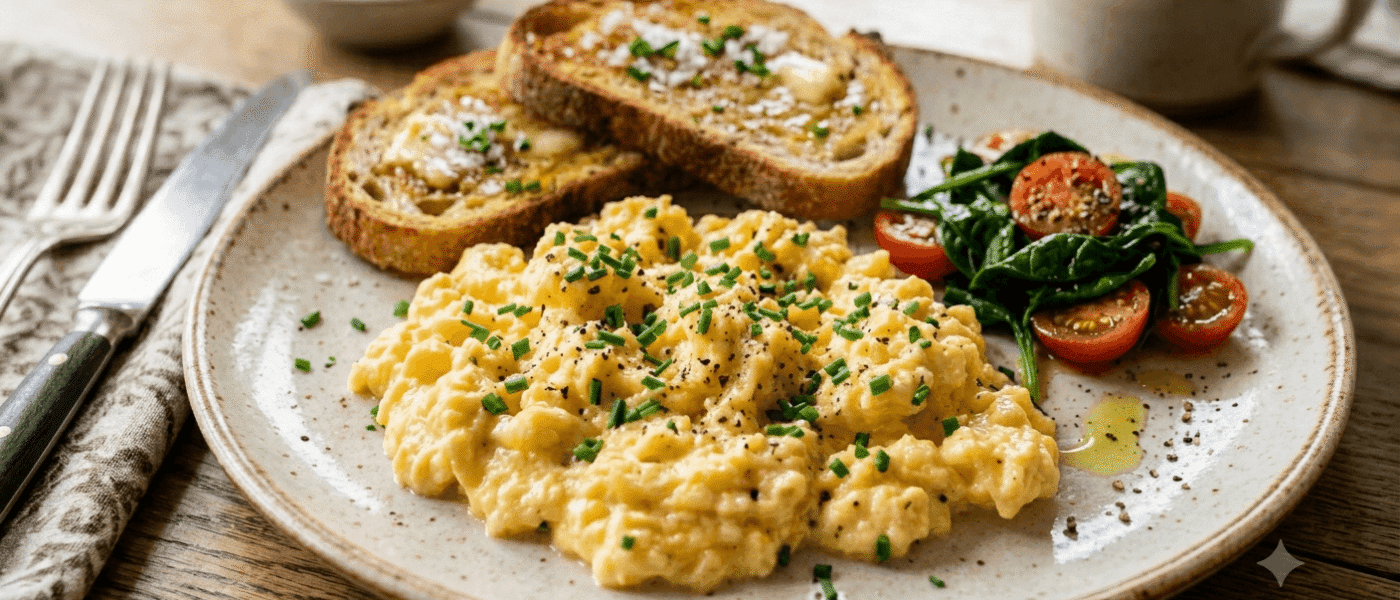
Perfect scrambled eggs take 10 minutes and four ingredients. The technique is what most people have wrong — and getting it right changes breakfast forever.
The problem with most scrambled eggs is heat: too much, too fast. High heat seizes the egg proteins before they have time to form the small, tender curds that make great scrambled eggs worth eating. The French method — low heat, constant movement, removed from the pan before they look done — produces something completely different. Silky, flowing, deeply flavoured. The same eggs. Completely different result.
What You’re Learning
Protein coagulation and heat control. Egg proteins begin to set at around 145°F (63°C) for yolks and 180°F (82°C) for whites. On high heat, the proteins seize and contract violently, squeezing out moisture and forming large, rubbery curds with a dry, grainy texture. On low heat, the proteins set slowly and evenly, trapping moisture inside and forming small, tender curds that flow together into something almost like a sauce. The difference is entirely about temperature management — which means the most important skill here is learning to keep the pan cool enough and pull the eggs at exactly the right moment.
Residual heat and carryover cooking. Eggs continue cooking after you remove them from the heat — more than almost any other food. By the time scrambled eggs look done in the pan, they are overcooked. The target is to remove them while they still look slightly underdone: glossy, still flowing, with visible liquid between the curds. Thirty seconds on a warm plate will finish them perfectly. If they look perfect in the pan, they’ll be rubbery on the plate. Trust the timing, not your eyes.
Ingredients
Makes 2 servings.
- 4 large eggs, cold from the fridge
- 1 tbsp unsalted butter
- ¼ tsp fine salt (added at the end)
- 1 tbsp crème fraîche or heavy cream (optional — cools the pan at the critical moment and adds richness)
- Freshly ground black pepper, to finish
- Fresh chives or parsley, to finish (optional)
Method
- Crack eggs directly into a cold pan with the butter. Do not beat them first. Starting cold gives you more time at low heat before the proteins set. Place the pan over the lowest burner setting on your stove.
- Begin stirring immediately with a rubber spatula. Constant, sweeping strokes covering the entire base of the pan. You are not folding — you are moving the eggs continuously so no single area overheats. The butter will melt into the eggs as the pan warms.
- Keep moving for 6–8 minutes. The eggs will look completely liquid for a long time. This is correct. Resist the urge to raise the heat. If curds seem to be forming too fast in any spot, lift the pan off the burner for 15–20 seconds while continuing to stir, then return to the heat.
- Stir in the crème fraîche when the first curds appear. When the eggs begin to look like very soft, flowing scrambled eggs — still shiny, still moving — stir in the crème fraîche or cream. This cools the pan slightly and gives you a few more seconds of control.
- Pull off the heat while they still look underdone. When the eggs are glossy and flowing but have just started to mound up — before they look “done” — remove from the heat entirely. Season with salt. Stir for 30 more seconds off the heat; carryover cooking will finish them. They should barely hold their shape and still look slightly wet.
- Serve immediately. Scrambled eggs wait for no one. Plate, add black pepper and chives if using, eat at once.
Notes
- Cold eggs from the fridge are correct. Don’t bring them to room temperature first — starting cold gives you a longer window at low heat before they set.
- Non-stick pan only. A sticky pan makes this frustrating. Cast iron holds too much heat and makes precise control nearly impossible. Use a small non-stick skillet.
- Salt at the end, not the beginning. Salting raw eggs can break down the proteins and affect texture. Add salt after the pan comes off the heat.
- Never cook for more than 2 people at once. More eggs means less control. Do two batches for four people — it’s faster than managing a full pan at low heat.
- Butter, not oil. Butter emulsifies into the eggs as they cook, adding flavour that oil cannot replicate. Use unsalted so you control the salt level entirely.
- The crème fraîche is optional but worth it. It cools the pan at a critical moment and adds a subtle tang. Sour cream, heavy cream, or Greek yoghurt all work.