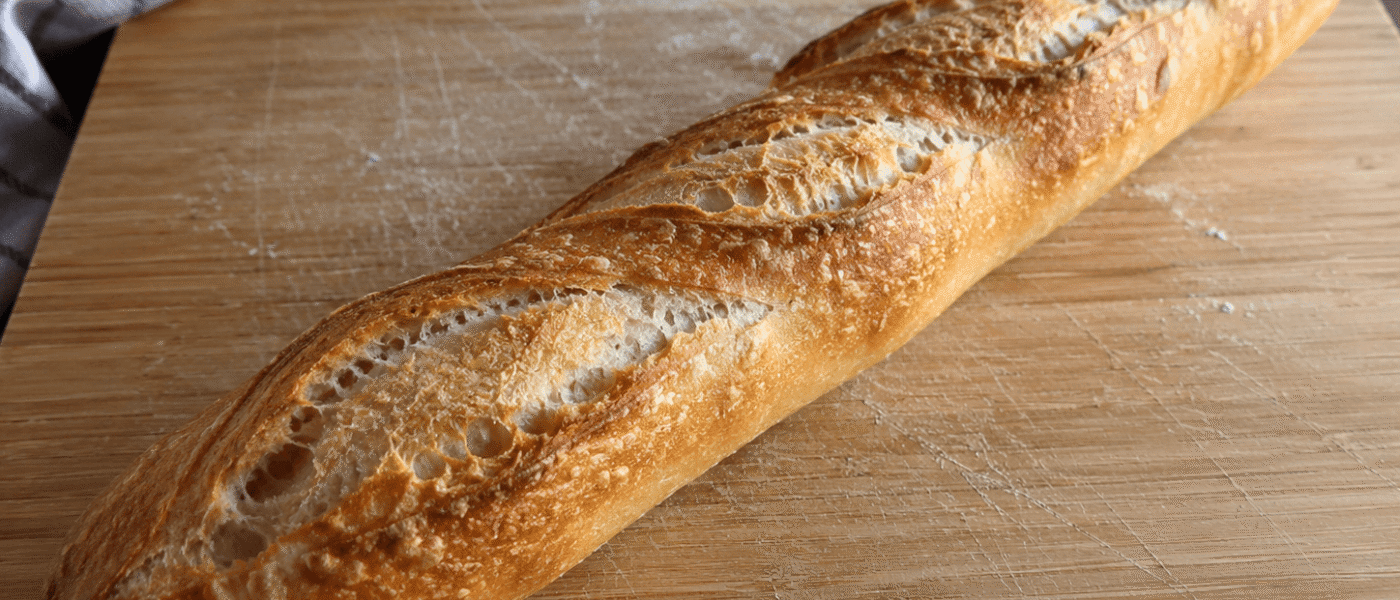
Real baguettes at home, with four ingredients and no effort. The overnight rest does all the work while you sleep.
This is a no-knead baguette. You mix everything in about five minutes with the end of a wooden spoon — the dough is wet, shaggy, and looks nothing like bread dough yet. Then you leave it alone for 12 to 24 hours. The long, slow fermentation develops the gluten and the flavor without any effort from you. In the morning, you shape, rest, and bake. What comes out of the oven has a crackly crust, an open crumb, and the smell that makes everyone walk into the kitchen.
If you’ve never baked bread before, start here. Four ingredients. One bowl. No kneading. No stand mixer. No special technique. Just time.
Featured Bakeware
USA Pan 3-Loaf French Baguette Pan — the channeled pan holds the dough’s shape as it proofs and bakes, giving you that classic baguette silhouette without a couche or any professional setup. Not required, but it makes a real difference in the final shape.
Ingredients
Makes 2-3 baguettes.
- 360 g all-purpose flour
- 1/4 tsp instant yeast
- 1 1/2 tsp salt
- 1 to 1 1/2 cups water
Method
- Mix (5 minutes, the night before). In a large bowl, combine the flour, yeast, and salt. Stir briefly to distribute. Add the water gradually — start with 1 cup and stir with the end of a wooden spoon. You want just enough water to bring all the flour together into a wet, shaggy dough with no dry patches left on the sides of the bowl. If slightly less than the full measurement does that, stop there. If the dough still has dry flour, add a little more. The dough will look rough and sticky. That’s correct. Cover tightly with plastic wrap. Place the bowl in your oven (turned off) or microwave — just to keep it out of drafts. Leave it overnight, anywhere from 12 to 24 hours. The longer it goes, the more flavor it develops.
- Shape. Generously flour your work surface. Turn the dough out — it will be loose and sticky, which is normal. Divide it into 2 or 3 equal pieces by weight if you have a scale, or by eye if you don’t. Working with floured hands, gently stretch and fold each piece into a rough log shape. Don’t overwork it. You’re not building tension here — just getting it into a shape that fits the pan. Lay the logs into a baguette pan or onto a parchment-lined baking sheet.
- Rest and preheat. Leave the shaped baguettes to rest uncovered while the oven preheats. Place a metal baking pan or cast iron skillet on the lowest rack of your oven — this will hold water for steam. Preheat to 500 degrees F (260 degrees C). Let it fully come to temperature, which takes 20-30 minutes depending on your oven. The baguettes will puff slightly during this time.
- Score and bake. Just before loading the oven, use a sharp knife or razor blade to make 3-4 diagonal slits along the top of each baguette — quick, confident cuts about 1/4 inch deep. These aren’t decorative. Scoring controls where the bread expands in the oven. Without it, the crust will crack randomly and the baguette won’t open properly. Carefully pour about 1 cup of hot water into the pan on the lower rack to create steam — this is what gives the crust its crackle. Quickly place the baguettes in the oven and bake for 25-27 minutes, until deeply golden and hollow-sounding when tapped on the bottom. Cool on a wire rack for at least 15 minutes before cutting. The crust will crackle as it cools. That sound is the whole point.
What You’re Learning
This recipe demonstrates one of baking’s most useful principles: time replaces effort. A standard bread dough requires 10–15 minutes of kneading to develop gluten. This dough requires none — because 12 to 24 hours of slow fermentation accomplishes the same thing. Yeast enzymes do the structural work while you sleep, and the slow rise also develops flavor compounds that a fast, warm rise never produces. This is why overnight-fermented bread tastes noticeably different from the same-day version.
You are also learning what steam does to bread crust. The pan of hot water on the lower oven rack creates moisture inside the oven during the critical first minutes of baking, when the crust is still soft enough to expand. Without steam, the surface sets too quickly — the bread cannot open along the score lines and you get a thick, dull crust instead of a crackling one. This is the difference between a proper baguette crust and ordinary bread. You will use this principle every time you bake a lean-dough bread.
Notes
- Use less water first. Start with 1 cup, add more only if the dough won’t come together. A slightly drier dough is easier to shape than one that’s too wet.
- The overnight rest is the recipe. The yeast is doing all the work while you sleep — developing flavor and gluten without kneading. Don’t shortcut it below 12 hours.
- No baguette pan? Shape the loaves on a parchment-lined baking sheet. They’ll spread slightly wider but will taste identical.
- The steam matters. Baguette crust forms in the first few minutes of baking when surface moisture keeps the crust flexible enough to expand. Without steam, you get a thick, dull crust. The pan of water on the lower shelf is the fix.
- Score with confidence. Hesitant cuts drag and tear the dough. One clean, angled stroke per slash. A lame (bread scoring tool) helps, but a sharp serrated knife works fine.
- Eat the same day. Like all lean-dough breads with no fat, baguettes go stale quickly. Day one is exceptional. Day two is decent for toast. After that, breadcrumbs.