
Sourdough Starter (Masa Madre)
A sourdough starter is flour and water that has been fed every day until it’s full of wild yeast and the bacteria that make bread taste sour. You don’t buy anything special to make one. The yeast is already living on the flour, and all you’re doing is giving it a warm jar, a steady supply of food, and about a week.
This is the slow part of sourdough, and it’s mostly waiting. Each feeding takes two minutes. Once it’s going, a starter lives in your fridge for years and asks for one feeding a week. The flour you pour off along the way is called discard, and it’s too good to throw out: it goes into our Sourdough Discard Bread and Sourdough Discard Granola.
What You’re Learning
You’re farming, not cooking. Flour carries wild yeast and lactic acid bacteria on it. Mix it with water and keep it warm, and they start to eat and multiply. For the first few days other microbes get there first, which is why a young starter bubbles, then goes quiet, then smells strange. Keep feeding it and the yeast and the acid-loving bacteria take over, because the acid they make pushes everything else out.
Feeding is a ratio. Every feeding here is equal weights of starter, flour, and water. That’s why you throw most of it away first: keep it all and feed it in the same ratio, and by the end of the week you’d need a bucket and a bag of flour a day. Discarding keeps the jar small and the food supply fresh. Weigh everything. A cup of flour isn’t a cup of flour, and a scale is the difference between a starter that rises on schedule and one that doesn’t.
Ingredients
Makes one starter, enough to keep forever. Amounts are for the whole week.
- About 300 g whole wheat flour (or whole rye flour)
- About 300 g unbleached all-purpose or bread flour
- About 600 g lukewarm water (75 to 80°F), filtered if your tap water smells strongly of chlorine
Method
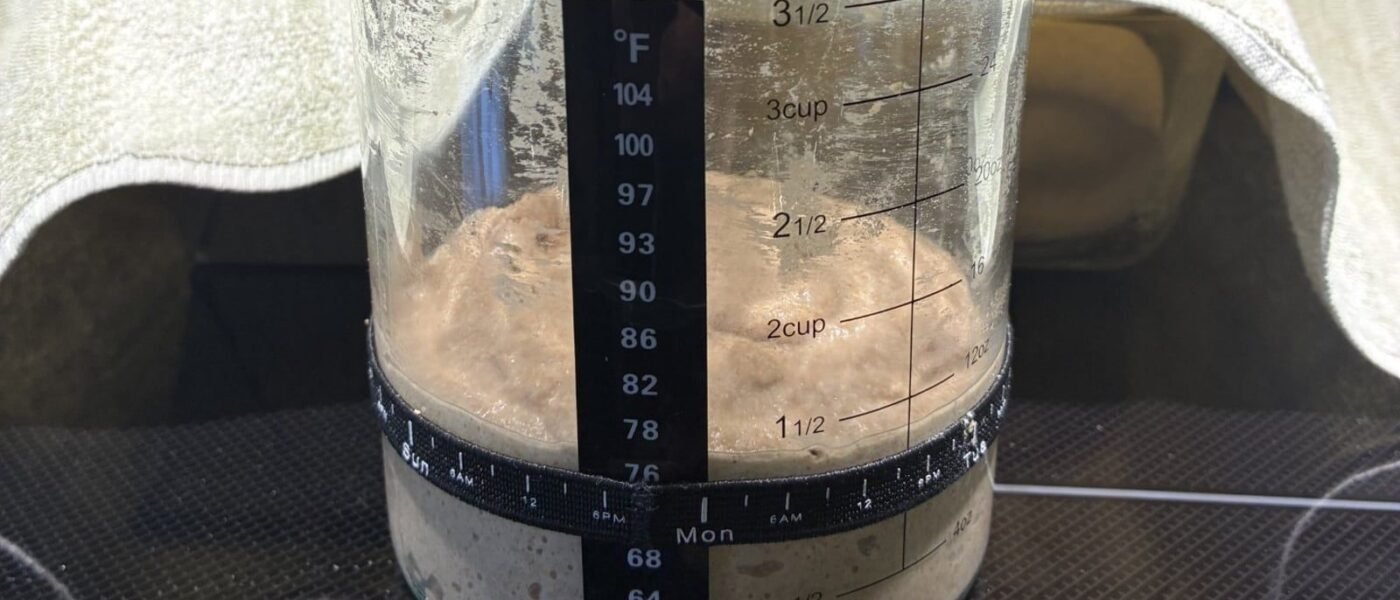
- Day 1: make the paste. In a clean quart glass jar, stir together 50 g whole wheat flour and 50 g lukewarm water until no dry flour is left. It should look like thick pancake batter. Scrape down the sides, put a rubber band around the jar at the level of the paste, and cover the jar with a cloth. Leave it somewhere warm, ideally 75°F, for 24 hours.
- Day 2: feed it. You may see a few bubbles, or none. Either is fine. Add another 50 g whole wheat flour and 50 g water, stir well, move the rubber band to the new level, and leave it for another 24 hours.
- Day 3: start discarding. Stir the starter, then spoon out all but 50 g (about 1/4 cup) into a separate container. Feed what’s left with 25 g whole wheat flour, 25 g all-purpose flour, and 50 g water. Do this once a day.
- Days 3 and 4: don’t give up. A starter that bubbled hard on day 2 often goes flat around now, and it may smell like old cheese, gym socks, or nail polish. That’s the early bacteria dying off as the jar turns acidic. Keep feeding on schedule. This is the stage where most people quit, and it’s the one stage you can’t skip.
- Day 5 onward: feed twice a day. Keep 50 g, then feed 40 g all-purpose flour, 10 g whole wheat flour, and 50 g water, about every 12 hours. You should see more bubbles and a rise after each feeding, and the smell should turn milder: tangy, a little yeasty, like yogurt or beer.
- Know when it’s ready. It’s ready when it doubles within 4 to 8 hours of a feeding, the top is domed and full of bubbles, and it does that two or three days in a row. In a warm kitchen that’s usually day 7 to 10. In a cold one it can take two weeks, and that’s normal.
- Keep it going. If you bake every day or two, leave it on the counter and feed it once a day. If not, feed it, let it sit for an hour, and put it in the fridge with the lid on. Feed it once a week. The night before you bake, take it out and give it two feedings 12 hours apart so it’s lively again.
Notes
- Warmth is the gas pedal. At 75 to 80°F a starter grows fast. At 65°F it can take twice as long. If your kitchen is cold, put the jar in the oven with only the light on, or on top of the fridge.
- Save the discard. Keep it in a covered jar in the fridge for up to a week and keep adding to it. It goes into discard bread, granola, pancakes, and crackers.
- Gray liquid on top means it’s hungry. That layer is called hooch. Pour it off for a milder starter or stir it in for a sourer one, then feed it.
- Whole grain gets it started. Whole wheat and rye carry more wild yeast and more food than white flour, which is why the first days use them. Once it’s established, white flour keeps it mild and predictable.
- When to start over. Pink or orange streaks, or fuzzy mold on the surface, mean something other than yeast took over. Throw it out, wash the jar well, and start again. A dry crust on top is fine: scrape it off.
More at This Level

Home Fries (Patatas Salteadas)
Home fries are what you cook when you want hash brown flavour but can't be bothered with the grating. Skillet, hot oil, patience for the crust — that's the whole recipe.

Grilled Vegetables (Verduras a la Parrilla)
A contact grill or outdoor barbecue adds something a roasting tray cannot — direct char, smoke, and grill marks. Even stovetop, vegetables can taste like summer.

Zucchini Fritters (Buñuelos de Calabacín)
Crispy zucchini fritters that actually hold together. The technique is one step done well: squeezing the moisture out before anything else happens.
More 🌍 Old World
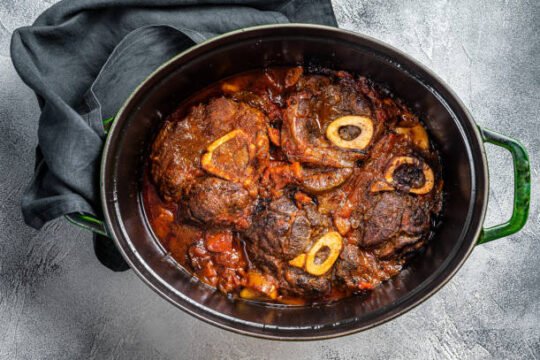
Braised Beef Shanks (Jarrete de Ternera Estofado)
Cross-cut beef shanks slow-braised in wine, paprika, and aromatics until the collagen melts into a rich, glossy sauce.
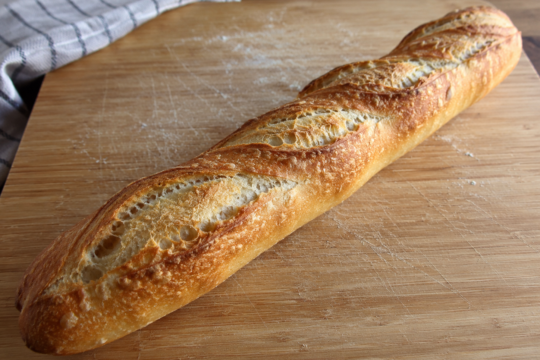
Baguette
Four ingredients, no kneading, and an overnight rest. Real baguette crust starts here.

Spanish Turkey Meatballs (Albóndigas de Pavo)
Spanish-style turkey meatballs simmered in a smoky paprika sauce — tender, weeknight-fast, and deeply savory.