
Cranberry Mimosa
The day after Thanksgiving, most kitchens have the same two things in the fridge: a bottle of sparkling wine that didn’t get opened, and the cranberry juice someone bought for the table. Pour them together and you have a cranberry mimosa, the easiest brunch drink there is. It’s tart, pink, cold and fizzy, and it goes with leftover turkey sandwiches, pie for breakfast, and a slow morning with nowhere to be.
A mimosa is two ingredients, so the only things that can go wrong are the bubbles and the balance. Get the order and the temperature right and it stays lively to the last sip. It does the same job as Spain’s Vermut, a few hours earlier: something light and easy to start a long day of eating.
What You’re Learning
Cold wine holds its bubbles. The fizz in sparkling wine is carbon dioxide dissolved in the wine, and cold liquid holds more of it than warm liquid. A bottle straight from the fridge stays bubbly in the glass; a room-temperature one foams up as you pour and goes flat in minutes. Chill the wine and the juice for at least three hours, or 30 minutes in a bucket of ice and water.
Pour the wine first. Bubbles form wherever the gas finds something to cling to: a scratch in the glass, a bit of pulp, a speck of sugar. Pouring wine onto juice gives it plenty to cling to, so it foams up and over the rim and loses fizz in the process. Pour the wine first, slowly, down the side of a tilted glass, then add the juice on top. The juice is heavier, so it sinks and mixes on its own. Don’t stir; stirring knocks the bubbles out.
Ingredients
- 4 oz dry sparkling wine (brut cava, prosecco or champagne), well chilled
- 2 oz cranberry juice cocktail, well chilled
- ½ oz orange liqueur, such as Cointreau or triple sec (optional)
- A few fresh cranberries
- 1 small sprig of fresh rosemary
Method
- Chill everything. Put the sparkling wine and the cranberry juice in the fridge at least 3 hours ahead. A chilled flute helps too: 10 minutes in the freezer is enough.
- Add the liqueur. If you’re using orange liqueur, measure it into the bottom of the flute first. It’s still and won’t make the wine foam.
- Pour the wine. Open the bottle by holding the cork and turning the bottle, not the cork, so it lets out a soft hiss instead of a pop. Tilt the flute and pour the wine slowly down the inside of the glass until it’s about two-thirds full.
- Top with the juice. Pour the cranberry juice in gently. It sinks through the wine and mixes on its own, so don’t stir.
- Garnish and serve. Drop in a few cranberries and tuck the rosemary sprig against the rim. Serve right away.
Notes
- Which cranberry juice. Use cranberry juice cocktail, the sweetened kind most stores carry. Pure, unsweetened cranberry juice is so tart it makes the drink sour. If that’s all you have, use half as much and add a teaspoon of simple syrup.
- Which sparkling wine. Pick a dry one: look for “brut” on the label. Spanish cava is dry, inexpensive and made the same way as champagne, so it’s a good choice here. Prosecco is a little fruitier and softer. Save expensive champagne for drinking on its own; the juice covers what you paid for.
- The ratio. Two parts wine to one part juice keeps it light and dry. For a sweeter, pinker drink, go one to one.
- For a crowd. Don’t mix a pitcher ahead; it goes flat within the hour. Set out the chilled bottles in an ice bucket, a jug of juice and a bowl of cranberries, and let everyone pour their own, wine first.
- Keeping an open bottle. Press a sparkling wine stopper on tight and put it back in the fridge. It keeps most of its fizz for a day or two, which is enough for Saturday’s brunch.
- Without alcohol. Swap the wine for chilled sparkling water or ginger ale and leave out the liqueur. Pour it in the same order.
More at This Level
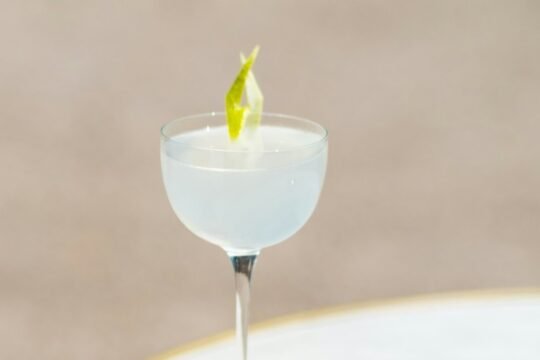
Daiquiri
White rum, fresh lime juice, and simple syrup, shaken hard and strained up into a chilled glass. The Daiquiri is the original template every great sour cocktail borrows from — three ingredients, one ratio, no shortcuts.

Manhattan
Rye whiskey, sweet vermouth, and bitters, stirred cold and strained up into a chilled glass. The Manhattan is proof a great cocktail doesn't need more than three ingredients, just the right ratio and the patience to stir it properly.
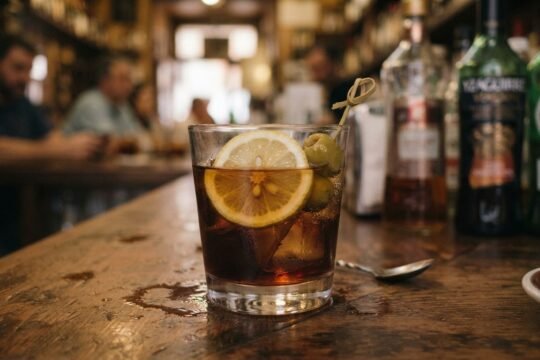
Vermut (Spanish Vermouth on the Rocks)
Spain's pre-lunch ritual: red vermouth poured over ice with a slice of citrus and an olive, served with something salty on the side. No shaker, no recipe to memorize, just la hora del vermut.
More 🌎 New World
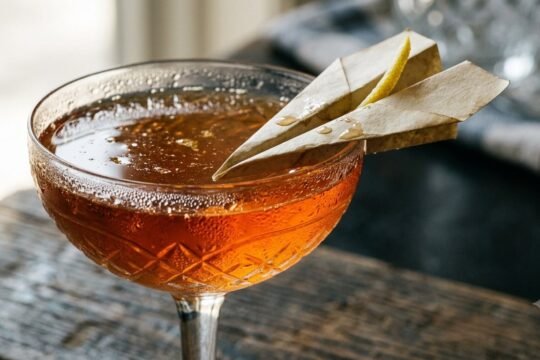
Paper Plane
Equal parts bourbon, Aperol, Amaro Nonino, and fresh lemon juice. The Paper Plane is a modern classic built on a formula that sounds too simple — and works better than it should.
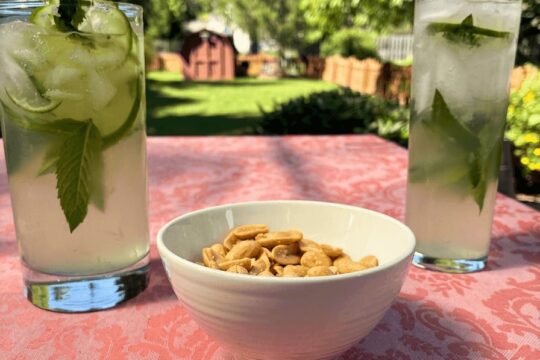
Coconut Water Mojito
Coconut water replaces simple syrup in this refreshing mojito. Learn the muddling technique that keeps mint bright, not bitter, and why building directly in the glass is the right call.
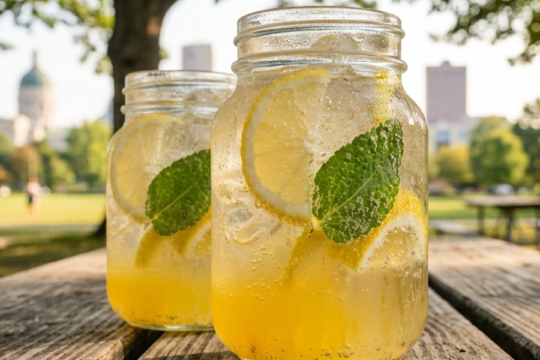
Lynchburg Lemonade
Jack Daniel's, triple sec, and fresh lemon juice, shaken hard and topped with lemon-lime soda. Tennessee's own whiskey lemonade, served in a Mason jar over ice.