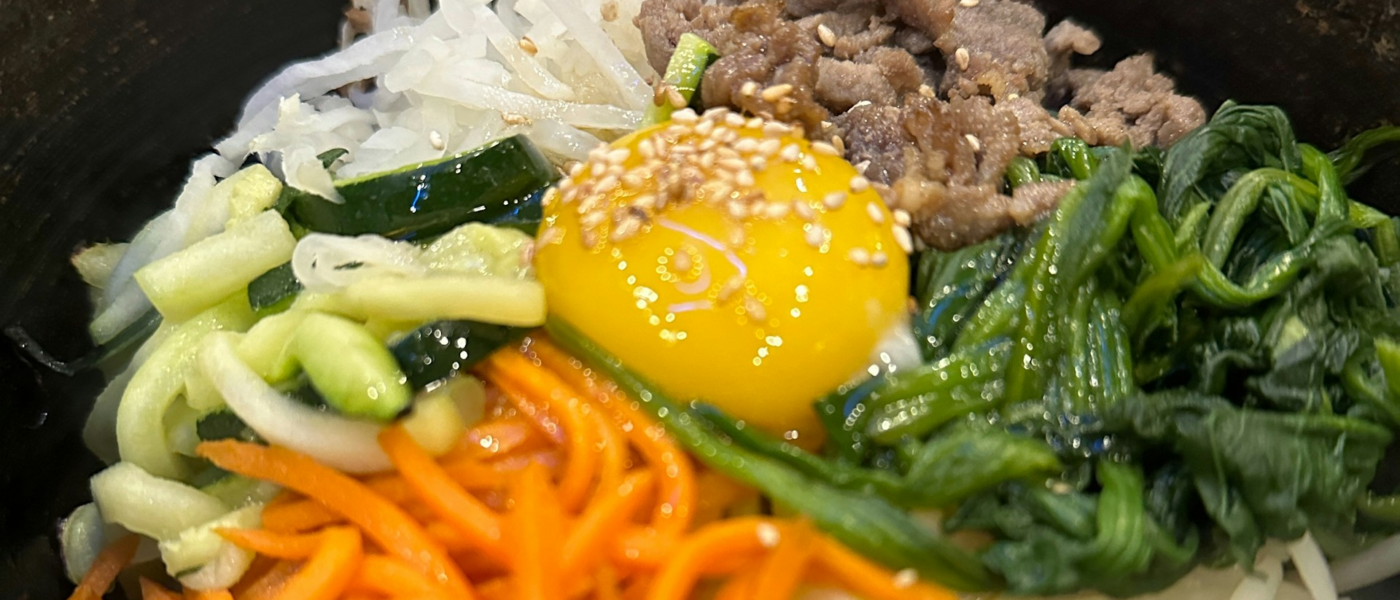
Bibimbap means mixed rice, but the stone bowl version isn’t about mixing at all until the very last step. Everything goes in separately, stays separate, and only comes together when you stir it yourself at the table.
The dish started as a way to use up whatever vegetables were on hand with a spoonful of rice, and it’s still built that way: five or six vegetables, each cooked and seasoned on its own, arranged around rice and beef in a bowl. The stone bowl version, dolsot bibimbap, adds one more layer. The bowl gets heated blazing hot before the rice goes in, so the rice touching the stone keeps cooking and crisping the entire time you eat, the same idea as the crust on the bottom of a good paella, just built to order instead of finished in one pan.
What You’re Learning
Seasoning vegetables one at a time, not together. Every vegetable in this dish gets its own brief treatment, blanched or sautéed, then tossed with its own hit of salt, garlic, and sesame oil while it’s still warm. It’s more small dishes to wash than throwing everything into one pan, but it’s the only way five vegetables with five different textures and cook times all taste like themselves instead of one generic pile of stir-fry.
Heating the stone bowl before anything goes in. A dolsot needs real heat, several minutes over medium-high with a coating of oil, before the rice goes anywhere near it. Add rice too early to a cool bowl and you get plain warm rice with no crackle anywhere near it. Get the bowl hot enough first and the rice touching the stone keeps toasting for the entire time you’re eating, building a crust, called nurungji, that most people order the dish specifically to get to.
Ingredients
- 2 cups short-grain white rice, rinsed until the water runs mostly clear
- 1 lb ribeye or sirloin steak, thinly sliced against the grain
- 3 tbsp soy sauce, divided
- 2 tbsp sugar, divided
- 4 tbsp sesame oil, divided
- 5 cloves garlic, minced, divided
- ¼ tsp black pepper
- 4 cups fresh spinach
- 2 cups bean sprouts
- 1 large carrot, julienned
- 1 small zucchini, julienned
- ½ English cucumber, julienned
- 4 tbsp gochujang
- 1 tsp rice vinegar
- 1 tbsp neutral oil, for the stone bowls
- 4 large eggs
- Salt, to taste
- 4 egg yolks
- Toasted sesame seeds and sliced scallions, for garnish
Method
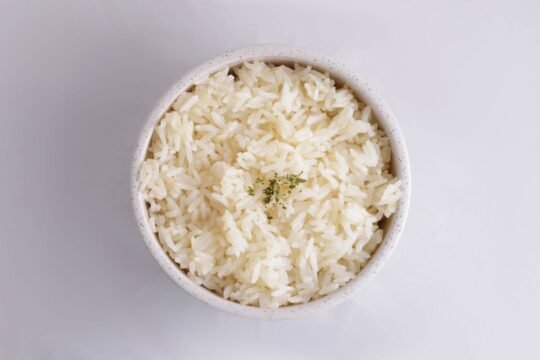
- Cook the rice. Combine the rinsed rice with water per the package instructions. Bring to a boil, cover, reduce to low, and cook 15 to 18 minutes, then let it rest off heat, covered, for 10 minutes.
- Marinate the beef. Toss the sliced beef with 2 tablespoons soy sauce, 1 tablespoon sugar, 1 tablespoon sesame oil, 2 cloves of the minced garlic, and the black pepper. Let it sit at room temperature while you prep the vegetables, at least 15 minutes.
- Blanch and season the spinach. Drop the spinach into boiling water for 30 seconds, then shock it in cold water and squeeze dry. Toss with 1 teaspoon sesame oil, 1 clove minced garlic, and a pinch of salt.
- Blanch and season the bean sprouts. Boil 2 to 3 minutes until just tender, drain, and toss with 1 teaspoon sesame oil, 1 clove minced garlic, and a pinch of salt.
- Sauté the carrot and zucchini. Working in two separate batches so they don’t steam each other, sauté the carrot in a touch of oil until just softened, then repeat with the zucchini. Season each lightly with salt as it comes off the heat.
- Salt the cucumber. Toss the julienned cucumber with a pinch of salt and let it sit 5 minutes, then squeeze out the liquid that collects. Leave it raw, it’s the one vegetable in the bowl that stays crisp and cool against everything hot.
- Cook the beef. Sear the marinated beef in a hot pan for 3 to 4 minutes, until browned and just cooked through.
- Make the gochujang sauce. Whisk together the gochujang, remaining sesame oil, remaining sugar, and rice vinegar with a splash of water until it loosens into a spoonable sauce.
- Heat the stone bowls. Set empty stone bowls over medium-high heat on the stove for 3 to 4 minutes, until genuinely hot, then coat the inside with the neutral oil.
- Add the rice and build the bowl. Spoon the warm rice into each hot bowl and press it lightly against the sides and bottom, it should start sizzling almost immediately. Arrange the beef and each vegetable in its own section on top.
- Top and serve. Crack a raw egg yolk into the center of each bowl, spoon on the gochujang sauce, and finish with sesame seeds and scallions. Bring it straight to the table and mix everything together there, the egg and sauce coat the rice as you stir, and the crust keeps crackling against the stone the whole time you eat.
Notes
- No stone bowls? A well-seasoned cast iron skillet gets you most of the crust, though it won’t hold heat at the table nearly as long as real stone.
- The vegetables are flexible. Shiitake mushrooms, fernbrake, or extra zucchini all take the same blanch-or-sauté-then-season treatment if you can’t find or don’t want everything listed here.
- Freeze the beef for 20 to 30 minutes before slicing. It firms up just enough to get thin, even slices without a special knife.
- If raw egg yolk isn’t for you, fry the eggs sunny-side up instead and set one on top of each bowl just before serving.
- Leftovers keep better as components than assembled. Store the rice, beef, vegetables, and sauce separately for 2 to 3 days and reheat the rice in a hot pan to get some crust back rather than the microwave.
- Skip the beef entirely and double the mushrooms for a vegetarian version, the technique doesn’t change.