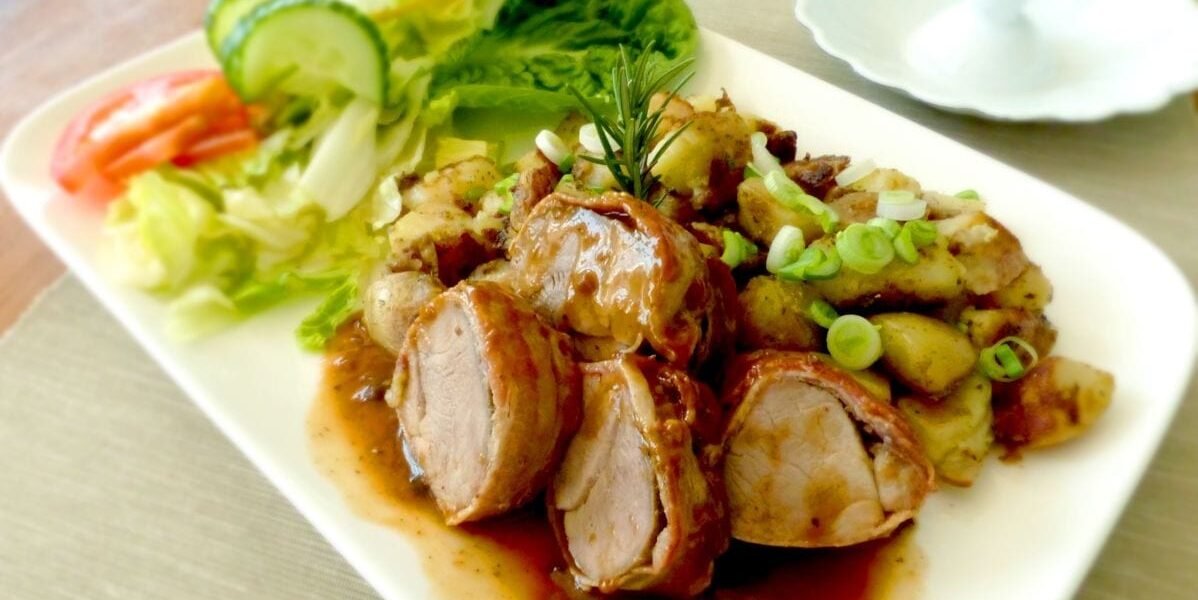
Pork tenderloin is the cut that teaches you how to cook any lean, fast-cooking protein — the sear-and-finish technique, the importance of resting, and how to turn pan drippings into a sauce in five minutes.
Pork tenderloin is the leanest cut of the pig — a long, tapered muscle that runs along the backbone and does very little work, which is why it’s so tender. The tradeoffs are that it has almost no fat to protect it from overcooking, and that it can dry out quickly if handled carelessly. The solution is a two-step cooking method: a hard sear on the stovetop to build a crust and develop the fond that becomes your sauce, followed by a brief finish in the oven where the heat is even and gentle. Pull it at 145°F (63°C), rest it properly, and the result is pork that’s juicy, barely pink at the centre, and actually flavourful — not the dried-out white slab that gives the cut a bad reputation.
The pan sauce is the reward for the sear. While the meat rests, the pan goes back on the heat — shallots, garlic, a splash of wine or stock to deglaze everything that stuck during the sear, a knob of butter to finish, a small amount of Dijon to add body and depth. It’s ready in five minutes and it’s the kind of sauce that makes dinner feel like you know what you’re doing. The technique transfers directly to chicken breasts, duck breasts, and fish fillets.
What You’re Learning
Sear and finish in the oven. Searing on the stovetop creates the Maillard reaction on the surface — the browning and flavour development that only happens above around 285°F (140°C). But a pan hot enough to sear is too hot to cook a whole tenderloin through evenly without burning the outside. Moving it to the oven solves this: a moderate oven (400°F/200°C) provides consistent, surrounding heat that brings the interior up gently and evenly while the crust you built on the stovetop stays in place. A thermometer is not optional here — the difference between 140°F and 155°F is the difference between juicy and dry, and you cannot judge it by colour or feel reliably.
Building a pan sauce from fond. Fond is the brown residue left in the pan after you sear protein — not burnt, but concentrated, caramelized sugars and proteins that carry enormous flavour. A pan sauce starts by deglazing: adding liquid to the hot pan and scraping up the fond with a wooden spoon so it dissolves into the sauce. Then aromatics, more liquid, and a reduction to concentrate. The final step — whisking in cold butter off the heat — creates an emulsion that gives the sauce body and gloss. Skip any of these steps and it’s just flavoured liquid. Do them in order and it’s a restaurant sauce made in the same pan you cooked the meat in.
Ingredients
Makes 4 servings.
- 2 pork tenderloins (about 1 lb / 450g each), silver skin removed
- 1½ tsp fine salt
- ½ tsp freshly ground black pepper
- 1 tbsp neutral oil (canola or grapeseed)
- 2 shallots, finely minced
- 3 garlic cloves, minced
- ½ cup (120ml) dry white wine or chicken stock
- ½ cup (120ml) chicken stock
- 1 tsp Dijon mustard
- 2 tbsp cold unsalted butter, cut into cubes
- 1 tsp fresh thyme leaves
Method
- Prep and season. Preheat the oven to 400°F (200°C). Pat the tenderloins completely dry with paper towels — moisture is the enemy of a good sear. Season all over with salt and black pepper. If the tenderloins have a thin, tapered tip, tuck it underneath and secure it with a toothpick or tie it with twine so the whole piece cooks evenly.
- Sear. Heat the oil in an oven-safe skillet (cast iron or stainless — not non-stick) over high heat until smoking. Add the tenderloins and sear without moving for 2 to 3 minutes until deep brown on the bottom. Rotate and sear all sides — roughly 8 minutes total. You want a proper crust on all surfaces, not just the bottom.
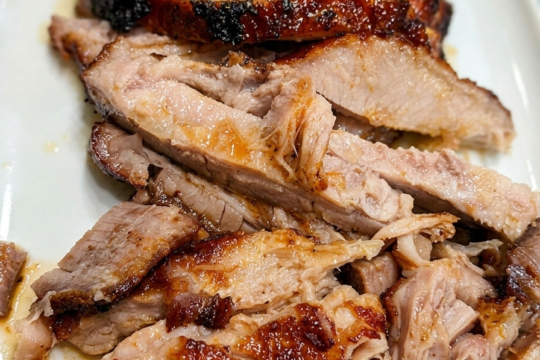
- Finish in the oven. Transfer the skillet to the preheated oven. Roast for 10 to 15 minutes, checking with an instant-read thermometer starting at 10 minutes. Pull the tenderloins when the thickest part reads 145°F (63°C) — it will carry over to around 150°F (65°C) while resting. Transfer to a cutting board and tent loosely with foil. Rest for 8 to 10 minutes before slicing. Do not skip the rest — this is when the juices redistribute.
- Build the pan sauce. Return the skillet to medium heat (carefully — the handle is hot). Add the shallots and cook, stirring, for 2 minutes until softened. Add the garlic and thyme and cook for 30 seconds. Pour in the wine — it will sizzle aggressively. Scrape up all the fond from the bottom of the pan. Let the wine reduce by half, about 2 minutes, then add the chicken stock. Simmer for 3 to 4 minutes until the sauce reduces and coats a spoon lightly. Remove from heat. Whisk in the Dijon mustard, then add the cold butter cubes one at a time, whisking constantly after each addition until the sauce is glossy and emulsified. Season with salt and pepper.
- Slice and serve. Slice the rested tenderloins on a slight bias into medallions about ¾ inch (2cm) thick. Arrange on a platter or individual plates, spoon the pan sauce over the top, and serve immediately.
Notes
- Remove the silver skin before cooking. Silver skin is the thin, bluish-white connective tissue that runs along one side of the tenderloin. It doesn’t break down with heat and will cause the meat to bow and curl as it cooks. Slide a sharp boning or paring knife under it, angle the blade slightly upward, and run it along the meat to pull it free in strips.
- 145°F is the safe target. USDA updated pork guidelines in 2011 — 145°F (63°C) with a 3-minute rest is fully safe and produces pork that’s still lightly pink and juicy. Cooking to the old 160°F guideline results in dry, grey pork. Use a thermometer.
- Don’t use a non-stick pan for the sear. Non-stick pans can’t withstand the high heat needed for a proper sear, and they don’t build the fond the pan sauce depends on. Use stainless or cast iron.
- Pan sauce variations. Swap the white wine for apple cider and the Dijon for whole-grain mustard for a slightly sweeter sauce. Or use red wine and chicken stock with a sprig of rosemary for something richer. The method is the same regardless of the liquid.
- Leftovers. Slice cold and serve in sandwiches, or dice and add to fried rice. Reheated sliced pork dries out quickly; reheat gently in a small pan with a splash of stock.