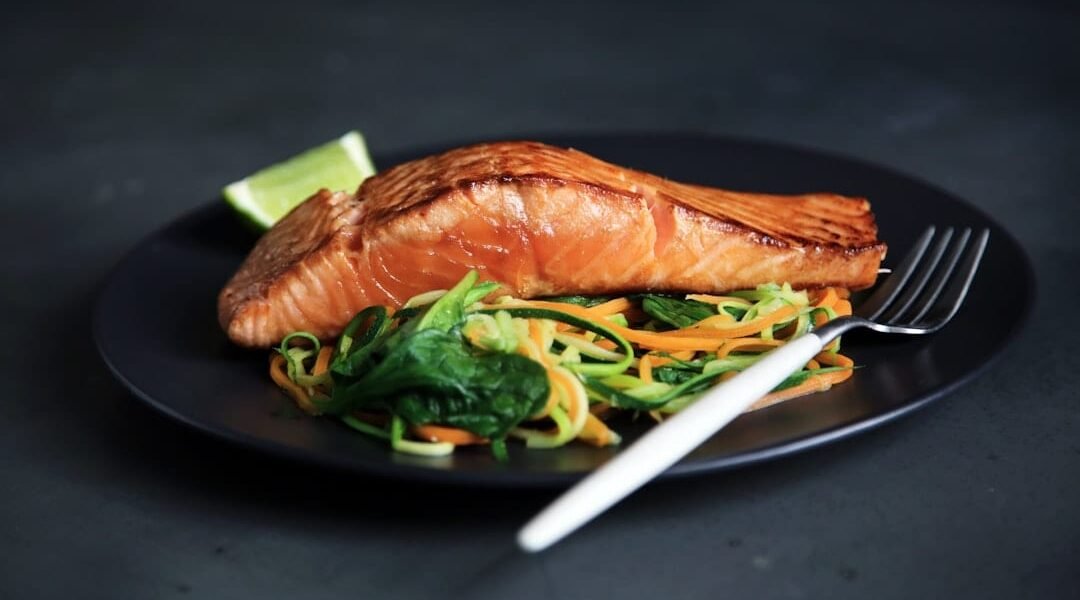
Crispy salmon skin is one of those things that sounds fussy but comes down to a single preparation step that almost every home cook skips.
Pan-seared salmon is one of the fastest high-reward recipes in the kitchen — from fridge to plate in fifteen minutes, with results that consistently outperform most restaurant versions once you understand what actually makes the skin crisp. The answer is moisture. Fish skin holds more water than almost any other protein skin, and water is the enemy of browning. Remove the moisture, get the pan ripping hot, press the fillet down at the start, and the skin will shatter when you bite it. Ignore those steps and you’ll get a pale, soft skin that slides off the flesh in sheets.
The flesh side is equally forgiving of error once you understand visual doneness: salmon goes from translucent dark orange to opaque pale pink as heat travels upward through the fillet. For medium — the target — you want to pull the fillet when the opacity has climbed about two-thirds of the way up the side of the fish. Carryover cooking takes it the rest of the way. This one visual cue replaces every timing guideline, every thickness calculation, every guess.
What You’re Learning
Dry skin and contact pressure. Salmon skin is high in collagen and water. When that water hits a hot pan, it steams rather than sears — the skin cooks gently, stays rubbery, and never develops the Maillard reaction that makes it crispy. The fix is threefold: dry the skin completely with paper towels immediately before cooking, heat the pan until it’s hot enough to cause slight smoking, and press the fillet down firmly for the first 30 seconds. That last step prevents the skin from buckling away from the pan as the heat causes the muscle fibres to contract. Constant contact means constant browning across the entire skin surface.
Reading doneness by sight. Raw salmon is dark, jewel-like orange or deep red depending on the species. As heat penetrates from the bottom up, the flesh turns from translucent to opaque — a clear colour shift you can see by looking at the side of the fillet. For medium (the ideal doneness for almost all salmon), pull when the colour change has climbed two-thirds of the way up. The fish will continue cooking from residual heat. For well-done, pull at three-quarters. For rare, one-half. This visual system is more reliable than any timer because it accounts for fillet thickness, starting temperature, and pan variation automatically.
Ingredients
Makes 2 servings.
- 2 salmon fillets, skin-on (6–7 oz / 170–200g each), about 1 inch thick
- 1 tsp fine salt
- ½ tsp freshly ground black pepper
- 1 tbsp neutral oil (grapeseed, avocado, or vegetable)
- 2 tbsp unsalted butter
- 2 garlic cloves, smashed
- 3–4 sprigs fresh thyme or a small handful of fresh dill
- Lemon wedges, for serving
Method
- Prepare the fish. Remove the salmon from the fridge 15 minutes before cooking. Pat the skin side completely dry with paper towels — press firmly and repeat until no moisture transfers to the towel. Season the flesh side with salt and pepper. Leave the skin side unseasoned; salt draws out moisture.
- Heat the pan. Set a heavy skillet — cast iron or stainless steel — over high heat. Add the oil and let it heat until it shimmers and begins to smoke lightly. This is hotter than most people cook fish, and that’s correct. A too-cold pan gives the skin time to steam rather than sear. The whole process of crisping skin happens in the first 60 seconds — you need the temperature to be there when the fish hits the pan.
- Sear skin-side down. Place the salmon fillets skin-side down in the pan. Immediately press each fillet firmly with a spatula for 20 to 30 seconds — this prevents the skin from curling away from the pan as the muscle contracts from the heat. Reduce to medium-high and cook, without moving the fish, for 4 to 5 minutes. The skin will release from the pan naturally when it’s ready; if it sticks, it isn’t done yet. You should see the colour change climbing up the side of the fillet. Wait until it’s about two-thirds of the way up.
- Add butter and baste. Add the butter, smashed garlic, and herb sprigs to the pan. As the butter melts and foams, tilt the pan slightly toward you and use a spoon to continuously baste the flesh side of the fillets with the hot, herb-infused butter for 30 to 45 seconds. This finishes the top of the fish without flipping.
- Flip and finish. Flip the fillets flesh-side down and cook for 30 seconds only — just enough to give the flesh a brief sear. Remove from the pan immediately. The fish should be medium: opaque two-thirds through, with a slightly translucent centre. It will finish cooking on the plate. Rest for 1 minute before serving.
- Serve. Plate skin-side up to keep it crispy — the skin softens quickly if it sits face-down. Squeeze a wedge of lemon over each fillet. Serve immediately.
Notes
- The pan must be hot. If you’re nervous about the heat, the skin won’t crisp. The high initial temperature is what transforms rubbery skin into something that shatters. Trust the process for the first 30 seconds.
- Score the skin on thicker fillets. If your fillet is very thick (more than 1¼ inch), use a sharp knife to make 3 shallow diagonal cuts through the skin before cooking. This prevents the skin from contracting unevenly and helps it stay flat in the pan.
- Don’t move the fish. Once it’s in the pan, leave it alone until it releases naturally. Trying to move it before it’s ready tears the skin and causes sticking.
- Wild vs farmed salmon. Wild salmon (sockeye, coho, king) is leaner and cooks faster than farmed Atlantic salmon. Reduce the cooking time by about a minute for wild fillets at the same thickness — they go from perfect to dry quickly.
- Serve skin-side up. Placing the fillet skin-side down on the plate traps steam under the skin and softens it within minutes. Plating it skin-up keeps the crunch through the meal.
Frequently Asked Questions
How do I know when to flip the salmon without a thermometer?
Watch the side of the fillet, not the clock. As the fish cooks from the bottom up, the flesh turns from translucent orange to opaque pale pink, and that color change climbs visibly up the side. For medium, flip once it’s climbed about two-thirds of the way up. This visual cue adjusts automatically for thickness and pan heat in a way a fixed cook time can’t.
Why does my salmon skin turn out soggy instead of crispy?
Almost always leftover moisture. Pat the skin completely dry with paper towels right before it hits the pan, and make sure the oil is hot enough to shimmer and lightly smoke first. Plating skin-side down afterward also ruins crispy skin fast, since it traps steam underneath. Always plate skin-side up.
Can I cook the salmon without butter and garlic at the end?
Yes, the sear itself doesn’t depend on it. Skip that step and just flip the fillet to finish the flesh side plain, or swap in olive oil if you want to keep it dairy-free. The butter baste adds richness and flavor, but the crispy skin comes entirely from the dry-and-press technique earlier in the method.