Chuck
Braise
Slow Cook
Pot Roast
High collagen — breaks down beautifully over low, slow heat into rich, tender meat.
 Tools & Table
Know what each cut needs — and why. Every animal is mapped with its best cooking methods and the reason behind them.
Tougher cuts need time and moisture. Tender cuts need high heat and little of it.
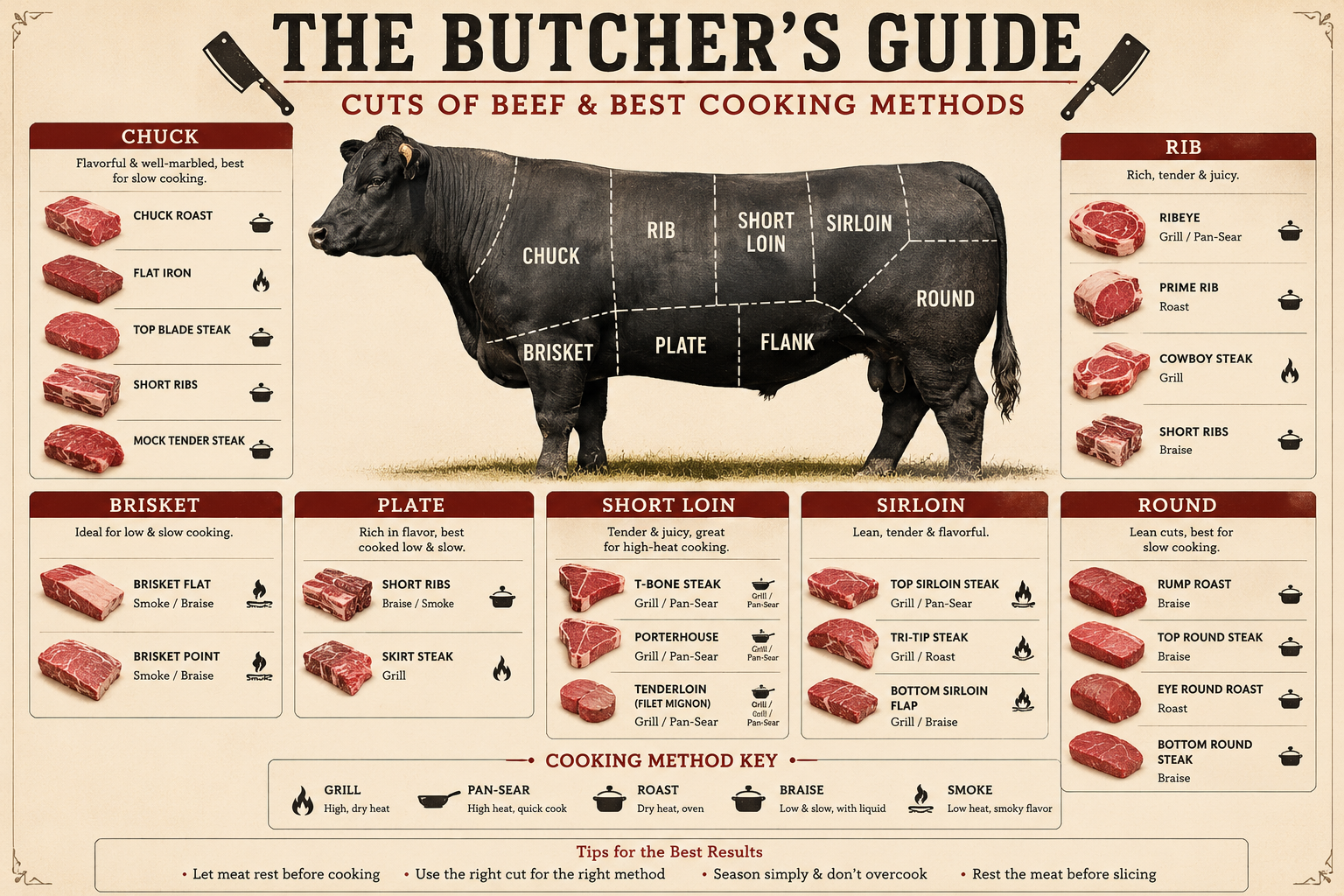
High collagen — breaks down beautifully over low, slow heat into rich, tender meat.
Well-marbled and tender. High heat brings out the fat and flavour. Don't overcook.
The most tender cut. Strip steak, tenderloin, T-bone. Quick, hot, minimal handling.
Lean and firm. Needs moisture or very slow dry heat to break down without drying out.
Dense connective tissue demands 6–12 hours. The reward is extraordinary tenderness.
Cross-cut as osso buco or whole. Collagen-rich — the braising liquid becomes the sauce.
Lean and flat with strong grain. Marinate well, grill hot and fast, always slice against the grain.
Fat and collagen melt into the sauce over 3–4 hours. One of the most rewarding cuts to braise.
Pork is forgiving — most cuts can be cooked multiple ways. Fat is your friend here.
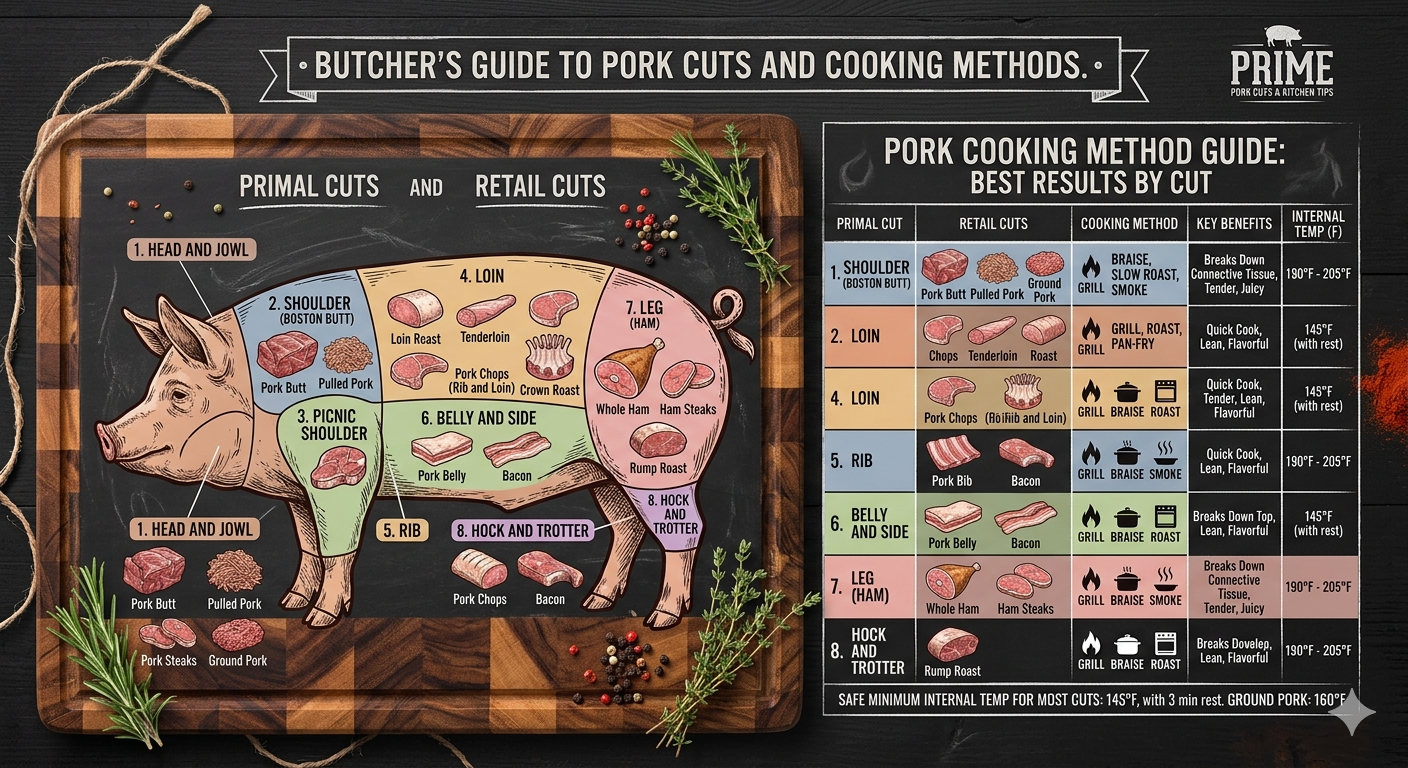
High fat and connective tissue — ideal for pulled pork. Needs 6+ hours to shine.
Lean and mild. Don't overcook — it dries out fast. Pull at 63 °C / 145 °F internal.
High fat ratio — roast long for crackling, braise for rich softness, or cure for bacon.
The leanest pork cut. Sear all sides, finish in the oven. Ready in under 30 minutes.
Braise first to tenderise, then finish on the grill or in the oven for caramelised bark.
Fresh: roast like a shoulder. Cured: glaze and bake to warm through without drying.
Bony and gelatinous — transforms soups and braises with extraordinary body and flavour.
Light and dark meat behave differently. Thighs forgive overcooking; breasts don't.
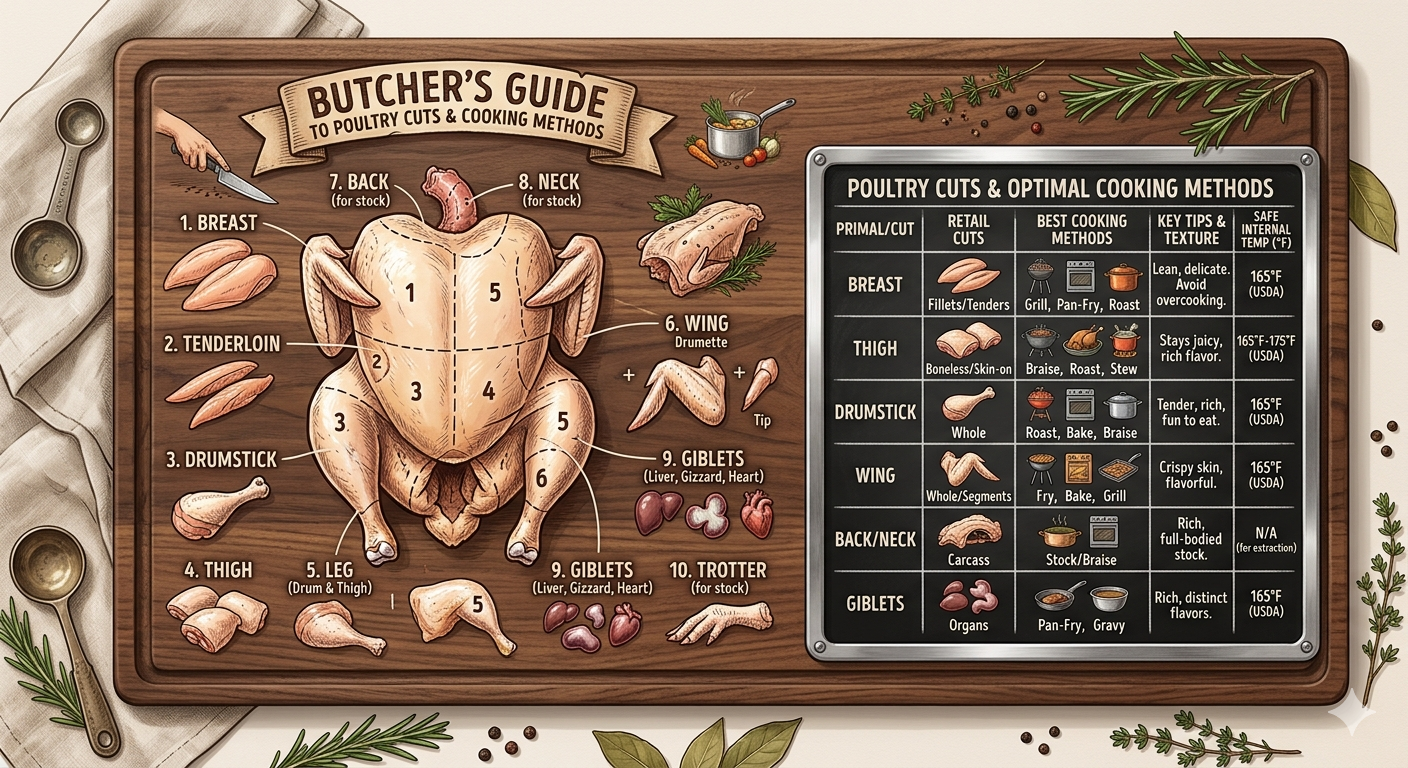
Lean and mild — dries out easily. Brine it, or cook to exactly 74 °C / 165 °F internal.
Forgiving and flavourful. Fat and dark meat tolerate higher heat and longer times.
Similar to thigh — more connective tissue. Excellent braised low and slow for fall-off-bone.
Small but packed with flavour. High heat renders the fat and crisps the skin perfectly.
Too bony to eat — too valuable to waste. Simmer 2–3 hours for deeply flavoured stock.
Lamb is rich and aromatic. Front cuts need braising; back cuts are perfect for quick heat.
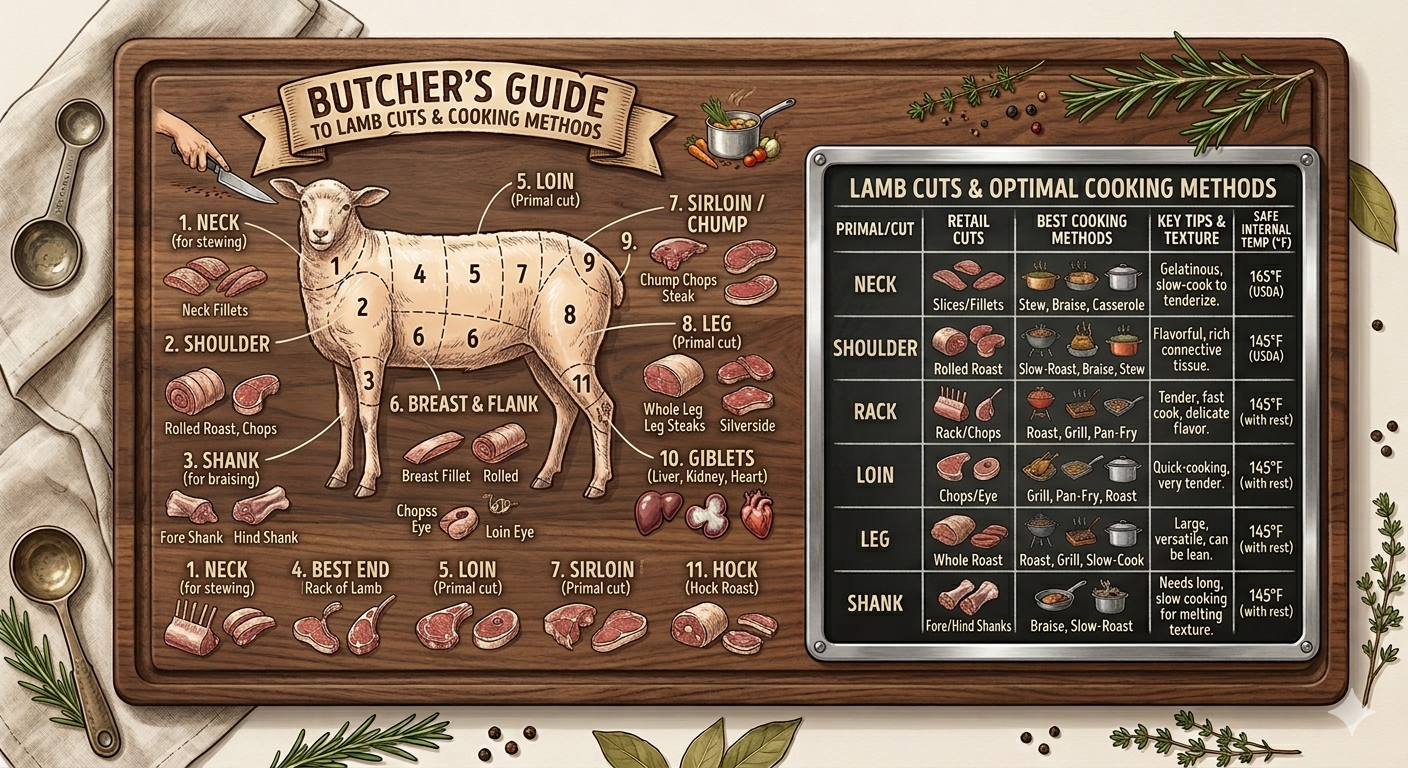
Generous marbling and connective tissue — ideal for a 4-hour low roast or braise.
The showpiece cut. Crust it in herbs, roast to medium-rare. 20 minutes is all it needs.
Quick and tender. Season simply, cook to medium-rare, rest 2 minutes before serving.
Whole leg: roast for a centrepiece. Bone-in shanks: braise slowly for deepest flavour.
Dense and tough raw, melting and silky after 2–3 hours in wine, stock, and aromatics.
Underused and underrated. Fat-rich; cook long until the meat pulls cleanly from the bone.
Seafood cooks in minutes, not hours, and punishes overcooking harder than any other protein. Watch it, don't walk away.
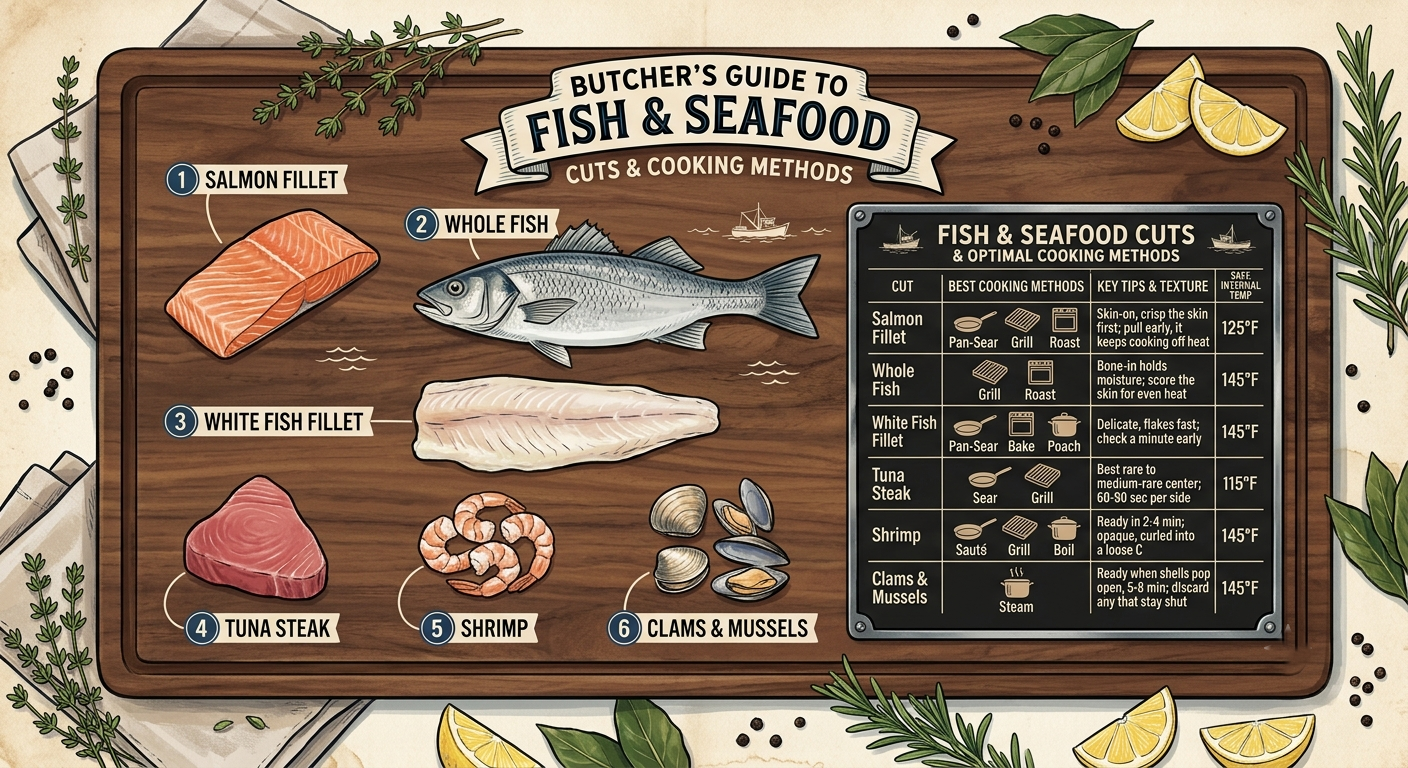
Skin-on, skin-side down first for a crisp crust. Pull at 51 °C / 125 °F for medium, it keeps cooking off the heat.
Branzino, snapper, trout. Bone-in holds moisture better than a fillet — score the skin so heat reaches the center evenly.
Cod, halibut, tilapia. Delicate and flakes apart fast — a gentler hand than salmon, and check a minute early.
Best rare to medium-rare in the center. A hot pan, 60-90 seconds a side, is the difference between silky and chalky.
Done in 2–4 minutes. Opaque and curled into a loose C means ready; a tight O means overcooked and rubbery.
Ready the moment the shells pop open, usually 5–8 minutes. Any shell that stays shut after that gets discarded, not forced.
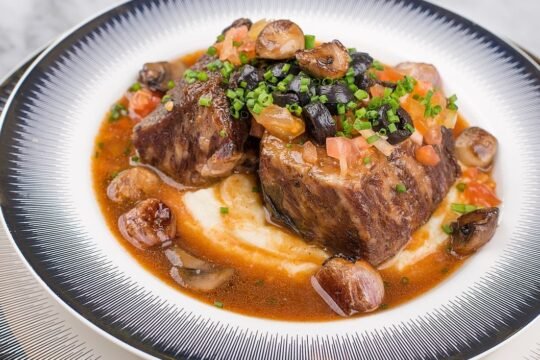
Bone-in beef short ribs seared hard, braised low and slow in red wine and stock until the meat falls away from the bone. The dish that teaches the full braising method — and why time is the main ingredient.
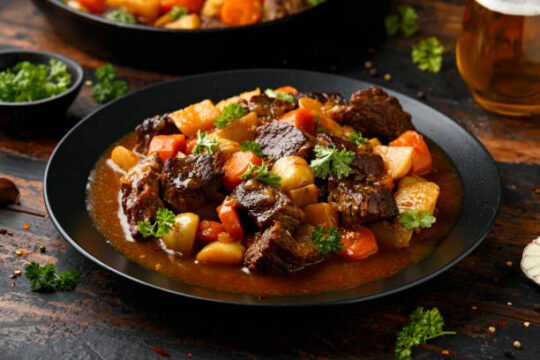
A Spanish-style beef stew built in layers — seared chuck, paprika-wine base, root vegetables — braised low and slow until the sauce holds a spoon.
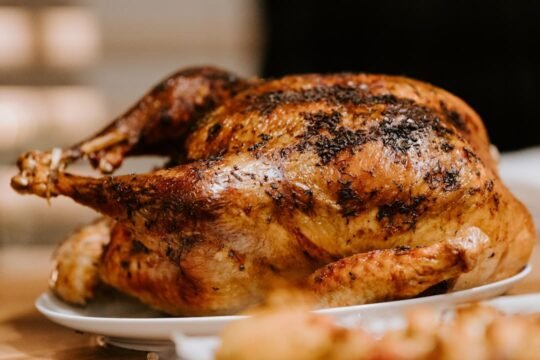
A whole chicken roasted until the skin shatters and the meat stays juicy — the technique that fixes every other chicken dish you'll ever make.
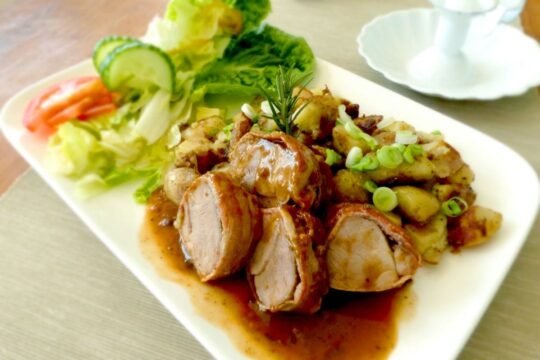
Pork tenderloin seared hard, finished in the oven, and rested properly — then a pan sauce built from the drippings in five minutes. Dinner in 40 minutes with technique that transfers to every protein.
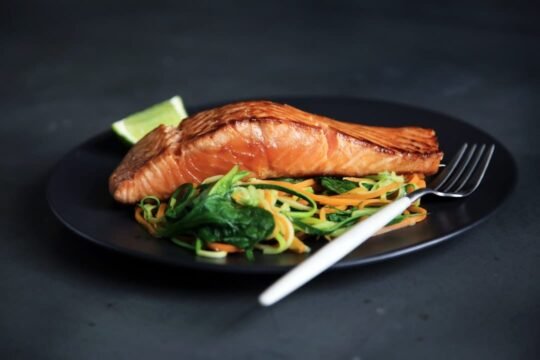
Salmon with skin so crispy it shatters and flesh that stays just translucent at the centre — done in under fifteen minutes once you know the technique.
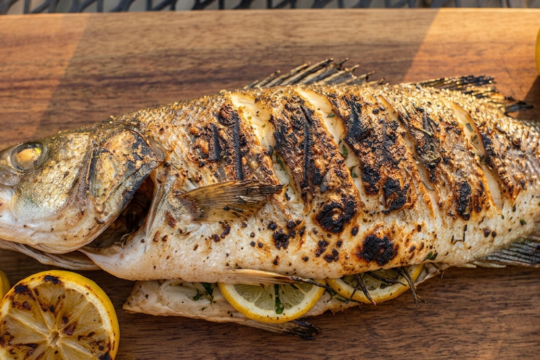
Two whole fish, a hot grill, and almost nothing else. Branzino stuffed with lemon and garlic, grilled until the skin crisps and releases clean, Spanish coastal cooking at its simplest.
Or let the next recipe come to you. Early access, before it hits the site. Free.
Sign up and get a free Kitchen Starter Cheat Sheet: conversions and knife cuts, straight to your inbox. Then every week, next week's recipe lands first, before it's live on the site. English or Spanish.