
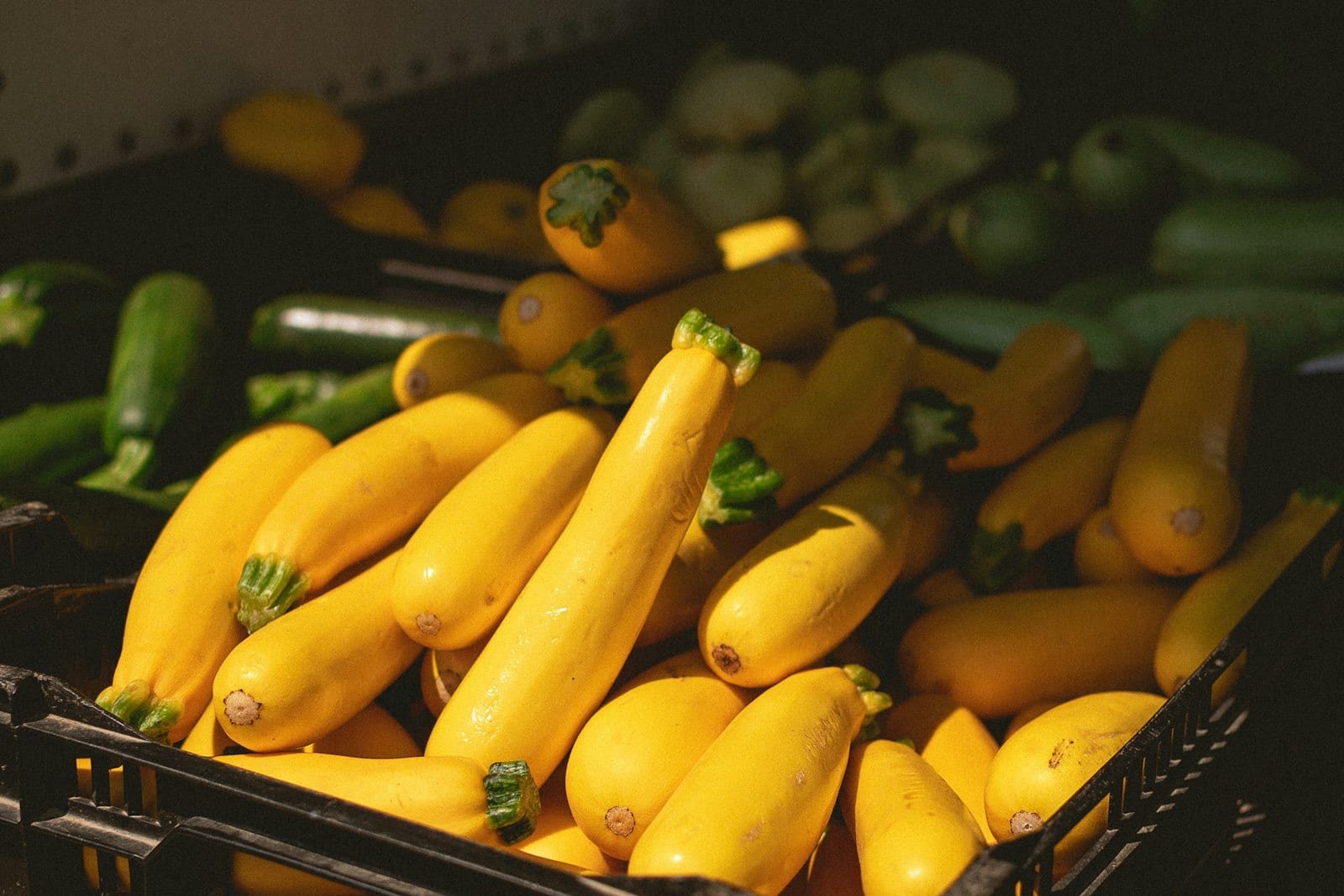
Every zucchini problem is a moisture problem. Once you understand that, everything else — fritters that hold together and brown, bread that stays moist for days, noodles that don’t collapse into mush — starts making sense.
Zucchini is roughly 95% water. This is useful in baking, where that slow-releasing water keeps a loaf moist long after a standard batter would have dried out. It’s a problem in savory cooking, where excess surface moisture prevents browning and causes proteins to steam instead of sear. Managing the moisture is the entire technique. Every method below is just a different version of that same idea.
The First Move: Grate and Freeze
If you’re overwhelmed — a glut of zucchini you genuinely cannot use this week — grate it all now and freeze it. This is not a compromise. Frozen grated zucchini is a better baking ingredient than fresh, because the freeze-thaw cycle ruptures the cell walls and releases moisture more readily. It goes straight into muffin batter or bread batter without any adjustment.
The method: grate using the large holes of a box grater or a food processor with a grating attachment. For savory use (fritters, latkes, added to pasta sauces), squeeze the grated zucchini in a kitchen towel first — the drier it is when it freezes, the better it performs later. For baking use (muffins, bread), don’t squeeze — you want the moisture. Portion into roughly 1-cup amounts in zip-lock bags, press flat, and freeze. They’ll keep for 3 months and thaw in a bowl of warm water in about 20 minutes.
Savory: Fritters That Actually Brown
Zucchini fritters fail for one reason: the zucchini is too wet. When you put high-moisture food into a hot pan, the water turns to steam before the surface temperature can exceed 212°F (100°C) — the boiling point of water. Browning (the Maillard reaction) requires temperatures above 300°F (150°C). As long as there’s excess moisture, browning can’t happen. You get a pale, steaming patty that falls apart when you flip it.
The fix is mechanical and it works every time. Salt the grated zucchini (the salt draws water out via osmosis), let it sit for ten minutes, then squeeze as hard as you can in a kitchen towel. The volume reduction is dramatic — you’ll go from two loosely packed cups to a tight, almost dry pile. That pile goes into a hot pan and starts browning almost immediately.
The full technique — with binder ratios, pan temperatures, and serving suggestions — is in the Zucchini Fritters recipe.
Savory: Zucchini Noodles (Done Right)
Zucchini noodles (zoodles) work. But not if you boil them — boiling breaks down the cell structure and releases so much moisture that you end up with a watery pile of mush by the time it reaches the table. The serving method matters as much as the cooking method.
Two approaches that work: Sauté briefly in a hot, dry pan (no oil, no water) for 2–3 minutes, tossing constantly, until just wilted. Serve immediately. The residual heat of a hot pasta sauce also works: spiralize raw, put in a bowl, pour hot marinara straight over the top. The heat softens the zoodles gently and the cooking is done by the time it’s at the table. Either way, serve fast — the moment zoodles sit, they continue releasing moisture into whatever they’re sitting in.
Salt them after cooking, not before. Pre-salted zoodles release liquid rapidly and become limp before they reach the pan.
Savory: Pisto — When You Want the Zucchini to Melt Into the Dish
Pisto is a Spanish braised vegetable stew — zucchini, peppers, onion, and tomato cooked slowly together until everything softens and the juices reduce into a thick, jammy sauce. It’s the opposite of fritters: instead of eliminating moisture, you’re using the zucchini’s water content to build the dish. The vegetables release their liquid as they cook, the tomato reduces and concentrates, and after 30 minutes you have something that’s more than the sum of its parts.
Unlike fritters or noodles, pisto has no moisture problem to solve — the liquid is the point. No salting, no squeezing, no race against steaming. Dice everything to a similar size, build the sofrito, and let the heat work slowly. It eats well as a side, spooned over fried eggs, or at room temperature on toast. The proportions and full technique are in the Pisto recipe.
Baking: Where the Moisture Becomes an Asset
In baking, the same moisture that causes problems in a frying pan becomes the thing you want. The cell walls of grated zucchini release water slowly as the baked good cools — continuing to rehydrate the crumb from within long after it leaves the oven. Fat-based moisture (from butter or oil) dissipates quickly; zucchini’s moisture persists. The result is a loaf or muffin that’s genuinely better on day two or three than it was the day it was baked.
This is the same principle behind carrot cake (notoriously moist) and banana bread (stays tender for days). The vegetable or fruit isn’t the flavor — it’s the moisture delivery mechanism.
Zucchini bread: Classic, lightly spiced, and easy enough for a first baking project. The Zucchini Bread recipe adds a cinnamon-warm crumb that stays moist for 4–5 days. Don’t squeeze the zucchini for bread — the water is part of the formula.
Double Chocolate Zucchini Muffins: Cocoa powder absorbs both the green color and the vegetable flavor entirely. The finished muffins look and taste exactly like a good chocolate muffin — fudgy, rich, deep — and they stay that way for days. If you have kids who are skeptical about vegetables in desserts, don’t tell them. The Double Chocolate Zucchini Muffins recipe makes 12 in 40 minutes.
Quick Savory Ideas (No Recipe Required)
When you have a zucchini in hand and 15 minutes before dinner:
- Grilled rounds: Slice into thick coins (1 cm), brush with olive oil, season with salt, pepper, and lemon zest. Grill or broil until char marks appear, 3–4 minutes per side. The high direct heat draws surface moisture out fast enough that browning happens before the zucchini turns mushy.
- Stuffed boats: Halve lengthwise, scoop out the seedy center, fill with sausage or minced meat, marinara, and a handful of shredded mozzarella. Bake at 425°F (220°C) until bubbling and golden, about 20–25 minutes. The full technique — including why salting the shells first prevents a watery filling — is in the Zucchini Boats recipe.
- Raw ribbon salad: Use a vegetable peeler to shave thin ribbons down the length of the zucchini. Toss with olive oil, lemon juice, salt, shaved parmesan, and toasted pine nuts. The raw texture is tender-crisp and completely different from cooked zucchini — no moisture extraction needed because you’re not trying to brown it.
- Added to pasta sauce: Dice small and add to any tomato-based sauce in the last 8–10 minutes. The zucchini softens into the sauce and adds body. Because it’s cut small and surrounded by other liquid, the moisture release doesn’t cause a problem — it just becomes part of the sauce.
Notes
- Large zucchini are not worse than small ones. Oversized zucchini (the ones that hid under the leaves) have more seeds and a slightly more watery center, but the flesh is still fine. Scoop out the seedy core with a spoon before grating for fritters or muffins — the core holds the most water and adds nothing useful. The outer flesh is identical to a small zucchini.
- The squeeze needs to be harder than you think. When a recipe says “squeeze out the moisture,” it means squeeze until your hands ache and then squeeze again. Most people do this once, gently, and wonder why their fritters are soggy. You cannot over-squeeze zucchini for any savory purpose.
- Yellow zucchini behaves identically. Same water content, same cooking properties, same baking behavior. The color is different; everything else is interchangeable.
- Don’t salt zucchini you’re about to bake. Salting draws out moisture you want to keep. For savory applications (fritters, sautéed), salt before cooking. For baking (bread, muffins), grate and use directly — the recipe’s leavening and liquid ratios are calibrated for un-salted zucchini.
- The best size for fritters is the standard grater hole. Grating on the large holes of a box grater produces strands that hold together well in a fritter and cook through quickly. Fine grating produces a paste-like texture. A food processor’s shredding disc gives large, coarse strands that work well for fritters but can be too dry for bread.